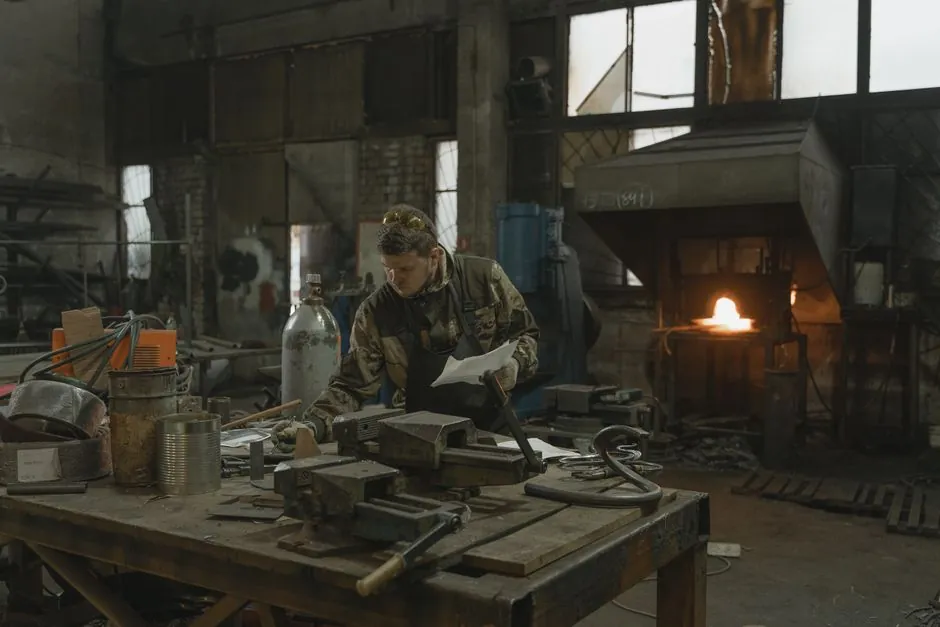
Foundry coke prices in Q3 2026 are tracking an FOB range of USD 294.81–362.01 per metric tonne across the major exporting regions, with China at USD 361.55/MT, India at USD 357.00/MT, Colombia at USD 300.00/MT, Poland at USD 362.01/MT, and Australia at USD 294.81/MT, all as of August 2026 [S5].
Foundry coke is a high-carbon, low-ash grade of metallurgical coke used as the primary fuel and carbon raiser in cupola and induction furnaces that feed iron, steel, and non-ferrous casting operations [S1][S3]. It is a distinct quality slice of the broader metallurgical-coke market, and as a downstream cost line it sits between the coking-coal benchmark and finished casting output.
Regional FOB price benchmarks, August 2026
Foundry coke follows the metallurgical-coke curve rather than thermal-coal pricing, and the August 2026 spread between Australia and Poland is USD 67.20/MT, a 22.8% gap that is typical of freight-, demand-, and policy-driven regional premia [S5]. Colombia and Australia sit at the low end of the range because of mine-mouth proximity to Atlantic and Pacific bulk ports, while Poland and China are the high-cost regions in the dataset.
The month-on-month move from July 2026 to August 2026 was uniformly positive: China rose from USD 357.54/MT to USD 361.55/MT, India from USD 300.00/MT to USD 357.00/MT, Colombia from USD 291.60/MT to USD 300.00/MT, Australia from USD 285.00/MT to USD 294.81/MT, and Poland from USD 351.46/MT to USD 362.01/MT [S5]. The India jump is the standout and tracks with Q2 2026 Indian domestic coke prices rising to roughly INR 27.70/kg in May, a 1.3% month-on-month increase, as crude steel production in India grew 1.9% year over year even as Chinese output declined 2.7% over the same period [S5].
Market sizing: foundry coke inside the metallurgical-coke stack
The metallurgical-coke market was valued at USD 205.43 billion in 2025 and is projected to reach USD 216.66 billion in 2026, then USD 265.46 billion by 2030 at a 5.2% CAGR [S4]. Foundry coke is segmented as a distinct product type inside this stack, alongside blast furnace coke, nut coke, pearl coke, and breeze coke [S4].
Foundry coke alone is forecast to add USD 13.16 billion in incremental revenue by 2030, ranking second behind blast furnace coke at USD 35.88 billion and ahead of nut coke at USD 7.03 billion [S4]. The dedicated foundry-coke market was estimated at USD 2,496.42 million in 2024, is expected to reach USD 2,614.55 million in 2025, and is projected to grow to USD 4,151.38 million by 2035 at a 4.73% CAGR, with Asia-Pacific identified as the fastest-growing region and North America as the largest regional market [S1]. A second, more recent sizing puts the foundry-coke market at USD 2.71 billion in 2025, growing to USD 2.83 billion in 2026 and to USD 3.5 billion by 2031 [S6].
Cost drivers: coal, freight, grade, and captive supply
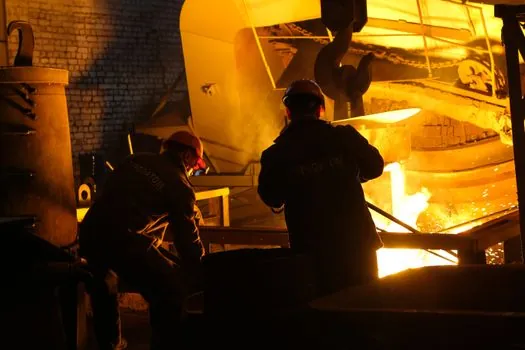
Four drivers move foundry-coke pricing more than anything else. First, coking-coal availability: Q2 2026 saw Chinese coking-coal supply tighten after mine disruptions and safety inspections in Shanxi and Shaanxi, triggering multiple coke price increases in late May 2026 [S5]. Second, freight and port premia: Poland and China carry a structural premium versus Australia and Colombia, reflecting the inland-to-port distance and the mix of contract-versus-spot liftings.
Third, ash and carbon grade: foundry coke is graded by ash content, with the less-than-8% ash tier dominating market share and the 10–12% ash tier growing fastest, and the carbon-type split covers metallurgical, petroleum, pitch, and anthracite cokes [S1]. Buyers of ductile iron and high-grade non-ferrous castings generally need the low-ash tier, which commands a price premium. Fourth, captive-versus-merchant supply: the April 2026 shutdown of ArcelorMittal Dofasco's No. 3 coke plant in Canada tightened captive North American capacity, while the April 2026 restart of an ArcelorMittal Poland blast furnace added regional demand [S5]. These captive moves change merchant-market availability independent of headline demand. For context on how captive-versus-merchant supply shapes cost curves in adjacent industrial inputs, the same pattern is visible in lithium-ion forklift battery sourcing for 2026, where captive and merchant TCO diverge by a similar percentage band.
Foundry coke versus blast furnace coke versus nut coke
Foundry coke, blast furnace coke, and nut coke are sold off the same coking-coal cost base, but they serve different end uses and command different price points. Foundry coke is sized to cupola and induction furnace throughput, and it is the grade that matters for grey iron, ductile iron, and non-ferrous castings. Nut coke is a smaller fraction, used in sintering and as a size-graded additive, and is the lowest-priced of the three on a per-tonne basis.
On the criteria that matter to a purchasing decision: (1) Carbon content: foundry coke typically targets 90%+ fixed carbon with ash under 8% for premium grades, while nut coke tolerates higher ash [S1]. (2) Reactivity: foundry coke must burn predictably at cupola bed temperatures, requiring tighter CSR/CRI control than nut coke. (3) Sizing: foundry coke is screened to a coarser fraction than breeze or nut coke to maintain bed permeability in cupola operations. (4) Total cost of ownership: the per-tonne FOB spread between Australia at USD 294.81/MT and Poland at USD 362.01/MT translates to roughly USD 13,500–16,500 in additional annual coke cost for a 200-MT/month foundry, before freight, demurrage, and storage are layered on [S5]. Sourcing from lower-FOB regions can offset freight if inland haulage is short, which is why Colombian and Australian quotes often win North American and European cost-down tenders.
Application split and who buys foundry coke
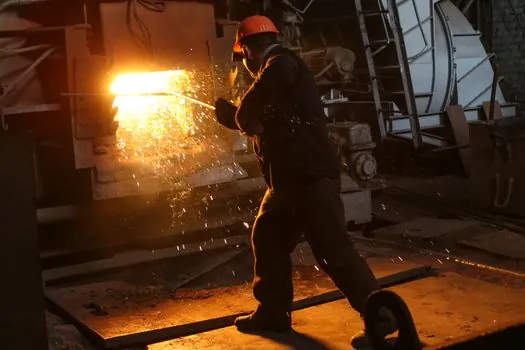
The end-use split for foundry coke is concentrated in machinery casting, automotive parts casting, insulation, and material treatment, with iron smelting as the dominant metal-smelting application and non-ferrous smelting plus ferrous/non-ferrous alloy smelting as the smaller but faster-growing slices [S1]. Automotive and machinery castings together drive roughly two-thirds of foundry-coke consumption, which links the coke curve tightly to light-vehicle output and industrial machinery capex.
Foundry coke is the right specification for: integrated iron foundries running cupolas, non-ferrous foundries needing a low-ash carbon source, and specialty casting operations that need tight CSR/CRI control. It is NOT a fit for: blast-furnace iron-ore reduction (use blast furnace coke), sintering beds (use nut or breeze coke), or chemical-feedstock applications such as methanol or acetylene production, where petroleum coke is the standard input [S3].
Constraints, risks, and what to watch
The biggest pricing risk into Q4 2026 is coking-coal supply concentration in China. The April 2026 ArcelorMittal Dofasco No. 3 coke plant shutdown in Canada also removed captive North American supply, and a restart timeline has not been published in the public dataset [S5].
Geopolitical and trade-policy exposure is the second constraint: foundry coke is globally traded, with Poland (USD 1.39 billion), China (USD 851 million), Colombia (USD 655 million), Japan (USD 654 million), and Russia (USD 564 million) as the top exporters in the most recent OEC dataset, and tariff or sanctions changes can reroute flows within a quarter [S3]. The third constraint is environmental regulation: increasing environmental rules are listed as a key market driver, and they tend to push buyers toward the less-than-8% ash tier and away from the 10–12% tier, even though the 10–12% tier is the fastest-growing volume segment [S1]. On comparable regulatory pressure reshaping other industrial sourcing decisions, electronics BOM risk scoring in 2026 uses a similar driver mix. Adjacent capital cycles, such as food and beverage plant modernization capex in 2026, indirectly lift machinery-casting demand and feed back into the foundry-coke curve.
Total cost of ownership beyond the FOB headline
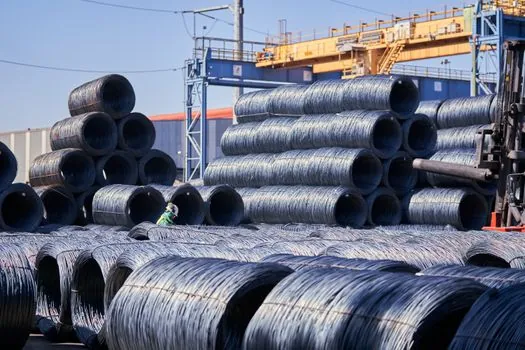
The FOB price is roughly 70–80% of the landed cost for a bulk industrial buyer; the remaining 20–30% is freight, port handling, demurrage, inland haulage, storage losses, and pre-shipment sampling. A foundry buying 500 MT/month at the China USD 361.55/MT FOB level pays roughly USD 180,775/month in commodity, plus an estimated USD 36,000–54,000 in freight and port costs for a typical Asia-to-Europe or Asia-to-North-America lift, before any demurrage or quality rejection [S5].
Energy is a secondary cost line: coke oven gas is a byproduct and a credit at integrated steel mills, but merchant foundry-coke buyers do not capture this credit, which is a structural USD 8–15/MT disadvantage versus vertically integrated rivals [S4]. Maintenance and inventory carrying cost add another 2–4% of working capital tied up in bulk coke stockpiles, given the volatility documented in the July-to-August 2026 moves [S5]. A comparable TCO framing in adjacent industrial procurement is the floating solar capacity 2026 outlook, where capital cost is only one of three drivers. For mechanical buyers sizing coke-handling systems, shock absorber selection for packaging lines shows the same total-cost discipline applied to a different hardware class.
Two signals to track into Q4 2026: the next coking-coal benchmark revision from Shanxi and the timing of any ArcelorMittal Dofasco No. 3 restart announcement, both of which are publicly observable and will move the FOB curve before any end-demand data lands.
Component reference pages worth checking: foundry, pressure transmitter, and flow meter.