
Fusion's industrial inflection arrived in 2026, when the U.S. Nuclear Regulatory Commission issued a proposed rule in February treating fusion plants as byproduct-material facilities under the ADVANCE Act, and the Fusion Industry Association held its inaugural Fusion Supply Chain Trade Show in Santa Fe, New Mexico in June 2026 [S1].
Five governments (U.S., China, Japan, Germany, U.K.) now treat fusion as a strategic industrial sector, with the People's Republic of China designating it a "key field leading future development" inside its 15th Five-Year Plan [S1]. The same shift is visible inside buyer organisations: hyperscalers are signing early offtake agreements and evaluating fusion for data-center power loads that no single grid region can easily supply [S1].
What changed in 2026: regulatory pathways and national roadmaps
The July 2024 ADVANCE Act amended the Atomic Energy Act of 1954 to define "fusion machine" and to add fusion-generated radioactive material to the "byproduct material" definition, a prerequisite for the NRC's February 2026 proposed rule that separates fusion from the Part 50/Part 52 nuclear-reactor framework [S1]. The U.S. Department of Energy's Fusion Science & Technology Roadmap (2026) anchors a "Build, Innovate, Grow" strategy running through the mid-2030s, and the 2026 Genesis Mission adds an AI-enabled discovery platform that ties federal datasets, supercomputers, and experimental facilities together [S1].
Inside the EU, the European Commission is preparing a dedicated fusion strategy scheduled for the second half of 2026, while the F4E Observatory documents Europe's €7.2 billion ITER-host supply chain contribution as the existing industrial base it has to scale from [S3]. These two parallel moves (U.S. byproduct-material framework plus an EU strategy) are the first time fusion has had two G7-class jurisdictions writing fusion-specific industrial rules in the same calendar year [S1][S3].
Supply-chain signal: who is buying, what is on order
Fusion developers are increasing direct supply-chain spend, while large technology firms are signing early offtake agreements and exploring fusion for data-center and advanced-manufacturing loads, a pattern Silverado flagged as a structural shift in 2026 buyer behaviour [S1]. The Reuters Events Fusion Energy 2026 conference (Boston, October 6-7, 2026) organises a full track around "Material Development & Supply Chain Build-Out" for "critical components and materials to support global fusion manufacturing at scale" [S2].
The June 2026 Santa Fe trade show was the first time this bill of materials was put in front of a generic industrial supplier base rather than a national-lab procurement audience [S1].
Which industries are the natural supplier base for fusion
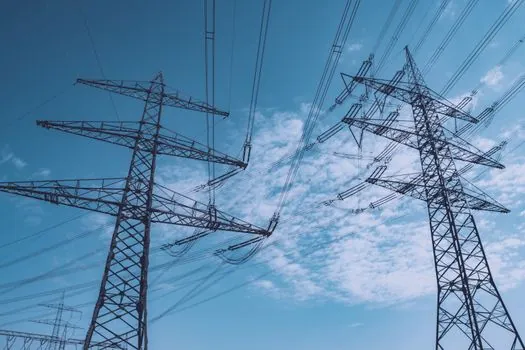
Fusion borrows its bill of materials from four mature industrial sectors, which determines who realistically wins the next supply contracts. Vacuum and plasma-facing components map onto the lamps and light fittings and high-vacuum process-equipment supply chain, which already runs refractory metals, alumina insulators, and high-purity feedthroughs at industrial volumes. Pulsed-power switching and grid interconnection draw on switching power supply and high-voltage power supply vendors serving particle-accelerator and semiconductor-fab customers, where pulse widths in the 1-100 s range and megajoule-class capacitor banks are standard product. [S1]
Cryogenics, magnets, and structural steel come from the construction machinery and equipment and heavy-engineering tier: vacuum vessels, radial plates, and cryostat shells are essentially one-off pressure-vessel fabrications in the 100-1,000 t class, which is the same fabrication envelope that ships fluid couplings for rolling mills and large drives. A fourth cross-cut is instrumentation: tritium accounting, neutron flux, and magnet quench detection depend on two-wire loop-powered 4-20 mA transmitters and safety-rated I/O already qualified under functional-safety regimes, which is the natural entry point for process-instrumentation vendors.
Decision criteria: which fusion concept to supply into
Suppliers cannot hedge across all concepts because the bill of materials diverges sharply. Four mainline confinement approaches are competing for industrial orders in 2026: tokamak, stellarator, inertial confinement (laser-driven), and magnetised-target / pulsed-magnetic concepts [S1][S3]. A criteria-based comparison lines them up against four supplier-relevant decision axes:
1. Tokamak. High Nb3Sn and REBCO tape volume, large D-shaped NbTi coils, massive cryoplant, conventional forging supply chain. Best fit for heavy-engineering and superconducting-cable vendors. 2. Stellarator. Same superconductor and cryogenic base, but with complex 3D coil geometry that pushes custom winding houses and precision tooling. Higher per-unit labour content, lower serial production. 3. Inertial confinement (laser-driven). Driver laser optics, frequency conversion crystals, flame-retardant potting compounds for capacitor banks, and large target chambers. Best fit for photonics, optics, and pulsed-power vendors. 4. Magnetised-target / pulsed-magnetic.
The practical decision rule: a vendor with deep forging, cryogenic, or superconducting-tape capacity is best matched to magnetic-confinement programmes; a vendor with optics, ceramics, or pulsed-power depth is best matched to inertial and magnetised-target programmes. Trying to serve both typically means retooling [S1][S3].
Limits, failure modes, and what is not yet an industrial market

Fusion is not yet a commercial generator. The 2026 regulatory moves clear licensing but do not clear first-of-a-kind engineering: the NRC's proposed rule is still in comment, the EU strategy is a strategy rather than a binding instrument, and no fusion plant has run a continuous net-positive electricity demonstration at industrial scale [S1][S3]. Tritium breeding, blanket first-wall lifetime, and remote handling for activated components are the three open engineering gates that the supply chain cannot de-risk alone, regardless of how many offtake agreements are signed.
For suppliers, the second-order risk is the same as for any first-of-a-kind industrial base: serial production lines are not yet justified, so per-unit costs are custom-engineering costs. Lead times on superconducting tape, beryllium, and large vacuum-vessel forgings remain the gating items, and the Fusion Industry Association trade show was organised specifically to widen the supplier pool precisely because the existing qualified-vendor list is thin [S1]. A buyer sourcing fusion components in 2026 should still expect 18-36 month engineering lead times, not catalogue pricing.
Standards, sourcing, and the regulatory anchors to track
The U.S. side runs on the Atomic Energy Act of 1954 as amended by the ADVANCE Act (signed 9 July 2024), with the NRC's February 2026 proposed rule implementing the byproduct-material pathway; a final rulemaking is still being developed [S1]. The EU side runs through the F4E Observatory and an EU fusion strategy expected in the second half of 2026, layered on top of the ITER project's industrial contributions [S3]. The Reuters Events Fusion Energy 2026 conference in Boston (6-7 October 2026) is the first industry-format venue where the supply-chain workstream is given equal billing with the physics workstream [S2].
For procurement teams watching the sector, the trackable signals for the next 6-12 months are: (1) the NRC final rule on the fusion byproduct-material framework, which determines whether U.S. plants can break ground under a Part 30-style licensing envelope; (2) the EU's H2 2026 fusion strategy text, which will set European supply-chain investment priorities; and (3) the post-event supplier and offtake announcements out of the October 6-7 Boston conference, which will be the first public read on whether the Santa Fe trade show converted into contracted orders [S1][S2][S3].