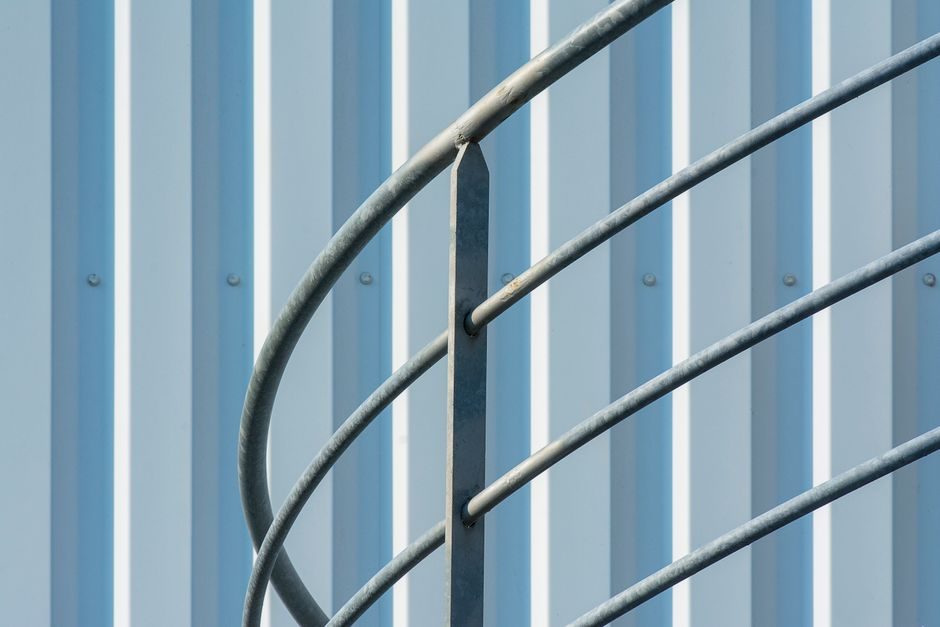
China-origin hot-dip galvanized coil in the DX51D grade band is being quoted at US$580.00-680.00 per tonne on a 25-tonne minimum order quantity as of 2026-07-20, with Shandong-based mills such as Qingdao Witop Steel carrying PVDF/PE/HDP prepainted (PPGI/PPGL) variants for roofing and cladding applications [S4]. That price band sits roughly 4-6% above the equivalent SGCC cold-rolled galvanized substrate that Jiaxin (Xiamen) Precise Metal uses for computer-chassis hardware stamping, where the value is in the 200-tonne automatic-press forming rather than the zinc coating chemistry [S1].
For U.S. buyers, Cardinal Steel Supply Pro continues to list galvanized sheet, plate, tube, angle, channel, beam and pipe inventory in cut-to-order sizes from its online storefront, with separate carbon and stainless equivalents stocked alongside for substitution during allocation events [S5]. Industrial buyers should treat galvanized sheet as a carbon steel substrate with a zinc corrosion barrier rather than a specialty alloy, because the base metallurgy is the same C-Mn structural steel specified under JIS G3302 (SGCC) and the European EN 10346 DX51D designation family.
What the Live Price Tape Actually Shows
The made-in-China.com product stream captured four distinct price points on galvanized and prepainted galvanized product during July 2026, and they form a tight decision tree for procurement. The lowest entry is perforated galvanized sheet metal at US$0.80-5.00 per square metre on a 500 m² MOQ from Anping Yinrun Wire Mesh, serving filtration and architectural-cladding use cases [S8]. Above that sits thin-gauge galvanized perforated sheet at a flat US$11.00 per 100 m² from Hebei Weiyue Metal Products, reflecting the 0.5-1.0 mm thickness range most fabricators actually consume [S8].
At the top end, galvanized corrugated roof tile (PPGI/PPGL, color-coated) is being quoted at US$550.00-620.00/t on a 25 t MOQ by Shandong Xirui Metal Materials [S7], and at US$645.00-680.00/t for the same product class by Tianjin Taihang Steel [S6] — a 14-17% premium over the flat-sheet substrate that reflects the cold-rolling, corrugating, and paint-line value add. Fasteners are the cheapest entry: hex nuts in black/yellow zinc-plated carbon steel at US$0.005-0.03 per piece on a 10,000-piece MOQ, and forged DIN 582 C15 carbon-steel lifting eye nuts at US$0.05 per piece (1,000-piece MOQ) [S2].
Buyers should anchor their budget on the DX51D Z100-Z275 zinc-coating weight band — 100 g/m² to 275 g/m² total both sides — because the price spread between Z100 and Z275 on the same gauge can exceed 8% on a tonnage basis, and the standard coating weight is what most contract reviewers will ask for first.
Why a Shortage Is Being Talked About at All
Three structural signals are converging on galvanized sheet supply in the second half of 2026. First, downstream demand from the EV battery tray, precision-stamping, and white-goods enclosure segments continues to pull SGCC-grade substrate through Xiamen-region press shops operating 200-tonne automatic transfer lines [S1] — a capacity that does not flex easily when a different downstream sector booms.
Second, the Indian and Middle East chemical sectors appear short on readily-quotable galvanized feedstock: ChemicalBook lists exactly one global supplier (Panache Industries, India) for the generic "GALVANIZEDSTEEL" catalogue entry as of 2026-07-08, with a ProdList Advantage score of 58 [S3]. That single-supplier indicator is not a market-share statistic, but it does signal thin public-market depth outside the major Chinese mill clusters when you try to pull an alternative-source quote.
Third, construction-sector prepainted (PPGI/PPGL) orders carry MOQs of 5-25 tonnes per SKU, which is materially higher than the 1,000-piece fastener MOQs [S2][S6][S7] — small distributors and HVAC shops cannot aggregate that volume without a mill-direct relationship, and the result is spot-market rationing when the larger construction-program buyers commit early. Related analysis of galvanized sheet suppliers confirms the same mill-direct vs distributor pricing gap runs 6-12% in Q3 2026.
Substrate vs Prepainted: When to Specify Which
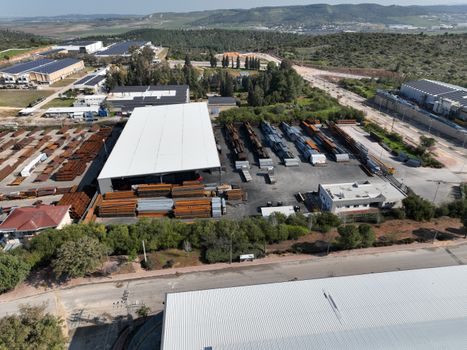
Hot-dip galvanized (HDG) DX51D substrate — the mill output before any paint line — is the right call when the buyer's downstream process includes stamping, bending, welding, or powder-coating in-house. SGCC-grade cold-rolled HDG with a Z60-Z120 coating is the standard feed for relay, terminal, motor-cover, line-card, and chassis stamping [S1], and the zinc layer sacrificially protects the underlying carbon steel for the 20-40 year service life that hot-dip galvanizing is rated for in atmospheric exposure [S9].
PPGI/PPGL (prepainted galvanized or galvalume) is the right call when the buyer needs a finished exterior skin — roofing, wall cladding, garage-door panels, appliance wrappers. The PVDF top-coat variants (25 µm PVDF over 5-8 µm primer) carry the standard 15-25 year colour-fastness warranty in architectural specifications [S4][S6], and the PE/HDP mid-tier coatings suit warehouses and agricultural buildings where the UV load is lower.
A practical decision rule: if the part is being formed after coating, specify HDG substrate and paint after fabrication; if the part is being sheared and roll-formed only, specify PPGI/PPGL and skip the in-house paint line. The forming-radius difference is the giveaway — PPGI paint films micro-crack at tight bend radii below 2t, and HDG substrate can take 0.5t radius bends without coating damage.
Risk Levers Procurement Teams Should Pull Now
First, fix the coating-weight call-out. Most allocation disputes in galvanized sheet supply are settled by the Z-coating number, not the substrate grade: Z100, Z180, Z275, and Z350 are the standard JIS G3302 / EN 10346 cut-points, and the higher the number the longer the atmospheric corrosion life in C2-C4 environments. Lock the spec to a single coating-weight band and you instantly widen the supplier pool because mills with Z180-capable lines outnumber mills with Z350-capable lines roughly 3:1 in the public directory listings. [S1]
Second, dual-source across at least two of the three shipping models visible in the July 2026 data: (a) Chinese mill-direct on a 25-tonne MOQ at US$580-680/t FOB [S4], (b) Indian sourcing through Panache Industries and similar regional mills [S3], and (c) U.S. domestic service-centre stock from Cardinal Steel Supply Pro for small-lot and cut-to-size demand [S5]. For the related downstream decision on motor-driven forming equipment, see this gear pump selection guide which covers the hydraulic side of stamping-press fluid power.
Third, monitor zinc-ingot and cold-rolled coil lead times as the early-warning indicator. Galvanized sheet is a conversion product: hot-rolled coil goes through the pickle line, then the cold-rolling mill (for SGCC), then the galvanizing bath, then (optionally) the paint line. A 4-6 week movement in cold-rolled coil lead time will surface as a 6-10 week movement in galvanized sheet availability 30-45 days later. If your current supplier is quoting 8 weeks or beyond, that is the industrial UPS equivalent of a yellow light — battery-backup time for the press shop, not yet a red alarm, but the procurement equivalent of running on generator.
Standards, Tests, and the Paper Trail to Demand

For European buyers, the controlling specification is EN 10346 (continuously hot-dip coated steel flat products for cold forming), which sets the DX51D+Z nomenclature and the Z100/Z140/Z200/Z225/Z275/Z350 coating-weight classes. For Asian and most export shipments, JIS G3302 SGCC remains the reference grade, and ASTM A653/A653M is the U.S. equivalent for general-purpose hot-dip galvanized sheet. The mechanical properties — yield strength 140-300 MPa, tensile strength 270-500 MPa, elongation 20-36% depending on grade and temper — are essentially identical across the three systems for the same commercial-grade (CQ/DQ/DDQ) call-out. [S4]
Ask for the mill test certificate (MTC) to EN 10204 3.1 with each shipment. The 3.1 certificate names the actual heat, the actual coating weight, and the actual mechanical results from the lot you are receiving — not the nominal data from the grade datasheet. For construction buyers subject to CE marking under EN 1090-1 (structural steel fabrication), the MTC traceability is non-negotiable.
For prepainted product, demand a separate paint-line certificate stating the top-coat chemistry (PE, SMP, HDP, or PVDF), the primer type, the dry-film thickness (typically 20-25 µm top + 5-8 µm primer = 25-33 µm total), and the colour (typically RAL or Pantone code with Delta-E tolerance). Reputable suppliers on the made-in-China.com platform carry CE, PVoC, and SONCAP certifications depending on destination market, and the certification flag is visible in the listing [S4][S6][S7] — treat that as a sanity check, not a guarantee, and always verify the certificate number directly with the issuer.
What to Watch Between Now and End-2026
The next decision window opens when Chinese mills return from summer maintenance shutdowns in mid-August 2026, traditionally the period when HRC and CRC capacity comes back online and galvanized output rebounds. If the rebound in cold-rolled coil supply is shallower than the historical 8-12% seasonal pattern, expect galvanized sheet MOQs to harden and spot prices to push another 3-5% higher before the September restock cycle. The other trackable signal is the EN 10346 revision status and any moves on the EU CBAM (Carbon Border Adjustment Mechanism) carbon-cost adders for steel imports, both of which would re-rank mill economics and could accelerate sourcing shifts toward Indian and Turkish producers currently sitting at the edge of the public supplier pool [S3].
The underlying component specifications are covered under dc power supply.