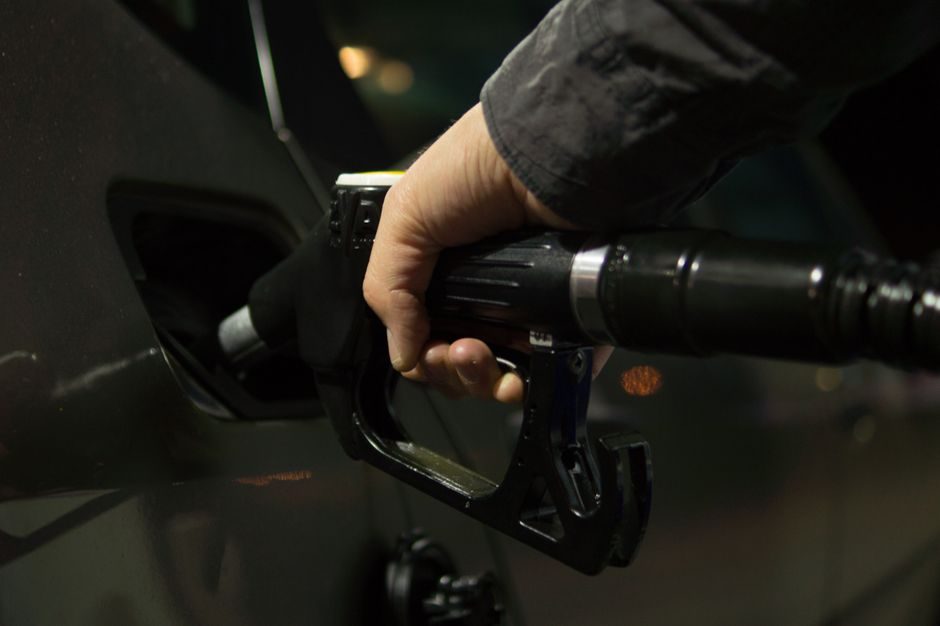
External gear pumps continue to dominate 2026 hydraulic-fluid transfer tenders, with the Made-in-China product index showing Tokheim-type gasoline-dispenser gear units listed at US$999 baseline [S2]. For a process engineer the pump type is dictated by the duty envelope, not the catalog price.
Buyers in 2026 face three primary architectures, internal-external geared idler, magnetically coupled sealless, and stainless sanitary, with the Alibaba Taiwan supplier index showing 941 active exporters competing on plunger, vane, and gear types in the same fluid-power category [S4]. The same source lists top export markets at Mid East 20% and Southeast Asia 20% [S4], which tracks with the fuel-dispenser and chemical-handling pull driving the segment.
Duty Envelope and Viscosity Ceiling
External gear pumps remain the workhorse below roughly 2,000 mm²/s (cSt) kinematic viscosity and at differential pressures up to about 200 bar, which is why they continue to show up in hydraulic power units and lube-oil skid packages [S2]. For polymer or bitumen service above 5,000 mm²/s the call switches to internal-gear or rotary-lobe positive-displacement designs, where the larger tooth-clearance-to-fluid-gap ratio tolerates thick films without hydraulic lock.
Suction-side specific speed (Nss) and the resulting NPSHr curves are the binding limits; a gear pump will cavitate before a centrifugal pump on the same suction line, so a flooded suction or a centrifugal boost pump is mandatory for hot viscous duty. Where the fluid is shear-sensitive polymer melt, a gear pump is preferred over a screw or progressive-cavity pump because the metered flow avoids pulsing and degradation.
External, Internal, and Magnetic-Drive Variants Compared
The dominant 2026 catalog split is straightforward: external gear pumps (two identical spur or helical gears) deliver up to roughly 25 m³/h at moderate viscosity, internal gear pumps (a rotor and an offset crescent-idler, defined separately on the gear pump page) handle up to roughly 120 m³/h on lighter fluids, and magnetically coupled sealless units eliminate the mechanical seal for chemical and hygienic service. Helical-tooth gearing is increasingly standard rather than optional because it cuts the dominant 1× gear-mesh frequency by 8-12 dB(A) at typical 1,450 rpm operating speed. [S2]
A side-by-side shortlist for the 2026 buyer: (1) External helical gear, cast iron body, PEEK bushing, Buna-N lip seal, up to 200 bar differential, best price-performance for lube oil; (2) Internal gear, ductile iron, bronze idler bushing, mechanical seal with flush plan, up to 16 bar differential, best for viscous polymer and resin transfer; (3) Magnetic-drive stainless, 316L housing, SiC thrust faces, Hastelloy containment can, up to 25 bar differential, best for solvents, acids, and clean-room service. The third option is the only one that drops the mechanical seal, which removes the dominant leak path but caps differential pressure at the rated magnet torque limit.
Materials, Bearings, and Seal Architecture
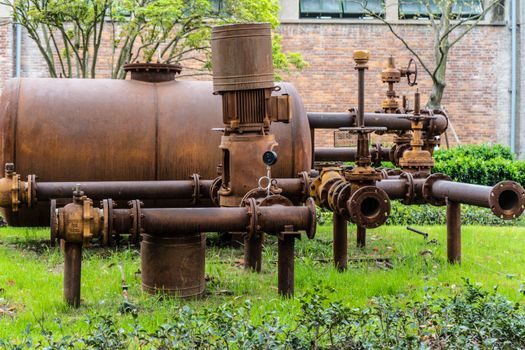
Bushing material sets the wear life and the fluid compatibility envelope: bronze on iron is the lube-oil default, PEEK or PTFE on hardened steel extends to solvent and chemical service, and silicon-carbide wear faces on magnetically coupled builds address abrasive slurries. The shaft sealing architecture scales with the fluid hazard class: lip seals below 80 °C and clean fluid, single mechanical seal with Buna-N or Viton elastomer for oils up to 180 °C, double seal with barrier fluid for hydrocarbons above 200 °C, and magnetic coupling (sealless) for toxic, hygienic, or volatile fluids.
A 2026 selection pitfall is specifying a Buna-N O-ring on a hot oil service above 120 °C continuous; FKM (Viton-class) fluoroelastomer extends the ceiling to roughly 200 °C, and perfluoroelastomer (FFKM) is the 250-300 °C option for aromatic hydrocarbons and amine systems. On the rotor-shaft side, parallel-shaft units connect to the driven machine through a flexible coupling, most commonly a gear coupling when shaft misalignment and torque density both matter, with the trade-off in torsional wind-up explained on the broader industrial gear reference page.
Speed, Flow, and Pressure Calibration
Volumetric displacement is the geometric product of gear tooth volume per revolution, so flow at the pump discharge equals displacement × rotational speed × volumetric efficiency, with ηᵥ typically 0.92-0.96 for a healthy external-gear unit at rated pressure and 0.85-0.90 for internal-gear units at the same pressure. A 100 cc/rev pump at 1,450 rpm with 0.94 efficiency delivers 136 L/min, while 0.85 efficiency drops that to 123 L/min, a 9.5% line-item loss that auditors routinely catch on commissioning flow tests. [S2]
Higher tip speeds raise the gear-mesh tone into the 2-5 kHz band, where the spectral noise is harder to attenuate. Differential pressure is set by the bearing load capacity, with bronze bushings typically capped near 16 bar, PEEK at 25 bar, and rolling-element bearings pushing 200-250 bar in helical-gear hydraulic pump units.
When a Gear Pump is the Wrong Choice
Gear pumps are the wrong answer for clear-water high-flow transfer above 500 m³/h, where a centrifugal pump is cheaper and more efficient, a duty mapped in detail on the centrifugal pump selection guide. The same applies to abrasive slurry above 5% solids by weight, where the close-running gear flanks wear rapidly and progressive-cavity or peristaltic designs last several times longer. [S2]
Shear-sensitive fluids in biotech and food, where shear at the gear mesh damages cells and emulsions, are also outside the design envelope, and a diaphragm pump or peristaltic pump is the correct specification. For hygienic food-grade transfer below 200 L/min, an external-gear pump with 316L wetted parts, polished to ASME BPE surface finish, can still meet the duty, but it must be specified as EHEDG-cleanable, not as a generic chemical pump.
Standards, Testing, and Sourcing Discipline
The binding international references for 2026 gear-pump specification are API 676 for general-purpose rotary positive-displacement pumps (which covers external and internal gear units in 3rd edition scope), ISO 4409 for hydraulic pump performance test methods, and ISO 5198 for petrochemical and chemical industry gear-type pumps. Hydraulic variants fall under ISO 4413 for hydraulic-system general rules, and ATEX 2014/34/EU category 2 (or IECEx equivalent) becomes mandatory when the pump sits in a Zone 1 hazardous area on a fuel or solvent skid. [S2]
Specify a documented shop test, preferably a hydrostatic test at 1.5× rated differential pressure and a performance test at 100% rated speed, 100% rated pressure, and 100% rated flow, with curves recorded. The supplier list on Made-in-China and Alibaba for 2026 still shows wide price variance on nominally identical dispenser pumps, with the Made-in-China baseline at US$999 [S2] and Alibaba Taiwan-listed hydraulic-pump suppliers quoting from below US$1 million turnover up to US$10 million turnover depending on the helical gear reducer and motor package they bundle [S4]. Insist on a published ηᵥ and η_total curve at 25, 50, 75, and 100% rated pressure, and on a signed nameplate, not a generic OEM catalog sticker.
For 2026 shortlisting, run a four-line comparison matrix before release, displacement and speed, differential pressure, wetted material and seal type, and ATEX/IECEx rating with a fifth column for documented ηᵥ at 100 bar. Reject any quotation missing the efficiency curve, since the apparent price gap between two gear pumps almost always closes once the efficiency penalty is capitalised over a 50,000-hour design life. Trackable next signals: the API 676 4th-edition public-comment closure date and the EU Machinery Regulation 2023/1230 transition deadline.