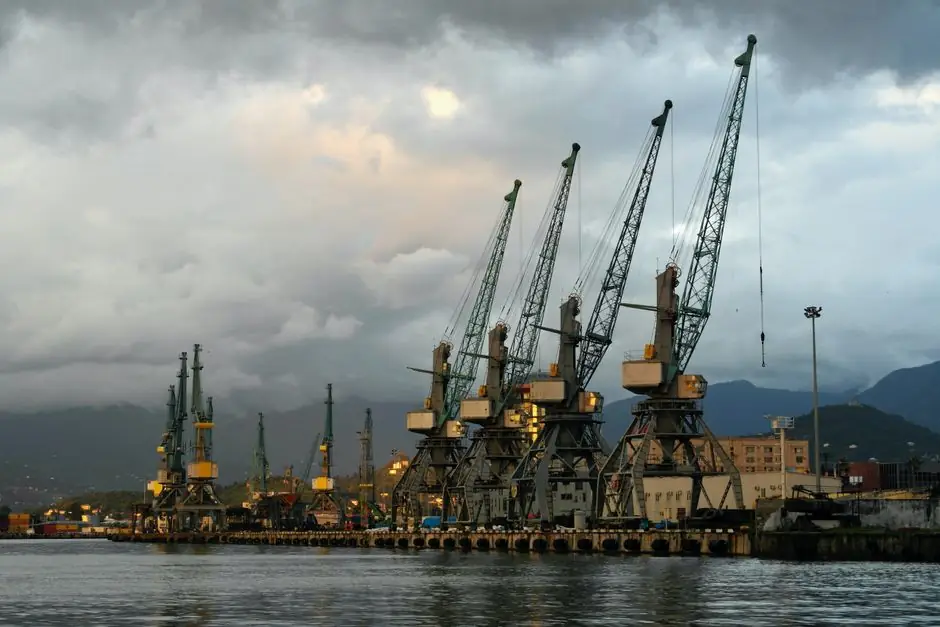
Active landfill cells need a gantry crane sized to the working face, not the worst-case container, because daily-cycle loads on a municipal solid waste (MSW) transfer station typically fall in the 5–30 t range with spans of 15–35 m [S1][S2].
Landfill duty is harsh: methane-rich atmosphere, leachate drip, abrasive dust, and soft subgrade that punish outrigger pads. The selection decision therefore pivots on corrosion protection, mobility on uneven ground, and a hoist class that matches container, bulk-bag, and maintenance lifts rather than peak port-style container weights.
Match Crane Type to the Landfill Workstream
Single-girder gantries cover the lower end of the duty envelope, while double-girder units take over once the lift exceeds roughly 10 t or the span pushes past 20 m, since double-girder designs give better hook-to-wall clearances for container corners [S2][S3]. A semi-gantry, with one leg running on an existing rail and the other on the floor, suits narrow leachate-handling bays where a full gantry will not fit, and the cantilever variant extends the main girder beyond the runway so transfer trucks or roll-off boxes can be picked without repositioning [S3]. Aluminum single-girder portables are common for small-parts and filter-bag lifts because the lighter deadweight allows pneumatic-wheel travel on compacted clay, but the same aluminum frame is not specified for full container cycles where repeated impact loads shorten fatigue life.
Capacity, Span, and Lifting Height Sizing
Capacity selection should start from the maximum single lift the site will see, including a future-proof margin, because under-specifying the hoist is the single most expensive field correction [S2]. Konecranes publishes an envelope of up to 30 t capacity, up to 10 m lift height (with the hook able to run below floor for below-grade access), and spans of up to 35 m across the single-, double-, semi-, and full-gantry families it builds [S1]. The span must clear the widest load plus clearance for the sling or container-handler attachment, and the wheel tread must be matched to the surface the gantry will run on, since soft subgrade at active cells often requires wider steel-clad wheels or rail rather than the narrow casters used on warehouse floors [S2]. Cantilever extensions of 2–4 m on either side are a typical spec to clear a transfer truck parked alongside the runway, and these are dimensioned against the cell width rather than the gantry span [S3].
Material, Drive, and Corrosion Package for Landfill Service
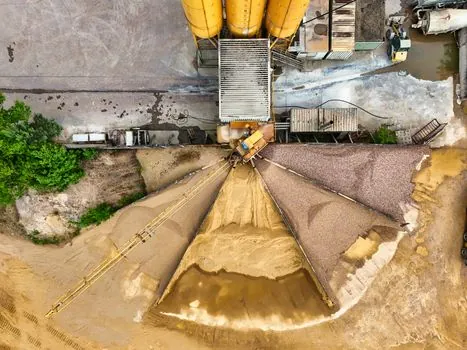
Steel construction dominates the landfill duty class because the landfill atmosphere carries hydrogen sulfide and ammonia from decomposing waste, and aluminum, while corrosion-resistant in clean plants, is not the default for outdoor cells subject to acid mist [S5]. For the running gear, rail- or rubber-tired full gantries with polyurethane-tread wheels are the common choice; rubber tires allow repositioning between cells but require firmer subgrade or mats beneath the wheels, while rails are preferred on permanent transfer-station floors where a long fixed runway is acceptable [S2][S7]. Hoist enclosures, brake housings, and electrical cabinets should be specified to a sealed rating, since leachate drip and wash-down cycles are routine; mining and bulk-handling gantries in the 5–50 t class are typically quoted with enclosed cabs, festooned or reeled power, and dust-protected motors for exactly this kind of abrasive service [S6]. Cantilever gantries for outdoor yards should also be ordered with hot-dip galvanizing or a heavy polyurethane topcoat, because cantilevered members shed debris and standing water more readily than a closed-frame box girder [S3].
Mobility, Setup, and Site Logistics
Mobile gantry cranes on casters or rubber tires allow relocation between cells, which matters for landfill work because the active face moves seasonally and the crane must follow it; foldable aluminum units are widely used for filter, pump, and small-component lifts in maintenance bays, while heavier steel mobile gantries cover container-handling cycles on firmer pads [S7]. Fixed-height frames are cheaper and stiffer, but adjustable-height legs are worth the premium on multi-cell sites where the crane is redeployed between cells of different depths, because adjusting the under-hook height avoids re-slinging awkward loads [S5]. Setup logistics drive a second decision: pneumatic-wheel aluminum portables can be manhandled and assembled without a crane, but a 20 t steel mobile gantry typically arrives knocked-down and needs a small auxiliary lift for erection, which has to be scheduled into cell-closure windows [S7].
Comparison of Gantry Types for Landfill Service
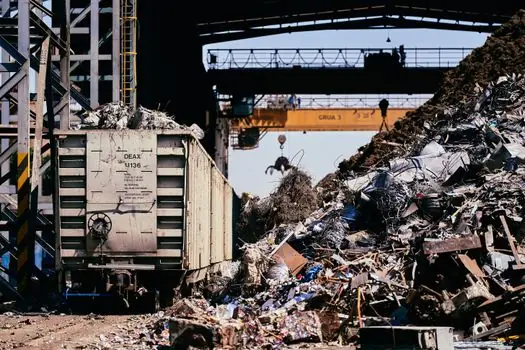
Across the four common configurations, the trade-off lines up against the criteria that matter on a working face:
• Single-girder steel gantry, 1–10 t, span to 20 m: lowest cost per ton, lightest deadweight for soft subgrade, but limited hook approach for tall roll-off boxes; fits leachate pump, IBC, and small-container cycles. • Double-girder steel gantry, 10–30 t, span to 35 m: higher hook height, better for ISO and roll-off container lifts, stiffer under cross-travel, but heavier and demands firmer pads or a rail [S1][S2]. • Cantilever / semi-gantry, 5–20 t, cantilever 2–4 m: picks a truck parked outside the runway line, good for narrow transfer bays, but the cantilever adds bending that limits capacity at full extension [S3]. • Mobile / portable gantry on rubber tires, 1–10 t: relocates with the active cell, fast setup, but limited capacity and not specified for full container duty on a daily basis [S7].
For a single-cell transfer station with daily 20 ft roll-off cycles and a fixed concrete apron, a rail-mounted double-girder full gantry in the 20–30 t class is the common spec; for a multi-cell landfill that follows the working face, a rubber-tired mobile gantry in the 5–10 t class paired with a stationary rail gantry at the transfer pad is closer to what procurement teams actually order. A gantry crane selected on this split avoids the most common field failure, which is a single all-purpose unit that is under-spec for containers and over-spec for maintenance lifts.
Limits, Failure Modes, and What Not to Specify
Three failure modes dominate landfill gantry service: wheel seizure from leachate contamination, structural fatigue at the cantilever root, and electrical failure from condensation inside the hoist housing [S2][S3][S7]. Aluminum single-girder portables should not be specified for daily 20 ft container cycles, because the impact load at corner casting engagement sits above the fatigue envelope most aluminum frames are rated for [S5]. Wide-span semi-gantries should not be ordered without an engineered runway beam, since the cantilevered leg transfers overturning moment into the existing structure, and a misrated host column will crack the building column before the crane reaches its nameplate capacity [S3]. For weigh-and-document operations at the scale house, a crane scale integrated into the hoist is now a routine retrofit rather than a separate platform scale, because it eliminates the double-handling step and reduces the time a loaded container sits on uneven ground [S5].
Applicable Standards and Documentation

Procurement specifications should reference the design rules used by the manufacturer, including FEM 1.001 / 9.341 duty classifications for the hoist mechanism and CMAA 70 / 74 for the structural service class, since these are the two most commonly invoked codes for the 5–30 t class covered here [S1][S3]. For sites with methane readings above 25% LEL, the hoist and motor must be specified to a hazardous-area classification (ATEX 2014/34/EU or IECEx, with the appropriate equipment protection level), and the cab or pendant must carry the same rating as the hoist, not a generic industrial rating. Documentation should include the maximum wheel load on the rail or subgrade, the seismic and wind rating for the cell location, and a corrosion-coating specification that names the standard (for example, ISO 12944 C4 or C5-I for coastal or hydrogen-sulfide-rich sites) rather than a generic "outdoor paint".
For the bulk-handling side of a transfer station, a mobile crane on a separate road often supplements the gantry for off-cell breakdowns, but the day-to-day container and bulk-bag cycle stays on the gantry because the runway alignment is the only way to control hook position accurately over the working face. Track two signals before the next procurement cycle: published FEM/CMAA class assignments on the OEM data sheet, and the OEM's published corrosion-coating standard for outdoor or landfill service; both are now appearing on the same spec page and let a buyer reject a frame quoted only as "painted" without a coating reference.
See also our earlier report, Mining Dump Truck Selection for Road Construction: Payload, Haul Road, and Cycle Match.