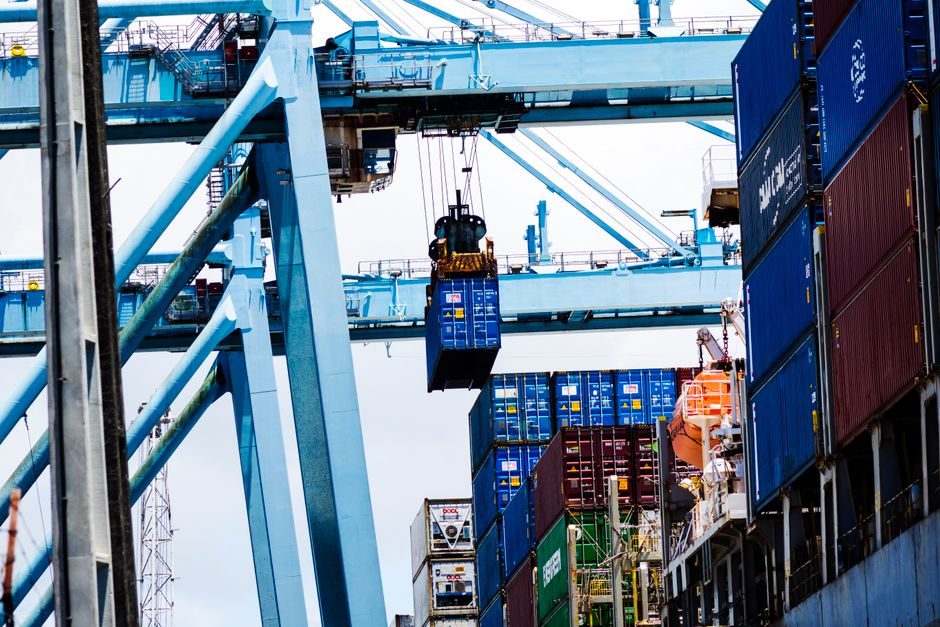
Gantry crane selection is a four-input problem — Safe Working Load (SWL), span between rails, hook lift height, and duty classification (FEM 1.001 / ISO 4301) — and the dominant cost driver is the wheel or rail reaction that sets the runway or track-beam design [S3].
For outdoor yards, shipyards and barge-loading work, mobile gantry cranes are now the default on rubber-tyred wheels (RTG) or rail; for indoor steel stock or machine shops, single- and double-girder bridge-style gantries dominate [S1][S3]. A correctly sized 10 t single-girder semi-gantry typically spans 10–25 m with a hoist lift of 6–12 m, while a 100 t shipyard portal can span 35–60 m with a lift of 25–40 m and a crane weight above 200 t [S3].
Defining SWL, Span, Lift Height and Hook Approach
SWL is the maximum gross load the crane must lift including the heaviest part, the lifting beam, and the sling mass — undersizing by 10–15% to save cost is the single most common specification error and the root of most near-misses [S6].
Span (S) is the clear distance between runway rails, not the centre-to-centre of girders; for a semi-gantry add 1.5–3 m of cantilever on the open side when stacking along a wall [S3]. Lift height is the vertical distance from the floor to the highest hook position and must include at least 1 m of clear hook approach (C) above the load for sling rigging and a 0.5 m safety margin below the upper limit switch [S6]. For very long spans the classical rule of thumb is span-to-deflection limited to L/500 under self-weight plus full SWL, which fixes the girder depth before strength is even checked [S3].
Hook approach dimensions (C) and end-clearance (K) are not negotiable: typical single-girder C-dim runs 600–1100 mm and K-dim 300–600 mm; any spec sheet that does not show them is a red flag [S3]. Wheel loads (P, kN) feed directly into the rail or track-beam and the foundation, so they are the figure the civil engineer asks for first [S3].
Duty Class, Hoist Group and FEM / ISO 4301 Mapping
Hoist and crane classification (FEM 1.001 / ISO 4301) maps the operating cycles per shift against the average load spectrum to set the hoist mechanism group, the girder fatigue class, and the motor sizing [S3].
A steel-stock yard running two shifts at moderate cycle count typically lands in FEM 2m / M5–M6; a shipyard block-handling crane running heavy plates 16 h a day is FEM 4m / M7–M8, while an in-shop maintenance gantry used once a week is FEM 1Bm / M3 [S3]. Get the duty class wrong and you either overpay for an oversized hoist (typical cost penalty 30–60%) or burn out a hoist in 2–3 years [S3].
Hoist group (e.g. FEM 3m) sets the motor kW, gear reducer size, brake rating, and the rope sheave life; crane group (e.g. FEM 4m) sets the girder fatigue, end-carriage bearing life, and runway wheel life [S3]. A common field rule: hoist group ≤ crane group; if the load is heavy and infrequent but the crane is mobile, the bridge/boom group is usually the binding constraint [S3].
Single-Girder vs Double-Girder: When Each Pays Off

Single-girder gantries with underslung hoists (electric chain or wire-rope) are the economic default for SWL up to 10 t and spans up to ~25 m — lighter self-weight means smaller wheel loads, smaller motors, and 15–25% lower procurement cost than a double-girder of equal rating [S3].
Double-girder gantries with top-running trolley hoists become mandatory above ~16 t SWL or where the spec demands higher hook approach (C-dim 400–600 mm better than underslung), faster hoist speeds, or two hoists on one bridge for tandem lifts [S3]. A double-girder 20 t / 30 m gantry typically weighs 22–35 t without the hoist; a single-girder 5 t / 20 m is 4–7 t, and that 5× mass difference flows straight into rail size, foundation, and freight [S3].
For very low headroom shops, low-headroom (NL-type) hoists on single girders recover 200–400 mm of lift versus a standard underslung unit, but cost 8–12% more and constrain maintenance access [S3].
Mobile Gantry, Rail-Mounted Gantry and Telescopic Variants
Mobile gantry cranes on rubber tyres or hydraulic outriggers replace fixed runways where the load is moved between bays or the floor cannot be excavated for rail — typical capacities 2–200 t, span 3–25 m, with a 5–10 t pneumatic-tyre unit on four swivel casters being the most common workshop size [S1][S3].
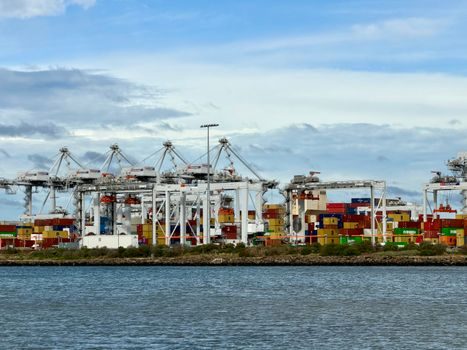
Rail-mounted gantry cranes (RMG) are the right call for container yards and barge terminals: spans 20–50 m, SWL 30–100 t under the spreader, 1.5–3.0 m/s trolley travel and 1.0–1.5 m/s gantry travel, all controlled by VFDs on a bus [S3]. For ship-to-shore (STS) container work, rail reaction per wheel on a 60 m span can reach 800–1200 kN, which is why civil design usually leads mechanical by 4–6 weeks [S2].
Telescopic gantries (adjustable-height aluminium or steel frames) are a niche but listed category for HVAC, glazing, and site erection where the load is light (≤5 t) and the span/height must be reconfigured per job [S1]. For offshore transport, a sea-going barge with two deck-mounted gantry pedestals has been used to ship fully erected STS cranes — a useful precedent for project logistics where the alternative is heavy-lift vessel charter [S2].
Drive, Power Supply, Control and Safety

Modern gantries are inverter-driven on long travel, cross travel, and hoist, which protects the load and the structure from shock loads and typically pays back the VFD premium in 1–2 years through reduced brake wear and energy use [S3].
Power supply options: cable reel (conductor or festoon) for low-speed indoor use, busbar (single-pole insulated) for outdoor runways, and drag-chain or energy chain for hazardous areas [S3]. For ATEX/IECEx zones 1 and 2, specify Ex d or Ex e enclosures, intrinsically safe pendant or radio, and confirmed compatibility of the variable-frequency drive with the motor insulation (inverter-duty rated to IEC 60034-25) — pairing a standard motor with a high-dV/dt VFD without a sine filter is a documented bearing-failure path [S3].
Mandatory safety stack: upper/lower hoist limit switch, overload limiter (set at 110% of SWL), anti-two-block for hook-mounted lifting beams, travel limit switches on both ends of each motion, phase-failure relay, emergency stop on pendant and bridge, and an audible/visual motion alarm [S6]. For outdoor gantries, add anemometer (cut-out at 72 km/h operation, parked at 88 km/h for non-operating, varies by OEM) and rail clamps or wheel chocks [S3][S6].
Civil Scope, Wheel Loads and Standards
Wheel load P (kN) is the single number the civil engineer needs first; for a 10 t SWL double-girder 22 m span, P typically lands at 60–90 kN per wheel on four wheels, while a 50 t / 35 m RMG sits at 250–400 kN per wheel [S3].
Runway options: I-beam (IPE/HEB) for capacities under 50 t, box girder for heavy duty, and direct rail (e.g. A100, UIC 60, CR 171) for container-handling RMG and STS-class equipment; rail clamping every 600–800 mm, joint fishplates welded, and earthing bonded to the building earth grid [S3]. For sites without a runway, the rubber-tyred mobile gantry distributes load through 4–8 contact patches and is the only practical option — see the mobile crane category for the wider vehicle-mounted family.
Core standards to call out on the datasheet: FEM 1.001 / ISO 4301 for classification, EN 15011 for crane safety, EN 13001 for general design principles, and ASME B30.17 (overhead and gantry) for North American scope [S3]. Installation and dismantling of portal-type gantries must follow a documented method statement with a full-time safety officer — Chinese field guidance treats them as special lifting equipment with divided responsibilities and a unified command structure [S6]. For related fixed-rail handling, the crawler crane and gantry crane encyclopedia entries cover the broader family.
Procurement Reality and Sourcing Levers
Quoted lead times in mid-2026 sit at 30–60 days for standard single-girder gantries up to 20 t and 90–150 days for double-girder 30 t+ units from Chinese OEMs, with rail and electrical add-ons often on the critical path [S4][S5]. Major Chinese manufacturers — Nante, Kuangyuan (Mine Crane), Henan Nybon, Air Technical — list full ranges from 1 t aluminium portable units to 800 t shipyard portals [S3][S4][S5].
Cost levers, ranked: SWL and duty class together (≈40% of price), span and lift height (≈25%), drive and control spec (VFD vs contactor, pendant vs radio, ≈15%), corrosion protection (paint system, galvanising, hot-dip, ≈10%), and brand/region of origin (≈10%) [S4][S5]. A painted C3-environment indoor 5 t / 12 m single-girder is typically the price baseline; jumping to outdoor C4 galvanised adds 10–18%, and Ex-rated adds another 20–35% on the electrical side [S4].
Watch two trackable signals: shipment of fully erected STS-class gantries on sea-going barges, which is becoming a documented alternative to heavy-lift vessel charter for new terminal builds [S2]; and the rising share of inverter-driven light 5–10 t mobile gantries in workshops where fixed runways are uneconomic [S3]. For cross-reference on related lifting tools, the crane scale and linear guide pages are useful adjacent reading.
For related coverage, see Best Titanium Alloy for Pharmaceutical Equipment: Grade Map and Selection Logic.