
A centrifugal pump is selected by three coupled numbers — required flow, total dynamic head, and NPSH available — over the maximum specific gravity, viscosity, solids content, and temperature of the fluid [S2]. A 2 hp vertical single-stage stainless model covering 5.2 m³/h (22.9 gpm) at 33 m (108 ft) head with 25 mm inlet/outlet and 3-phase 220–480 V supply is representative of the small end-suction frame on the market [S3].
Choosing the wrong class (e.g., specifying a single-stage end-suction pump where a multistage pump is needed for high head) is the most common cause of cavitation, motor overload, and seal failure on commissioning day. The selection logic below maps duty to construction and material without trusting catalogue curves alone.
Duty Point: Flow, Head, and Fluid Properties
A centrifugal pump's operating envelope is set by the pump curve intersecting the system curve at the design flow Q (m³/h) and head H (m); matching this intersection, not the nameplate, is what guarantees the motor is not overloaded at shutoff [S2]. For light-duty clean-water service, standard end-suction frames hold head up to roughly 100 m in a single stage, while multi-stage builds extend that envelope to several hundred metres for boiler-feed and RO feed duty.
Fluid properties drive the entire material and seal selection. A general-purpose water pump is rated to 80 °C medium temperature, while ISR-type water-ring variants reach 120 °C, and stainless / duplex / Hastelloy / PTFE-lined builds extend chemical compatibility further [S4]. When the fluid is a non-Newtonian or hydrocarbon, the same physical pump head in metres of water must be re-computed against the actual specific gravity using NPSH correction [S2].
NPSHa, Cavitation Margin, and Suction Layout
Net Positive Suction Head Available (NPSHa) must exceed the pump's NPSHr by a margin of typically 0.5–1.0 m at the design point; below that margin, vapor bubbles collapse on the impeller eye and the impeller pitting shows up within weeks [S2]. For hot-water boiler-feed and hot-oil circuits the margin tightens because vapour pressure rises faster than system pressure, and the only fix is lowering the pump, enlarging the suction line, or stepping down to a gear pump for low-NPSHa services.
CPspec's NPSHA module defaults to a 1-stage suction line that the user edits for length, fittings, and static head, then compares against the manufacturer's NPSH3 curve from the data sheet [S2]. Real plants that skip this step end up de-rating the impeller, which is more expensive than correcting the suction piping during design. A flooded suction tank mounted 1–2 m above the pump centreline is the cheapest insurance on clean-water duty.
Construction Class: End-Suction, Vertical, and Split-Case

Horizontal end-suction centrifugal pumps (ISO 5199 / ASME B73.1 frames) are the default for general industry: 1–3 in. flanges, 2900 rpm 50 Hz or 3500 rpm 60 Hz 2-pole motors, mechanical seal or packed stuffing box [S1]. They are cheap, easy to maintain, and accept a wide range of standard seal cartridges. Split-case and between-bearing designs dominate flows above ~500 m³/h where end-suction bearing life would suffer.
Vertical centrifugal pumps — sumps, multistage borehole, and inline pipeline boosters — are specified where floor space is limited or the suction source is a pit. The 2 hp vertical 1-stage pump in 25 mm stainless is a typical light-frame booster used in series/parallel for higher flow or head, a configuration that the catalogue explicitly supports [S3]. For solids-laden water (sewage, slurry, paper stock), the open-impeller self-priming sewage and end-suction variants in the Jushi catalogue are the workhorse pattern [S1].
Material Selection by Fluid Chemistry
Cast iron with stainless impeller handles clean water and glycol up to ~80 °C; stainless 304 / 316 is the baseline for mildly corrosive chemical duty; duplex 2205 is required above roughly 600 m head in chloride-bearing brine; PTFE- or Teflon-lined cast iron extends compatibility to strong acids where a metallic pump would fail in days [S1]. Plastic (PP, PVDF) chemical pump bodies lift the temperature ceiling only when the seal elastomer is matched (EPDM, FKM, FFKM).
Verder's Packo stainless centrifugal range, machined from solid stainless, is targeted at hygienic, pharmaceutical, and fine-chemical duties where surface finish (typically Ra ≤ 0.8 µm) and CIP/SIP capability matter more than raw head [S7]. For phosphoric-acid duty with suspended silica and gypsum fines, vendor guidance for plastic chemical pumps notes that the temperature ceiling is set by the pump body material plus the seal material — not by either alone [S1].
Mechanical Seal, Drive, and Standards Compliance

Mechanical seal selection is the single biggest determinant of MTBF on a chemical centrifugal pump. Seal face material (carbon vs SiC vs tungsten carbide), secondary seal elastomer (EPDM, FKM, FFKM), and seal chamber geometry (plan 11/52/53A flush) must all be specified against the fluid's vapour pressure and temperature, not against water defaults [S1]. Single seals are acceptable for non-hazardous service; double seals with barrier fluid are mandatory for flammables, hot oils above 200 °C, and oxygen service.
For driving, a fixed-speed 2-pole or 4-pole motor is the cheapest option but penalises part-load efficiency; a VFD on the same frame is standard practice when the duty cycle spends more than 30 % of operating hours below 70 % of design flow. ISO 5199 covers the dimensional envelope for chemical end-suction pumps, ASME B73.1 is the North-American equivalent, and API 610 governs oil & gas / heavy-duty refinery pumps with heavier casings, larger shafts, and 3-year continuous-duty warranties. Frame sizes stay cross-referenced between ISO 2858 (footprint) and ISO 5199 (mechanical) so spares stay interchangeable across vendors.
Pump Family Comparison on Selection Criteria
Single-stage end-suction (ISO 5199): 5–500 m³/h, head up to ~100 m, 80 °C clean water or chemical with seal flush; cheapest first cost, easiest spares. Multistage (ring-section or barrel-casing): 5–1000 m³/h, head 100–800 m, boiler-feed / RO / mine dewatering; higher cost, more bearings to maintain but lower flow per stage. Vertical cantilever / sump: 5–2000 m³/h, low NPSHa sumps, abrasive slurries; no submerged bearing in flooded-suction models saves seal failures. Magnetic-drive / diaphragm-pump style seal-less variants: zero-emission chemical duty; cost premium 30–80 % over sealed end-suction of the same size but eliminate the seal as a maintenance item [S1][S7].
The decision branches in this order: (1) classify fluid — clean water, abrasive slurry, corrosive chemical, hygienic; (2) fix Q and H at the worst-case operating point; (3) confirm NPSHa minus NPSHr > 0.5 m; (4) match material to chemistry and temperature; (5) pick construction class; (6) size the motor with a 1.15 service factor. Pumps specified backwards — starting from a frame size in a catalogue and working outward — almost always end up with an impeller trim, an oversized motor, or a seal that the fluid attacks.
Common Selection Failures and Field Telltales
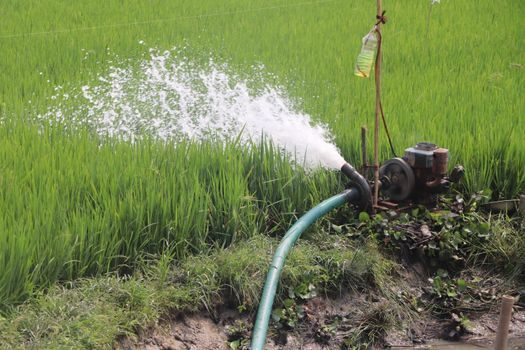
Three patterns repeat in failed selections: the pump is oversized and the duty is met at 30 % of BEP (waste of energy, vibration, premature bearing failure); the seal was specified for water when the line carries solvent (elastomer swells in days); or the impeller material was adequate for the bulk fluid but not for the upset condition during CIP (pitting at the eye within one quarter). When any of these surfaces, the fix is a re-spec against the actual system curve, not a thicker mechanical seal. [S2]
For a related perspective on matching process equipment to duty, see this bulldozer sizing spec map for farms — the same "frame first, duty second" lesson repeats across capital equipment. Once the duty is locked, sourcing from audited Chinese OEM listings (e.g., Made-in-China Centrifugal Pump catalogue, MOQ 1 set, USD 2 500–10 000 for high-performance leak-proof builds) shortens lead time from months to weeks for non-O&G spec lines [S5].
Shortlist Logic and What to Verify on the Datasheet
A clean shortlist has 2–3 candidates that all meet Q/H/NPSHa, then differentiates on efficiency at the design point, seal arrangement, material certificate, and lead time. For each candidate, the datasheet must show the full pump curve (not just one point), NPSH3 curve, power curve, and a confirmed ISO 9906 acceptance grade; certificates to ISO 5199 / API 610 / ATEX 2014/34/EU where the area classification demands it. A 4-pole motor (1450/1750 rpm) trades roughly 20 % head for a doubling of bearing life over 2-pole at the same flow — worth specifying on continuous-duty 24/7 service. [S2]
Track two signals over the next procurement cycle: price-per-kW of efficiency for ISO 5199 frames in the 50–200 m³/h band, and the lead-time spread between audited Chinese OEM centrifugal-pump factories and European / North-American names. Chinese OEM high-performance leak-proof centrifugal pumps list in the USD 2 500–10 000 per set range, against the typical EU chemical-frame list of 3–5× that, and the gap has narrowed on material certification over the past 12 months [S5]. See also this shot-sleeve spec map for pump and valve HPDC tooling for the upstream casting side of the same supply chain.