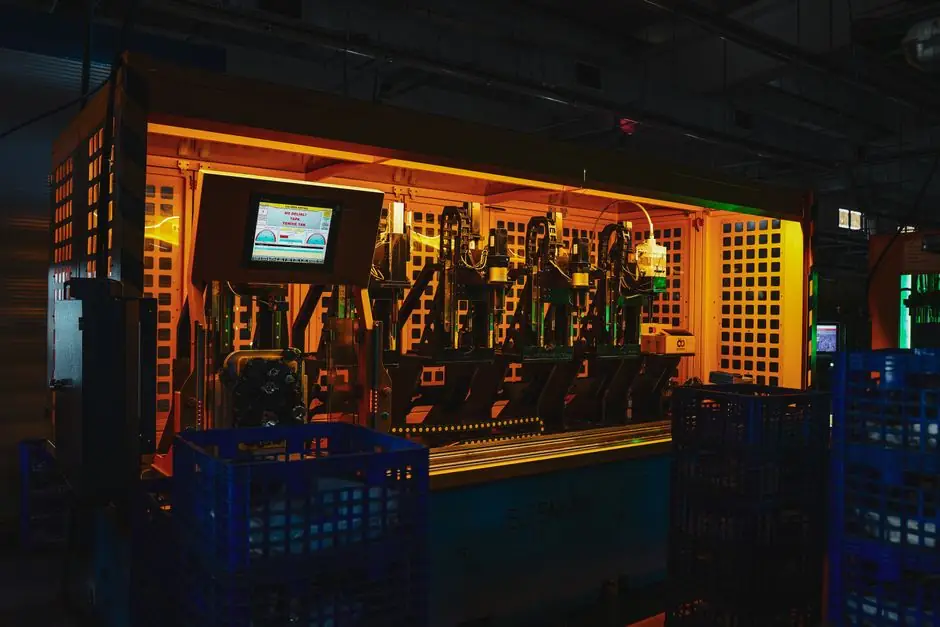
Helical, planetary, and spur gear drives split the workload on a modern packaging line by speed class, torque class, and positional accuracy, with helical gearmotors dominating conveyors and fillers, planetary and harmonic units taking indexing and palletizing, and spur gears covering low-cost torque transfer in auxiliary drives [S1][S2][S3].
For conveyor duty, packaging OEMs commonly specify three-phase helical gearmotors in the 0.18-2.2 kW band with output speeds of 10-300 rpm, mounting configured to B5 flange, B14 flange, or foot-mount depending on the machine frame [S1][S2]. For high-speed pick-and-place, delta robots, and robotic palletizers, low-backlash planetary and harmonic-drive gearboxes are the default, since start-stop accuracy and high cycle rates outweigh the cost premium [S4][S6].
How each gear type maps to packaging functions
Helical gearmotors are the workhorse for conveyors, fillers, sealers, labelers, cartoners, and wrappers because the angled tooth mesh reduces impact load and vibration, which directly protects lightweight bottles, cartons, bags, and labels on the line [S1]. Output speed of a helical gearmotor is set by the formula output speed = motor speed / gear ratio, so a 4-pole motor at roughly 1450 rpm (50 Hz) paired with a 20:1 reducer delivers about 72.5 rpm at the output shaft [S2].
Planetary geared motors cover the same conveyor, filling, sealing, labeling, cartoning, and wrapping functions but in a more compact envelope with higher torque density, which suits multi-motor machines where several gearboxes share one frame and where start-stop duty is frequent [S2]. Spur gears remain the simplest and lowest-cost torque-transfer element in filling, sealing, labeling, boxing, and case-packing equipment, with parallel-axis teeth, straightforward geometry, and minimal maintenance demand [S3].
Selection criteria that drive the decision
Five selection criteria repeat across helical, planetary, and spur guidance: output speed, output torque, gear ratio, mounting type, and motor power, with duty cycle and ambient conditions layered on top [S1][S2]. For a packaging conveyor, output speed is normally 10-300 rpm, and required torque is driven by product weight, conveyor length, belt friction, roller diameter, start-stop frequency, incline angle, shock load, and a safety factor, so a torque margin is recommended for frequent start-stop service [S2].
Motor power for packaging conveyors typically falls into discrete IEC frame sizes: 0.18 kW, 0.25 kW, 0.37 kW, 0.55 kW, 0.75 kW, 1.1 kW, 1.5 kW, and 2.2 kW, with small conveyors stopping at 0.18-0.37 kW and heavier lines stepping to 1.5-2.2 kW or higher [S2]. Mounting options seen on packaging machines include B5 flange, B14 flange, foot-mount, and shaft-mount, while lubrication is either grease (sealed-for-life units on small helical gearmotors) or oil (larger reducers and right-angle units) [S1][S5].
Comparison: helical vs planetary vs spur on decision criteria
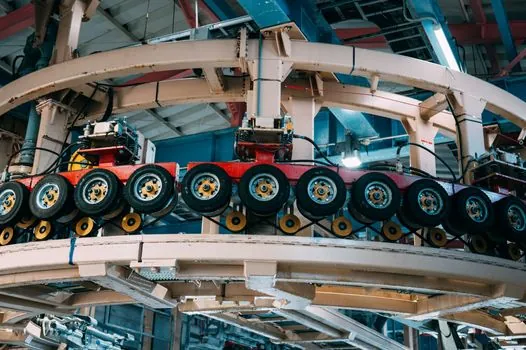
On the four criteria that matter to a packaging OEM, the three topologies line up as follows. Noise and vibration: helical is quietest, planetary is moderate, spur is loudest because of the parallel-axis impact mesh [S1][S2][S3]. Torque density per kilogram: planetary is highest, helical is mid-range, spur is lowest, which is why planetary units dominate servo-driven indexing tables and delta robots [S2][S4][S6]. Cost: spur is cheapest, helical is mid-range, planetary and harmonic are the most expensive, especially for low-backlash grades used on pick-and-place heads [S3][S4].
On positioning accuracy, helical and spur units are adequate for conveyors and fillers, but high-speed cartoning, flow-wrapping, and robotic palletizing require low-backlash planetary or harmonic gearboxes to hold repeatable start-stop control and consistent dosing and label placement [S4]. For a deeper look at how worm reducers stack up against helical and planetary units on a different line, see the Worm Gear Reducer Selection for Automotive Production: 2026 spec map, which covers the same duty-cycle logic from a different angle.
Application-specific fit: conveyors, fillers, indexing, palletizing
Conveyor selection keys are output speed, torque, load weight, belt width, and working hours per shift, with a typical packaging line running one or two shifts and some 24-hour lines where a gearmotor failure stops the entire line [S1]. Filling machines, including liquid, powder, granule, and paste fillers, drive turntables, conveyors, lifting systems, or screw feeders, where smooth motion and stable speed directly translate into filling accuracy and overall equipment effectiveness [S2].
Sealing machines need stable torque to avoid sudden speed changes that break the seal, and continuous sealing units call for motor and gearbox combinations rated for long-term operation [S2]. Labeling accuracy is governed by conveyor speed stability, which is why both helical and planetary gearmotors are routinely paired with a frequency inverter on higher-end packaging machines to trim speed on the fly [S1][S2]. Rotary indexing tables for packaging machinery add a positioning-consistency requirement on top of speed, with the gearbox choice directly setting line speed and long-term reliability [S6].
Integration with servos, inverters, and PLC electronic gearing
Servo-driven packaging axes use electronic gearing in the PLC to synchronize a slave axis to a master axis through a programmable gear ratio, which is the standard technique for label applicators where the label feed must match conveyor speed exactly [S7]. When the mechanical side is a low-backlash planetary or harmonic gearbox, the electronic gear ratio translates cleanly into physical motion; backlash in the mechanical path shows up directly as label or cut-position error at the output [S4][S7].
For inverter-driven helical and planetary gearmotors, the mechanical output speed of 10-300 rpm is the floor the inverter modulates around, not a fixed setpoint, and gear ratio is chosen first so the motor runs in its efficient band before the inverter trims speed [S2]. To see how this same electronic-gearing logic plays out on a different motion axis, the Dial Indicator Training Fit: Spec Map for 2026 Selection covers the mechanical-tolerance side of a comparable positioning chain.
Failure modes, limits, and what to derate
For helical gearmotors, the dominant failure modes are oil-seal leakage, bearing wear under shock load, and overheating when the torque margin is too small for the start-stop duty, all of which the source guidance flags as reasons to oversize rather than undersize [S1][S2]. Spur gears, by contrast, are limited by tooth-impact noise and the absence of thrust-load sharing, which is why they tend to lose out to helical and planetary units on high-speed packaging lines even though their geometry is the simplest [S3].
Planetary and harmonic gearboxes introduce their own constraints: low-backlash grades cost more per newton-meter, and high cycle rates combined with high acceleration push the gearbox into the critical component on pick-and-place and delta-robot axes, so the unit must be sized for dynamic load, not just static torque [S4]. Across all three topologies, packaging OEMs should derate for continuous operation, frequent start-stop, incline on conveyors, and ambient temperature, and treat the published kW and rpm as starting points rather than fixed selections [S1][S2][S5]. For a sense of how spec maps handle duty-cycle and service-factor decisions on a different reducer family, the Worm Gear Reducer Selection for Pulp and Paper: Ratios, Efficiency, and Service Factor walks through the same margin logic from a mill-duty perspective.
Sourcing checklist and what to confirm before ordering
Before signing a purchase order, the practical checklist from the source material reduces to seven items: required output speed (rpm), required output torque (Nm) with safety factor, motor power (kW) at the IEC frame size, gear ratio that maps motor speed to output speed, mounting style (B5, B14, foot, or shaft), input voltage and phase (single-phase or three-phase), and the duty cycle including starts per hour and ambient conditions [S1][S2].
For the packaging machine category as a whole, the consistent signal across 2026 supplier guidance is that helical gearmotors remain the default for conveyors and fillers, planetary and harmonic gearboxes are specified wherever the line has a servo-driven indexing or palletizing axis, and spur gears stay in the auxiliary-drive slot where cost matters more than noise [S1][S2][S3][S4][S6]. The next node to track is whether servo-driven electronic gearing continues to pull planetary and harmonic gearboxes deeper into mid-speed cartoning and flow-wrapping duty, which would further squeeze the helical-only specification on high-end lines through the rest of 2026 [S4][S7].
For component-level specifications, see logistics packaging, and packaging material.