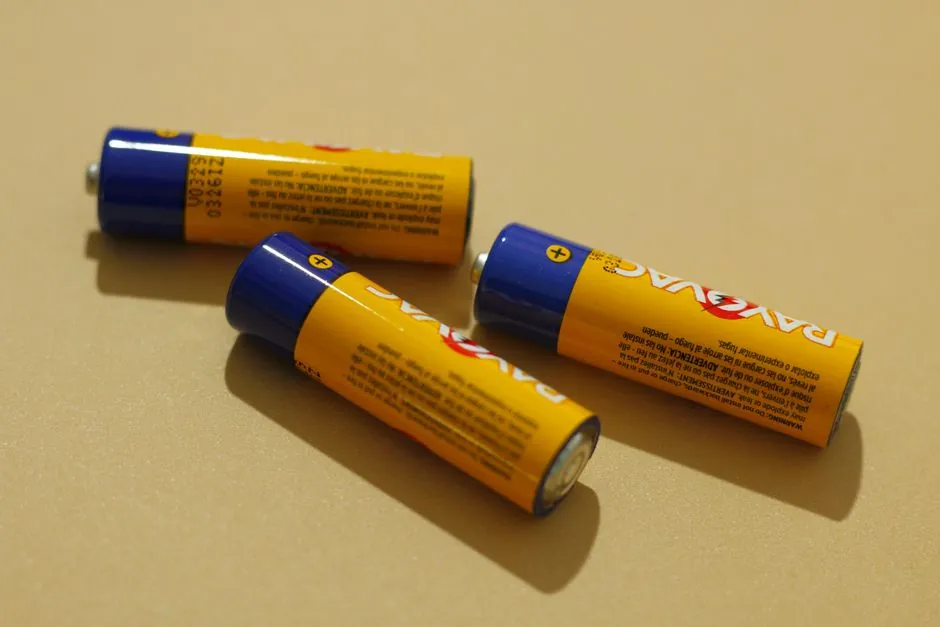
Global grid-scale battery storage deployment reached 108 GW of new capacity in 2025, a roughly 40% year-over-year increase, anchoring a market that the IEA classifies as having taken on a larger system role in grid balancing [S5].
Lithium-ion chemistries retained roughly 52% of the stationary storage segment by share, with battery energy storage systems (BESS) capturing approximately 52.34% of the broader energy storage market by storage-system type in 2025 [S3][S8]. The U.S. EIA tracks this expansion through its March 2026 update on large-scale battery storage capacity by region and ownership [S1].
Manufacturer Share: Tier-1 Cell and System Integrators
The August 2026 market-research landscape consistently names six Tier-1 players across cell manufacturing and system integration: CATL, Tesla Energy, LG Energy Solution, Samsung SDI, Fluence Energy, and Siemens Energy [S4]. These six anchor the global storage supply chain, with Chinese cell makers (CATL in particular) holding the largest share of LFP cell shipments feeding utility-scale projects in Asia-Pacific, North America, and Europe.
Asia-Pacific leads on installed-capacity share at approximately 48.3%, driven by China's 14th Five-Year Plan mandate requiring provinces to pair at least 10% of new renewable capacity with multi-hour storage [S4]. North America is the fastest-growing region at a projected 30.8% CAGR, while Europe holds the second-largest share at 18.2% under the REPowerEU plan. The U.S. Energy Information Administration breaks U.S. large-scale battery capacity down by region and ownership type in its March 2026 battery storage trends release, a useful reference for anyone sizing domestic procurement [S1].
Technology Split: Lithium-Ion Dominance, LFP Cost Curve
Batteries commanded a 57.6% share of the overall energy storage market by technology in 2025, with LFP cells having displaced nickel-manganese-cobalt chemistries in stationary applications and driving pack-level costs below USD 120/kWh by late 2024 [S4]. On-grid connectivity represented 87.5% of the market, and grid-scale utility applications represented 75.4%, both as of 2025 [S4].
Non-lithium pathways are gaining explicit forecast share: hydrogen-based storage is projected to register the fastest segment CAGR at 35.4% through 2035, addressing seasonal and long-duration discharge profiles that 4-6 hour battery systems cannot economically cover [S4]. For typical utility procurement, the storage rack form factor and containerised BESS enclosures have become the standard build block, and our storage rack reference covers the structural and seismic classifications most RFPs reference. Ancillary handling and staging hardware around those enclosures is covered in the storage handling and storage cage encyclopedia entries.
Use Cases: Peaker Replacement, Ancillary Services, Renewable Firming
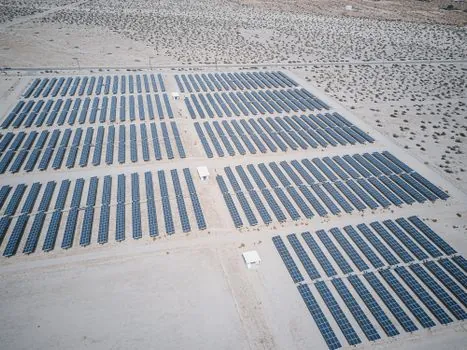
Utilities in the U.S. and Europe are retiring natural-gas peaker plants and replacing them with four-to-six-hour battery systems that stack arbitrage revenue with ancillary service payments [S4]. Japan's grid-scale segment is examined in detail in the Renewable Energy Institute's June 2026 report, which maps the country's policy framework, siting constraints, and capacity-auction outcomes [S7].
For project sizing, ancillary measurement hardware scales with MWh: electronic scale and bench scale platforms handle cell and module QA at the cell-maker or integrator line, while crane scale integration is common during containerised BESS rigging where lifting audits require real-time load readouts against rated SWL. These are not grid-balance controls; they are production-floor and construction-floor instruments that sit inside the supply chain feeding the grid-scale market.
Comparison: Cell Maker vs System Integrator vs EPC
A practical procurement decision lines three player types against four criteria. Cell makers (CATL, LG Energy Solution, Samsung SDI) score highest on cell cost per kWh and chemistry roadmap control, but lowest on project-level EPC delivery and O&M ownership. System integrators (Fluence Energy, Tesla Energy) score highest on turnkey delivery and software stack (controls, EMS, warranty), but typically source cells externally. EPC and OEM majors (Siemens Energy) score highest on grid-tie compliance, HV/MV switchgear integration, and bankability, but typically price above pure integrators. [S4]
Bankability and ITC-eligibility add a fourth axis: U.S. projects leveraging the standalone storage investment tax credit unlocked roughly USD 7.5 billion in project financing within the IRA's first eighteen months, which has reshaped preferred-supplier lists toward integrators able to document domestic-content thresholds [S4].
Constraints: Supply Chain, Long-Duration Gap, Grid Interconnection
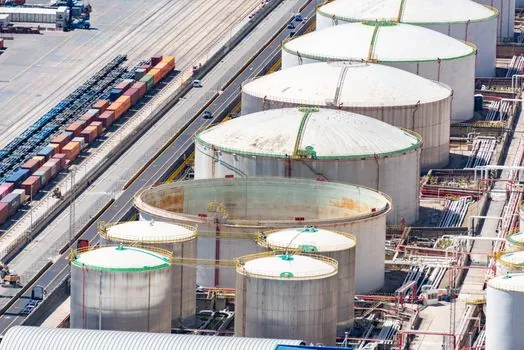
Three structural constraints shape the 2026-2030 buildout. First, long-duration storage above 6-10 hours remains a technology gap that lithium-ion cannot economically close, which is why hydrogen-based, flow, and thermal storage are drawing the 35.4% segment CAGR forecast [S4]. Second, grid interconnection queues in the U.S. (notably Texas ERCOT and California CAISO) and in Germany's Nordics continue to delay project COD by 12-36 months. Third, cell-supply concentration in China creates procurement risk for U.S. and European developers attempting to qualify for domestic-content incentives.
The 2025 base market value of USD 32.4 billion is forecast to grow from USD 39.2 billion in 2026 to USD 226.2 billion by 2035, a 21.5% CAGR across the broader energy storage market that includes pumped-storage hydro, thermal, and hydrogen [S4]. The narrower grid-scale battery subset alone was estimated at USD 10.69 billion in 2024 with a projection toward USD 43.97 billion by 2030 [S2].
Sourcing, Standards, and Trackable Signals
Procurement specifications commonly reference UL 9540 (energy storage systems), UL 9540A (thermal runaway fire propagation), IEEE 1547 (interconnection), and IEC 62619 (secondary lithium cells for industrial applications), alongside NFPA 855 spacing rules for indoor and outdoor ESS installations. The IEA's May 2026 commentary is a good cross-check on year-over-year GW additions, regional deployment splits, and the policy levers driving the next capacity wave [S5].
Trackable signals for the next 12-18 months: U.S. IRA domestic-content guidance clarifications from the U.S. Treasury; the next round of ERCOT and CAISO interconnection awards; the outcome of Japan's long-duration storage subsidy framework flagged in the Renewable Energy Institute report [S7]; and any BNEF or Wood Mackenzie update to the LFP pack-level cost benchmark, which sat below USD 120/kWh by late 2024 and continues to reset utility-scale LCOS figures [S4].
This topic is covered further in Solar PV Glass 2026: Capacity, Pricing Pressure, and the New U.S. Supplier Map.