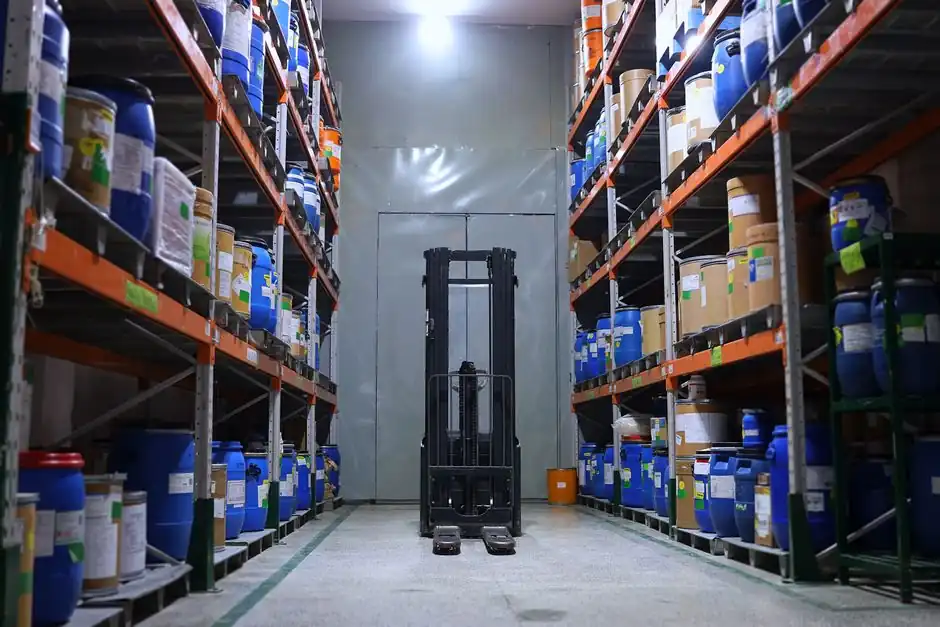
Grid-scale battery energy storage system (BESS) manufacturing in 2026 converges on lithium iron phosphate (LFP) prismatic cells in the 280-314 Ah capacity class, stacked into 1.5-6 MWh DC blocks inside 20 ft or 40 ft ISO containers wired to a 1500 V DC bus, with PCS efficiencies published in the 97-98.5% band and round-trip DC efficiencies specified at ≥92% for AC-coupled designs [S1].
Three cell-format families compete for the same 1500 V pack topology, and the quality audit trail now hinges on cell-level, module-level, and system-level certifications rather than datasheet marketing claims. Procurement teams writing an RFQ in 2026 must therefore map every production step, from dry-room dewpoint to formation cycling, against a defined standard number [S7].
Cell format selection and the LFP quality baseline
LFP prismatic cells in the 280-314 Ah class dominate 2026 utility-scale BESS because aluminium-laminate stacking scales efficiently to 1500 V module strings and tolerates the 0.5-1 C continuous discharge profile typical of frequency-regulation duty cycles [S1]. A typical commercial build uses a 3.2 V / 314 Ah prismatic cell configured as 1P240S, producing a 768 V nominal system with a 636-864 V operating window, as catalogued in one 241 kWh all-in-one outdoor cabinet SKU [S3].
Large-format cylindrical cells (e.g. 46 mm diameter, 105 mm height form factors) offer better radial heat rejection and cleaner mechanical venting, but require 2-4× more cell-level welding per kWh; cell-to-pack blade formats push volumetric energy above 160 Wh/L at pack level [S1]. The trade-off matrix a sourcing engineer should write into an RFQ: prismatic = lowest $/kWh, blade = best energy density, cylindrical = best safety margin under nail-penetration abuse. Cell-cycle verification commonly references IEC 62619 accelerated life testing, with 92% capacity retention reported after 6,000 cycles at 1 C charge/discharge and 25 °C ambient for the LFP chemistry tier [S5].
Module and container line quality gates
Pack-assembly lines for utility BESS operate in dry rooms at dewpoint ≤-40 °C, with -40 °C to -60 °C typical for LFP stacking, to keep cell-jelly moisture below 200 ppm before laser welding of busbars and tab-to-tab interconnects [S1]. After cell stacking the line transitions to BMS PCB mounting and high-voltage harness routing, before the battery pack is closed inside an ISO container with HVAC, aerosol or perfluorohexanone fire suppression, and a 1500 V DC combiner.
Module-level production verifies the cell monitoring, balancing, and protection stack against over-voltage, under-voltage, overtemperature, and short-circuit thresholds during end-of-line test [S1]. Fire-safety design at the module tier commonly includes a dedicated thermal-runaway vent channel, per-cell independent temperature control, high-pressure box arc-extinguishing, and fused sprinkler heads paired with NFPA 69 explosion-prevention and ventilation for IDLH gases, as specified in one 3.44 MWh containerised BESS datasheet rated IP54 with liquid-cooled battery chambers [S4]. Operating-temperature envelopes for outdoor cabinets in this class run from -30 °C to 50 °C with derating above 45 °C, and the same datasheet quotes a 0.5 P rated charge/discharge rate with battery voltage range 1160-1228 V [S4].
BMS, PCS, and the 1500 V DC bus integration envelope
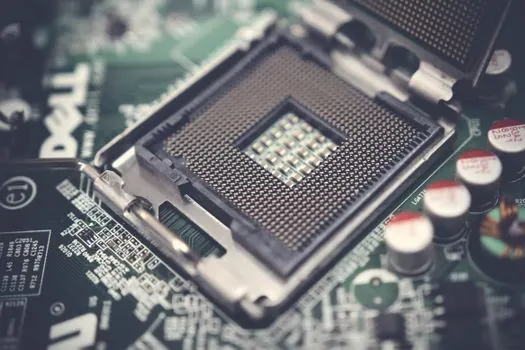
The battery management system inside a 1500 V BESS block is typically a master-slave architecture: a battery management unit (BMU) per module, a battery control unit (BCU) per rack, and a system controller managing the full container; communication runs CAN-bus internally and Modbus TCP or IEC 61850 externally to the plant [S1]. The 3.44 MWh reference unit, for example, exposes RS485 plus Ethernet interfaces running Modbus RTU and Modbus TCP, with an isolation transformer rated 0.69 kV / 37 kV and ONAN cooling [S4].
Modern PCS units increasingly integrate Gallium Nitride (GaN) and Silicon Carbide (SiC) semiconductors to push peak efficiency above 98.6% under IEEE 1547-2018 test conditions, with sub-100 ms response, real-time reactive power control, and black-start capability [S5]. The PCS-tier specification most procurement teams should fix in writing: maximum current THD below 3% at nominal power, DC component below 0.5% at nominal power, and power factor above 0.99 at nominal power, all of which match the 3.44 MWh datasheet values [S4]. A 100 MW / 400 MWh BESS may deploy 20 × 5 MW PCS units, each rated for ±1.1 pu reactive support and capable of 200% short-term overload for synthetic-inertia duty [S5].
Safety and performance standards: which certificate covers what
Cell-to-system safety evaluation (overcharge, crush, thermal abuse) is governed by UL 1973 and UL 9540, while UL 9540A addresses thermal-runaway propagation testing; no UL 9540A report generally means no utility interconnection approval [S5][S9]. For international deployments IEC 62619 covers industrial Li-ion cells and modules, and IEC 62933-2-2 specifies grid-scale ESS performance and mandates 95% round-trip efficiency verification at 0.5 C, not just lab conditions [S9]. Electromagnetic compatibility for industrial environments falls under FCC Part 15 Class A, not the consumer Class B limit [S9].
Shipping and stationary safety certifications for a 3.44 MWh class container commonly list CE, UN38.3, GB/T 36276, GB/T 34131, and GB/T 34120, with the latter three being Chinese national standards for stationary energy storage systems, BMS, and PCS respectively [S4]. Buyers evaluating Asian suppliers should weigh the OEM-versus-ODM split because, as detailed in this OEM vs ODM in BESS sourcing brief, some vendors offer cell-to-pack integration while others assemble bought-in modules, and the audit trail must be matched to the actual production step.
Digital quality, AI-BMS, and the 2026 adoption curve
2026 production data increasingly feeds back into the quality system through AI-BMS, digital twins, and end-of-line formation analytics, as catalogued in this Energy Storage Industry 4.0 brief. Formation cycling is the longest single bottleneck on a pack line, running at 0.05-0.5 C charge/discharge for 3-7 days per channel, with most 2026 lines targeting 256-512 channels per formation cabinet [S1].
The cell, connector, busbar, and electrical-part monitoring coverage expected at module level is comprehensive and real-time, per the 3.44 MWh datasheet design notes, which include module-core insulation, per-cell independent temperature control, and fire-suppression penetration into each battery module to limit damage in the event of thermal runaway [S4]. Procurement teams mapping this against the standard stack should treat UL 9540A propagation testing and IEC 62933-2-2 round-trip verification as non-negotiable gates, then layer GB/T 36276 and GB/T 34131 for projects connecting to the Chinese grid.
What disqualifies a supplier, and where the audit trail breaks
Suppliers without a documented UL 9540A report cannot secure utility interconnection in most North American jurisdictions, and suppliers citing only data-sheet cycle life without IEC 62619 accelerated-life evidence are exposed on technical-due-diligence reviews [S5][S9]. Projects still in pilot phase, such as the Form Energy 100-hour iron-air Massachusetts installation (prototype validated only at 10 kW scale, MIT Lab 2023) and the QuantumScape solid-state San Jose pilot (50 kWh lab unit, no UL 1642 or IEC 62620 certification filed), should not be treated as commercially deployable grid assets as of May 2024 [S6].
The verification checklist a sourcing engineer can run against any 2026 datasheet: cell chemistry declared as LFP with 3.2 V nominal; cell capacity in the 280-314 Ah band; system voltage within 1160-1500 V DC; PCS peak efficiency ≥97%; round-trip efficiency specified at 0.5 C; certifications naming UL 1973, UL 9540A, IEC 62619, and IEC 62933-2-2; and fire-suppression type declared (aerosol, perfluorohexanone, or water-mist fused-sprinkler plus NFPA 69) [S1][S4][S9]. Materials and solvents used in pack fabrication, including the fluoroketone suppressants in some all-in-one cabinets, should also be checked against the industrial solvent spec map because several common suppressant chemistries have substitute-phase regulatory pressure outside the energy sector.
Track the next two signals: any 2026 IEC 62933-2-2 round-trip efficiency verification update at the 0.5 C test point, and any GB/T 36276 revision clarifying propagation-test methodology for liquid-cooled LFP containers in the 3 MWh-plus class.
For the relevant spec sheets and selection criteria, see additive manufacturing material, air quality monitor, and power quality analyzer.