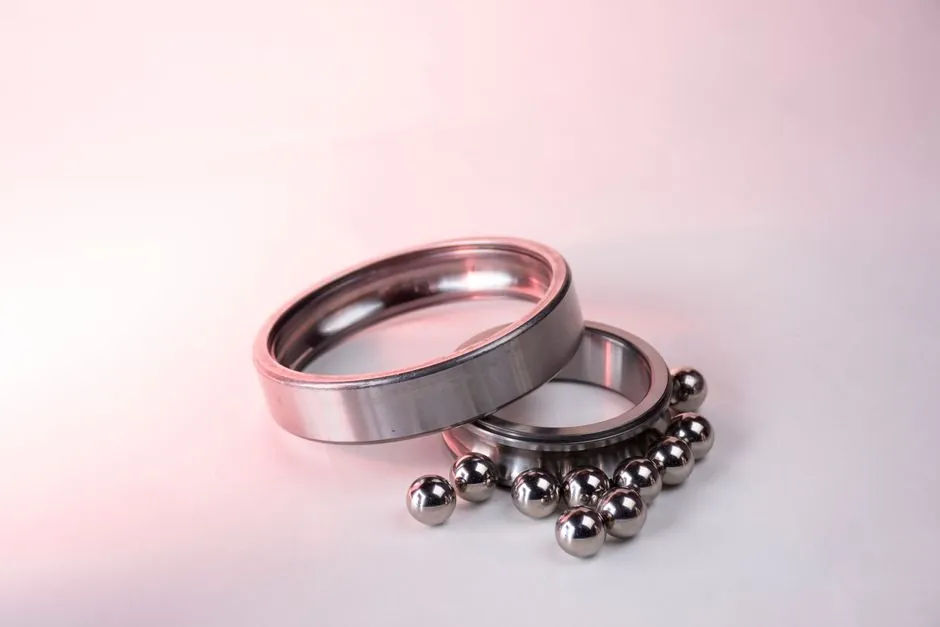
The 2026 premium tier of the harmonic reducer market sits with five suppliers holding the majority of strain-wave-gear value, with Harmonic Drive Systems, Nabtesco, Sumitomo Heavy Industries, Leaderdrive and Zhejiang Laifu forming the leadership block per a 2024-2025 vendor-landscape review [S5].
Below that tier, hundreds of Chinese ODMs in the Guangdong and Jiangsu clusters ship cup-format 14–50 mm units at US$100–400 FOB per piece, with the Guangzhou Haozhi DHS-25-100-U-OC11 (25 size, 100:1, 67 N·m rated torque, ≤60 arcsec transmission error) anchoring the mid-frame reference build [S3]. Rated torque envelopes stretch from 8 N·m in size 14 cup units to roughly 1200 N·m in size 65, and backlash classes still cluster at ≤3 arcmin standard, ≤1 arcmin super precision, and ≤0.5 arcmin ultra precision [S4].
Premium Tier: Japanese and Chinese Champions Hold the Bulk of Strain-Wave Gear Value
Harmonic Drive Systems (Japan, with R&D and manufacturing operations across Japan, Germany and the United States) is the technology originator of the strain-wave topology and sells the CSF/CSG general-purpose, CSD/CPL thin-and-lightweight, SHF/SHG high-torque-high-rigidity, and FHA-C/CHA integrated-joint families, with outer diameters from roughly 14 mm to 200 mm and rated torque from tens of N·m to over a thousand N·m [S1]. The CSG series is rated 30% higher in rated torque, 30% higher in start/stop peak torque, 30% higher in instantaneous maximum torque, 30% higher in ratchet (back-torque) holding capacity, and 42% longer rated life (10,000 hours baseline) than the same-frame CSF unit, while keeping envelope, rigidity, lost-motion accuracy and input inertia identical to CSF [S4].
Three China-headquartered players, Picea Motion (precision harmonic drives, cup-type PMCG form factor), Suzhou Harmontronics Automation Technology (SH:688022, STAR Market listed 2019) and Haitian Smart Solutions, are consolidating the stack into one-stop offerings for 2026 smart-manufacturing cell builds [S2]. Harmonic reducer reference design and selection criteria are detailed in the harmonic reducer encyclopedia entry.
Second Tier: Specialist Strain-Wave Houses and Mid-Frame Chinese ODMs
The Maker Map segment for 2026 lists Wuxi Hemingder Technology (BOER Building, 592 Shengan West Road, Huishan District, Wuxi, Jiangsu) with planetary reducer and reducer-motor sub-lines, PICEA Motion (Shenzhen, +8615603061887, [email protected]) positioned as a China harmonic-reducer R&D house, Shenzhen Homwing Technology (3/F, Building 1, Xinyuan Industrial Zone, Shangwei Park, Guxing Community, Xixiang Street, Bao'an District, Shenzhen 518126) exporting to North America, South America, Eastern and Western Europe, Southeast Asia, Africa, Oceania, the Middle East and Eastern Asia on EXW terms with 1–3 month peak-season lead time, and Hanzhen Harmonic Drive Gear (+8613682198282 / +8613501056375) listing cup-format families from 14-50/52 up to XB1-BS-GF, XB2/6-GF, XB1-BS-C and XB1-AR-GF [S3].
Within this tier, the Guangzhou Haozhi Industrial DHS/DHSG model grid covers hat-type 25 and 32 frames at 100:1 ratio with European-coupling input options, and the CHD Chs-P-I series built at 2066 Yuqiao Road, Pudong, Shanghai publishes a 1-piece MOQ with negotiable price on Made-in-China [S4]. Buyers mapping a CSF-to-CSG migration on existing tooling get a torque and life upgrade with no mechanical re-fit penalty because the envelope, rigidity, lost-motion accuracy and input inertia are identical to CSF [S4].
Sub-Family Positioning: Cup, Hat and Pancake Allocate the Maker Share

Cup-style (CSF / CSG / LCS / LCSG) is the volume workhorse: a flat disc flexspline nested inside a circular spline, with a high-ratio single stage from 30:1 to 160:1, and is the family most 6-axis robot joint, semiconductor handler and machine-tool rotary table designs specify first [S4]. Standard ratio offerings across the CSG/CSF-2UH family sit at 50, 80, 100, 120 and 160:1 in ten frame sizes, giving cell designers a one-platform bill of materials for payloads from roughly 3 kg collaborative arms up to roughly 800 kg heavy-payload cells [S2].
Hat-type (DHS / DCS / HDS) inverts the flexspline into a top-hat profile for smaller OD at the same ratio, and is specified where a through-shaft cable/wiring harness or a hollow-shaft servo must pass through, with the DHS-25 and DHSG-32 lines from Haozhi sitting in this family at 100:1 ratio; pancake / flat (FRS / HPG / FFA) collapses axial length to a few millimetres by moving the wave generator to the rim and is used in satellite gimbals and similar axial-length-bound builds [S4]. The cross-roller output bearing integrated into the wave generator or flexspline is why most robot makers buy a "gear unit with cross-roller bearing" rather than a bare reducer, a point that pairs with the harmonic filter reference for joint-level signal-chain design.
Spec-Band Comparison Across Three 2026 Reference Builds
A side-by-side read of the 2026 reference builds lines up as: Haozhi DHS-25-100-U-OC11 (hat-type, 25 size, 100:1, 67 N·m rated torque, ≤60 arcsec transmission error, mid-frame Chinese ODM); Harmonic Drive CSG-2UH (cup-style, ten frame sizes, 50:1–160:1, premium tier, 30% torque and 42% life advantage over CSF); Haozhi DHSG-32-100-U-OC14 (hat-type, 32 size, 100:1) [S2][S3][S4]. Premium-tier CSG/CSF-2UH holds the standard precision backlash envelope at ≤3 arcmin standard and ≤1 arcmin super precision, with ≤0.5 arcmin ultra precision made-to-order at premium price [S4].
Operating envelope for the 2026 buy starts with four hard specs: ratio window 30:1 to 160:1 for CSF/CSG/LCS cup series, rated torque 8 N·m to roughly 1200 N·m across the size 14 to size 65 envelope, backlash ≤3 arcmin on standard precision units and ≤1 arcmin on super-precision grade, and a wave generator geometry (disc + flexspline + circular spline) that fixes input/output concentricity [S4]. The kinematics differ from RV cycloidal and planetary reducers, and the comparison is summarized in the cycloidal reducer, planetary reducer and RV reducer encyclopedia entries.
2026 Market-Size Context and Robot-Driven Demand Pull
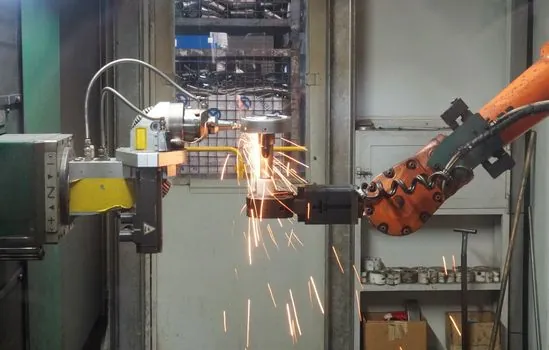
Global harmonic reducer market value was reported at US$3.2 billion in 2025, projected to US$9.4 billion by 2034 at a 12.8% CAGR over the 2026–2034 forecast window, with single-stage product type holding the largest share at 42.6% in 2025 and Asia Pacific accounting for 47.3% of global revenue [S5]. Robotics-related consumption accounted for an estimated 38.4% of global harmonic-reducer revenues in 2025, a share projected to rise above 47% by 2034 as humanoid robots, warehouse automation and surgical robotic platforms proliferate [S5].
Each articulated robot arm typically integrates between three and six harmonic reducers per joint axis, so the upstream pull on the maker map is direct: 2026 collaborative robot market deployments and warehouse robotics demand growth translate one-for-one into cup-style and hat-type order intake for the 14–50 mm cluster, with the matching servo-side stack layered onto the 2026 servo drive competitive map.
Reliability, Sourcing Audit and Failure-Mode Anchors
A 2022 accelerated-life study published in the Journal of Mechanical Science and Technology (Vol. 36, Issue 6) proposed a torque-based step-stress framework that targets the dominant failure mechanisms inside harmonic reducers for manufacturing robots, giving specifiers a calibrated method to convert bench hours to field MTBF without running 30,000-hour endurance tests [S2]. The standard 10,000-hour rated life baseline on the CSF unit extends to 14,200 hours on the same-frame CSG, a 42% gain that lines up with the step-stress framework's torque-domain load mapping [S2][S4].
For 2026 sourcing audits, three actions map to the maker-tier split: demand FMEA and ISO 9001 evidence from the assembly line that builds the gear being purchased; verify the integrator's digital layer (Haitian-class MES/MIS stack) can read joint-level current and temperature data, not just cell-level OEE; and confirm the connector and harness sub-cell that physically carries encoder feedback, motor phase currents and IO-Link signals is built on machinery from suppliers with an installed base at TE, Aptiv, Bosch, Continental and Yazaki, a stack that Harmontronics anchors in the wiring-harness automation line [S2].