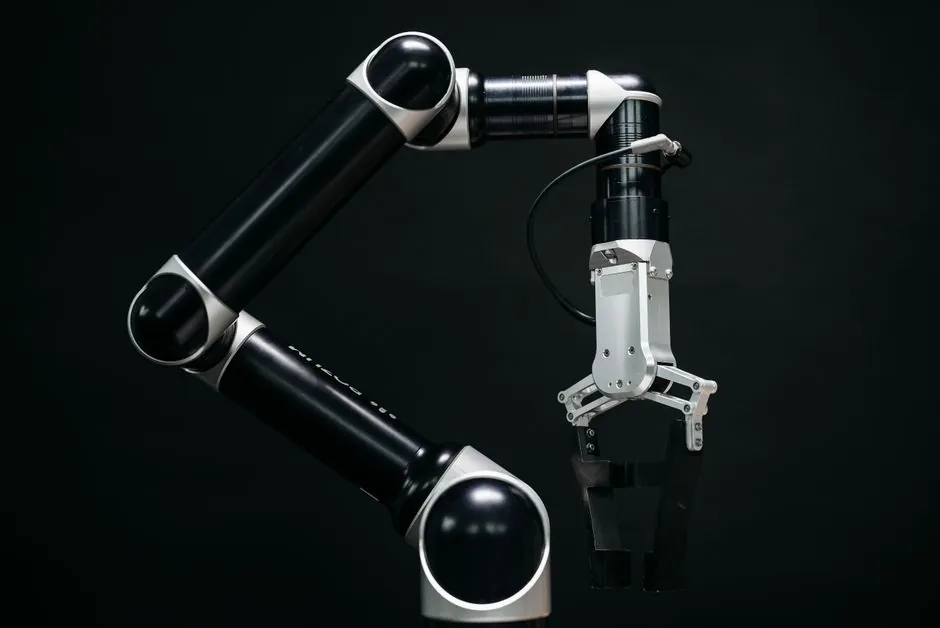
The global warehouse robotics market sits between USD 10.96 billion and USD 15.26 billion for 2026, with Asia Pacific accounting for approximately 39.52% of 2025 revenue and the United States representing about USD 3.21 billion of that base [S2][S5].
Two structural shifts define the buying question in 2026: robotics is splitting into a hardware-dominant core and a fast-growing software layer, and procurement is migrating from custom engineering projects toward modular, plug-and-play platforms configured by system integrators [S4][S5].
Market Size and the Hardware-vs-Software Split
Hardware captured 70.05% to 70.62% of the 2025 warehouse robotics outlay, while software is forecast to grow at an 18.44% CAGR through 2031, the fastest component layer in the segment [S5]. By function, storage held 38.05% of 2025 revenue, with picking and sorting advancing at an 18.11% CAGR and mobile robots expanding at an 18.02% CAGR through 2031 [S5]. The warehouse robotics software sub-market on its own is projected to grow from USD 2.45 billion in 2025 to USD 4.47 billion by 2031 at a 10.5% CAGR [S8].
For operators, this means capex should be benchmarked against two separate curves: a mature, slower-growth hardware line item (dominated by AS/RS, AMRs, and robotic arms) and a compounding software line item tied to fleet orchestration, slotting, and WMS-adjacent AI features. Asia Pacific's 39.52% share and 17.94% regional CAGR reflect China's 44% spike in new warehouse robot installations during 2024, the single largest national acceleration in the dataset [S5].
Picking Robots: DHL and Locus Hit the One-Billion-Pick Milestone
DHL and Locus Robotics announced in March 2026 that their fleet had completed one billion warehouse picks across DHL's global fulfillment network, the largest public deployment metric in the segment to date [S3]. The deployment spans more than 40 DHL-managed facilities worldwide, with Locus's warehouse execution platform coordinating humans and AMRs in the same picking zone [S3].
The scale matters more than the headline: one billion picks across 40-plus sites indicates AMRs are no longer a pilot line item, they are a throughput-critical layer in tier-one 3PL operations.
Vendor Map: M&A, Capacity Expansion, and the Robotics-as-a-Service Model
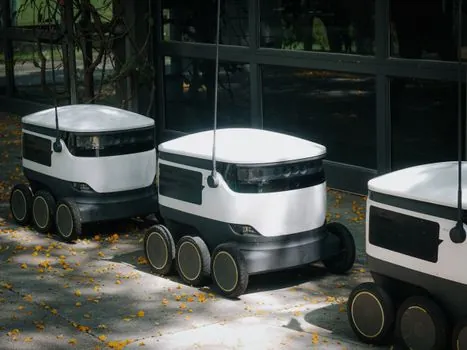
Zebra Technologies acquired Photoneo for USD 350 million in December 2024 to secure 3-D vision IP, one of the largest disclosed 2024-2026 deals in the segment [S5]. Symbotic raised USD 300 million from institutional investors in October 2025 to fund a second US manufacturing plant plus regional service centers [S2]. Dematic broke ground in January 2026 on a USD 150 million, 200,000-square-foot expansion of its Grand Rapids, Michigan plant dedicated to AS/RS, with 300 new jobs attached [S2]. On the RaaS side, Exotec's 2026 framing notes that renting robotics is now mainstream for adding seasonal capacity, though over a multi-year horizon it usually costs more than purchasing outright [S1].
Capacity announcements cluster around the same six-month window, suggesting vendors are pre-building for the 2026-2028 demand curve rather than reacting to current backlog. For buyers evaluating flow meter or pressure transmitter suppliers in adjacent process industries, the relevant parallel is vendor financial health: a USD 350M acquisition, USD 300M raise, and USD 150M plant expansion in twelve months signal that the leading integrators are betting on sustained order books, which improves the case for long-term service contracts and reduces 3PL exposure to vendor failure. 3PL adoption is rising in part because contract lengths were historically too short to justify automation capex, and flexible co-investment plus RaaS frameworks are now closing that gap [S4].
From Custom Engineering to Modular Plug-and-Play
Interact Analysis's mid-2026 update, summarized by research manager Rueben Scriven, restates a clear pivot: the industry is moving away from highly customized systems with bent steel and bespoke code toward modular, plug-and-play platforms that system integrators configure from pre-designed building blocks [S4]. Scriven also acknowledged prior apparel-sector forecasts were too aggressive, while lifting projections for pouch sortation, which is expanding from apparel into healthcare, pharmacy, and parcel facilities to maximize overhead spatial efficiency [S4].
This matters for procurement scope: a modular architecture shortens deployment timelines, lowers change-order risk, and lets operators swap vendors at the subsystem level. It also changes the spec-writing workflow, because buyers now evaluate platform compatibility and API contracts rather than custom mechanical drawings. Adjacent industrial buyers, including those specifying servo motor and PLC architectures, will recognize the same shift toward open, modular control stacks that has played out in factory automation over the past decade.
Regional Outlook: US, Europe, and Asia Pacific

The US warehouse robotics market was valued at USD 3.21 billion in 2025 and is projected to reach USD 21.60 billion by 2035 at a 21.00% CAGR [S2]. Europe was valued at approximately USD 1.96 billion in 2024 and is on track to reach USD 3.67 billion in 2025, with continued double-digit growth through the forecast horizon [S6]. Asia Pacific is both the largest region (39.52% share) and the fastest-growing at a 17.94% CAGR through 2031, anchored by the Chinese installation surge [S5].
Regional divergence shows up in driver mix: North America and Europe lead on OECD labor-pool shrinkage and 3PL investment, while Asia Pacific leads on raw installation volume and government-supported manufacturing capacity. A spec-driven buyer running a multi-region network should expect very different vendor rosters, lead times, and after-sales coverage models on each continent, even when buying from the same global brand.
Limitations, Open Questions, and What to Track Next
Forecast variance is wide. Two reputable sources put the 2026 market at USD 10.96 billion and USD 15.26 billion respectively, a USD 4.3 billion gap that reflects different segmentation and methodology rather than data error [S2][S5]. Humanoid robots remain in pilot: purpose-built AMRs, AS/RS, and robotic arms are what perform reliably in production today, and AI in the warehouse is strongest where data is abundant, structured, and mistakes are cheap, conditions warehouses partially meet but rarely fully [S1]. RaaS lowers the entry barrier but inflates lifetime cost over multi-year horizons, so total-cost-of-ownership modeling matters more than headline monthly fees [S1].
Two signals worth tracking into Q4 2026: whether Symbotic's second US plant comes online on schedule given the October 2025 funding round, and whether Interact Analysis revises apparel-sector forecasts again after the mid-2026 correction, since apparel is a bellwether for broader warehouse capex cycles [S2][S4]. For readers mapping adjacent automation categories, the humanoid robot field 2026 comparison and the global cobot market 2026 manufacturer map cover the two mobile-manipulator segments that increasingly overlap with warehouse picking and palletizing use cases.