
Global revenue across the combined servo motors and drives market is projected to climb from USD 18.43 billion in 2026 to USD 26.93 billion by 2032, a 6.50% CAGR, with the standalone servo drive sub-segment anchoring the closed-loop, high-bandwidth slice of that total [S2].
Forecast endpoints diverge by taxonomy: MarkWide Research sizes the dedicated servo drive market at USD 14.8 billion in 2026 rising to USD 31.1 billion by 2035 at 8.60% CAGR [S6], while Dataintelo tracks servo drivers alone at USD 7.45 billion in 2025 reaching USD 14.53 billion by 2034 at 7.8% CAGR [S3]. The spread reflects whether motor revenue is bundled in, and which voltage classes are included.
Sub-Segment Split: Drive vs. Drive+Motor, and Where Servo Sits Inside VFD
Inside the broader variable frequency drive (VFD) market, MarketsandMarkets lists USD 24.7 billion in 2025 expanding to USD 32.0 billion by 2030 at 5.3% CAGR, with the type-axis split into AC Drive, DC Drive, and Servo Drive [S5]. That taxonomy is the cleanest way to position a servo drive against general-purpose AC drives used on fans, pumps, compressors, and conveyors, where dynamic response and positioning accuracy, not raw kW throughput, drive the procurement decision.
Regional VFD demand in 2025 puts Asia Pacific at USD 10.98 billion, Europe at USD 5.50 billion, and North America at USD 4.95 billion, a distribution that mirrors where the standalone servo sub-segment also concentrates [S5]. The medium-voltage VFD band is the fastest grower inside that stack, projected at 6.1% CAGR from USD 5.26 billion in 2025 to USD 7.08 billion by 2030, but it is largely irrelevant for the servo motor and drive pairing, which lives in the low-voltage, multi-axis, sub-690 V range feeding robotics, packaging, semiconductor handlers, and CNC [S5].
Application Pull: Robotics, Semiconductor, and Injection Molding
Robotics is the fastest-growing application band, with collaborative robot deployments in automotive assembly, electronics manufacturing, and logistics facilities expanding at 9.3% CAGR through 2034, outpacing the overall servo driver market [S3]. Each new robot install consumes multiple servo axes, and China alone is expected to lift its robot density from approximately 250 robots per 10,000 manufacturing workers in 2020 to an estimated 390 in 2025, approaching 550 by 2030, with 3-6 servo axes per robot [S4].
Semiconductor fabs in Taiwan and South Korea are expanding servo drive procurement for lithography and wafer handling systems [S6], and China's installed base of servo-driven axes in factories is estimated to have surpassed 35 million units by early 2026, driving replacement cycles of 6-8 years that account for 35-40% of annual unit purchases [S4]. Injection molding is a separate, slower-growing lane: the dedicated injection molding servo driver segment is forecast at USD 13.3 billion in 2024 expanding to USD 18.1 billion by 2033 at 3.5% CAGR, dominated by closed-loop control types at 58.2% of 2024 revenue [S1].
Selection Criteria That Decide a Servo Drive Buy
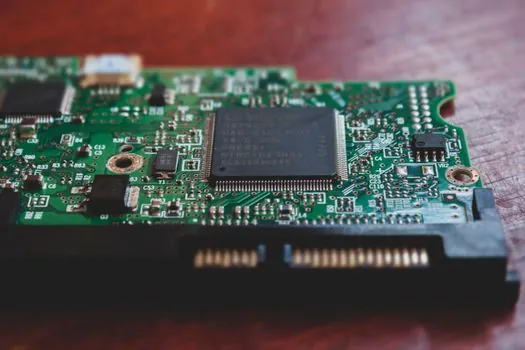
Four criteria consistently separate a servo drive spec from a general-purpose VFD: closed-loop bandwidth, encoder feedback resolution, real-time industrial Ethernet support, and embedded functional safety [S2][S4]. In China, over 75% of new product launches in 2025-2026 support multi-protocol communication stacks including EtherCAT, and safety-enabled models with STO, SS1, and SLS functions are moving from a niche to an estimated 20-25% of new installations by 2027 [S4].
Compact multi-axis servo drives controlling 2-4 motors from one unit are growing at 12-15% annually, driven by space-constrained collaborative robot and mobile automation platforms [S4]. For cement, mining, and heavy process plants, the relevant comparison is to a slewing drive or a drive-motor stack rather than a multi-axis servo, since those applications run open-loop position control with worm or planetary gear reduction, not closed-loop torque regulation; the 2026 collaborative robot market map covers where the multi-axis servo architecture actually dominates.
Comparison of Main Servo Drive Options on Decision Criteria
For a specifier choosing between the three dominant servo drive architectures, the comparison axes are bandwidth, axis count per unit, and typical application. A standalone single-axis AC servo drive delivers the highest bandwidth and is the default for CNC spindles and semiconductor handlers. A multi-axis compact drive (2-4 axes per unit) trades peak bandwidth for footprint and wiring reduction, making it the choice for collaborative robots and electronics assembly. An integrated servo motor and drive (drive-motor) bundles the amplifier into the motor housing, simplifying cabinet layout but limiting serviceability and high-axis-count synchronization. [S4]
On functional safety, the multi-axis compact drive is winning share fastest because it co-locates the STO/SS1 safety chain with EtherCAT communication, while standalone single-axis units remain the preferred pick for retrofit applications where the cabinet layout and existing wiring constrain multi-axis consolidation [S2][S4]. The cobot market 2026 spec map shows that cobot OEMs overwhelmingly specify the multi-axis compact form factor, which in turn pulls the servo drive CAGR above the broader VFD stack's 5.3%.
Regional Outlook: China, Asia Pacific, and the Import-Source Split

Asia Pacific is the largest regional market for servo drivers, contributing USD 3.15 billion in 2025 and 42.3% of global revenue, with manufacturing output in Asian plants expected to grow at 8.2% CAGR through 2034 [S3]. China is simultaneously the largest demand center and a significant manufacturing base, but the production ecosystem remains heavily concentrated in mid-range and entry-level specifications.
Domestic Chinese suppliers have captured an estimated 55-65% of unit shipments in the mid-range and economy segments, yet premium, high-precision servo drivers with sub-1 kHz bandwidth and multi-axis synchronization remain 60-70% import-sourced, primarily from Japanese and European manufacturers [S4]. North America captured 28.6% of 2025 global servo driver market share, anchored by automotive suppliers in Michigan and Ohio serving Tesla, General Motors, and Ford [S3].
Supply Constraints, Lead Times, and Cost Pressure
Supply chain volatility for critical power semiconductors, including IGBT modules and SiC MOSFETs, plus high-resolution encoders, continues to create 8-16 week lead-time fluctuations, constraining production planning for domestic assemblers [S4]. Price competition in the general-purpose 200 W to 3 kW segment has compressed gross margins to the 18-25% range for local Chinese manufacturers, limiting R&D reinvestment into premium feature development.
Regulatory divergence between China's GB/T standards and international CE/UL frameworks imposes dual-certification costs of 3-6% of product value for suppliers targeting both domestic and export markets [S4]. The volatile cost of rare earth magnets and supply chain restructuring are also shaping margin dynamics in the injection molding servo driver segment, where regulatory pressure to cut factory energy consumption continues to favor servo upgrades over hydraulic systems [S1].
Five-Year Demand Track: 2026 to 2030 Endpoints

Stitching the forecasts together, the standalone servo drive market is expected to expand from a USD 14.8 billion 2026 base to roughly USD 22-24 billion by 2030 on the 8.60% CAGR trajectory, while the broader servo motors and drives market rises from USD 18.43 billion in 2026 to USD 26.93 billion by 2032 at 6.50% CAGR [S2][S6]. The injection molding servo driver segment is on a slower 3.5% CAGR track, reaching USD 16.37 billion by 2030 from USD 13.78 billion in 2025 [S1].
Specifiers building 2026-2030 procurement plans should weight their volume toward low-voltage, closed-loop, EtherCAT-capable multi-axis drives in the 200 W to 3 kW range, monitor the 8-16 week semiconductor lead-time window as the binding supply constraint, and track the GB/T versus CE/UL dual-certification cost as a margin line item for any export-bound build. Two trackable signals: the share of new Chinese installations carrying embedded functional safety (target 20-25% by 2027) and the multi-axis compact drive's 12-15% annual growth rate against the broader 5.3-8.6% market CAGR.