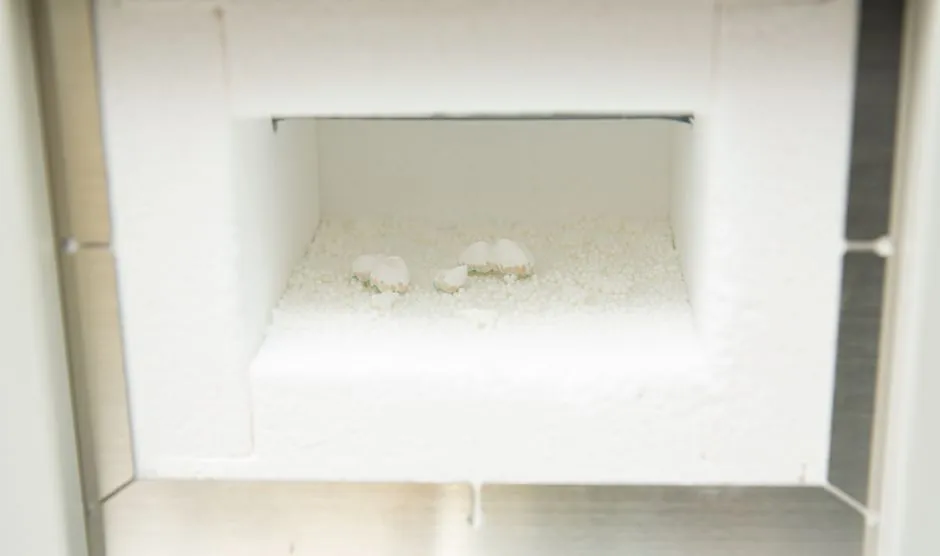
For automotive heat-treatment lines in 2026, furnace selection is driven by part family, alloy, throughput target, and the three recurring shop-floor defects, which are batch-to-batch hardness variation, surface oxidation, and hydrogen embrittlement on plated fasteners, identified in OEM process audits [S2].
Continuous mesh-belt furnaces rated to 1100°C with ±5°C chamber uniformity are the workhorse for automotive fasteners, self-tapping screws, and small gears; vacuum gas-quench furnaces reaching 1300°C with 0.8–10 bar (extendable to 20 bar) nitrogen cooling at 50–100°C/s serve high-stress gears, fuel injectors, and turbocharger components [S1][S4].
Process-to-Part Mapping in Automotive Heat Treatment
Automotive heat treatment is applied to re-engineer the crystal structure of steel, raising hardness, tensile strength, and fatigue life on parts that include transmission gears, engine crankshafts, CV joints, drive shafts, bearing rings, and fastener families from M6 to M20 [S4]. Quenching and tempering, carburizing, annealing, and stress relieving each map to a specific component role rather than to a generic "best furnace" choice [S3].
Tempering, typically performed at 150–650°C depending on the target toughness/hardness balance, is required after hardening to reduce brittleness on tools, gears, and shafts; small temperature variations shift the final properties, so chamber uniformity is a first-order selection criterion [S3]. Stress relieving at 500–650°C for carbon steels is the standard process for welded subframes, large weldments, and machined housings where residual stresses would otherwise distort the assembly [S3].
Comparison of Main Furnace Types for Automotive Production
Five furnace classes dominate automotive specification, and they line up against four decision criteria, which are throughput, surface finish, maximum temperature, and atmosphere control, in the table below. [S2]
Mesh-belt continuous furnaces score high on throughput and offer inert-atmosphere control (N2/Ar) for oxidation-free bright quenching of small fasteners and self-tapping screws, with rated temperature 1100°C and ±5°C uniformity, and 40% energy savings versus brick-lined batch units [S1][S2]. Vacuum gas-quench furnaces score highest on surface finish and cleanliness, reaching 1300°C with 0.8–10 bar (extendable to 20 bar) N2/Ar cooling at 50–100°C/s, which is the preferred route for high-value gears, fuel injectors, and turbo parts [S1][S4].
Pit-type gas carburizing furnaces (rated 950°C, vertical loading) deliver surface hardening by diffusing carbon from methanol/propane atmospheres, suiting gears and bearings that need a hard case plus tough core [S1]. Pit annealing furnaces are specified for long shafts and bars where vertical loading avoids sag during long holds at temperature [S2]. Box or chamber furnaces remain the flexible choice for low-volume specialty work, motorsport components, and complex multi-step cycles [S3][S4].
The 2026 engineering choice is rarely "vacuum or continuous": most Tier-1 automotive plants run a hybrid line, with mesh-belt quench plus washing and tempering sections for fasteners, and pit or vacuum furnaces dedicated to shafts and high-value case-hardened parts [S2].
Selection Criteria Engineers Use in 2026
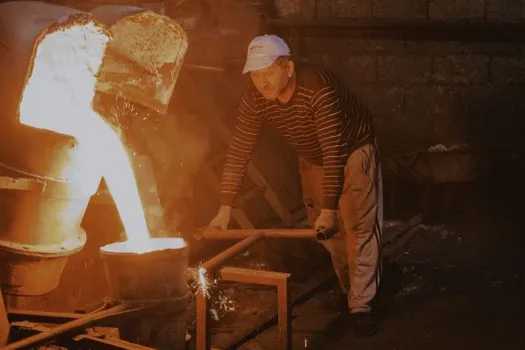
Seven factors drive a defensible furnace spec in 2026, per program-engineering guidance [S10]: (1) target heat-treatment process and alloy, (2) part geometry and maximum batch dimensions, (3) required metallurgical properties including hardness, case depth, and distortion limit, (4) throughput and duty cycle (batch versus continuous), (5) energy source and total cost of ownership, (6) regulatory and safety compliance including atmosphere control and emissions, and (7) maintenance access and uptime targets.
Spec-level numbers anchor each factor. Industrial heat-treatment furnaces in the 75–150 kW electrical class deliver full-load power consumption up to 180 kW, with temperature control accuracy of ±1°C using advanced PID loops, three-phase 380 V AC supply per IEC 60038, cooling water flow 5–15 m³/h, and operating pressure 1.0–1.6 MPa for sealed-quench variants [S9]. Multi-zone independent control holds chamber uniformity to ±5°C, which is the threshold most automotive specs treat as non-negotiable for case-hardened gears [S1].
Process stability and atmosphere control outrank rated temperature for most automotive work, because the dominant defects (hardness drift, scale, decarburization) all trace to atmosphere and uniformity failures rather than to peak-temperature capability [S2].
Use Cases by Part Family and Production Volume
Fasteners (bolts, nuts, self-tapping screws) and small gears are the highest-volume automotive heat-treatment jobs and run most economically on mesh-belt continuous furnaces with integrated washing and tempering sections; controlled atmosphere reduces oxidation and removes post-machining [S2][S8].
Gear sets, bearing rings, and CV-joint components that require a hardened case with a tough core are processed in pit-type gas carburizing furnaces, where vertical loading minimizes gravity-induced distortion during long carburizing holds at 950°C [S1]. Drive shafts, axle beams, and long bars go through pit annealing furnaces for spheroidizing anneal prior to machining, with the vertical geometry preventing sag at high temperature [S2].
High-stress engine and drivetrain parts, including fuel injectors, turbocharger wheels, and high-performance gears, are typically vacuum gas-quenched for an oxidation-free surface and controlled cooling rate, where the 0.8–10 bar (extendable to 20 bar) N2 quench window lets the metallurgist tune cooling to the alloy [S1][S4]. Low-volume specialty and motorsport work still runs through box or chamber furnaces for cycle flexibility [S3].
Standards, Sourcing, and Sizing Benchmarks
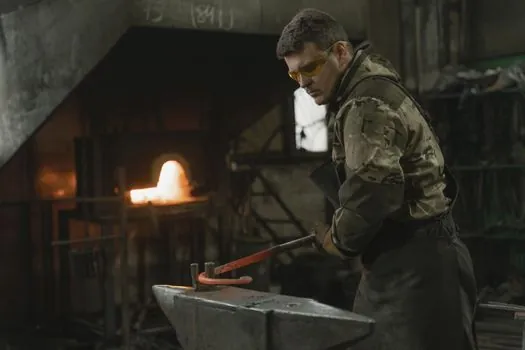
For U.S. and EU plant builds, the governing reference is AMS 2750E for pyrometry and furnace class, with the ±1°C control accuracy benchmark, the 5–15 m³/h cooling-water envelope, and the three-phase 380 V / 50–60 Hz supply per IEC 60038 acting as baseline spec lines rather than optional extras [S9]. Hydrogen embrittlement relief on plated high-strength fasteners is a non-skippable downstream process, and is best scheduled after the tempering section on a continuous line to keep cycle time tight [S2].
When sourcing equipment in 2026, treat the heat treatment furnace spec sheet as a metallurgical contract, not a procurement form, and verify chamber uniformity, atmosphere control architecture, and quench pressure range before price. For parts that require clean, bright surfaces, a vacuum furnace or sealed quench line is the right risk profile; for high-volume fasteners, a mesh-belt continuous line remains the lowest cost-per-part [S4][S7].
Limitations, Failure Modes, and Risk Controls
Each furnace class has a defined failure envelope that automotive buyers should price in. Mesh-belt continuous furnaces constrain part size to the belt width and furnace height, and they lose efficiency on mixed-alloy short runs because each alloy needs a different temperature profile [S8]. Vacuum furnaces are slow on high-volume runs and the 50–100°C/s gas-quench rate is alloy-dependent, so a grade that needs higher cooling rates may require the 20 bar extended pressure option rather than the standard 10 bar [S1].
Pit furnaces carry long heat-up and cool-down cycles that compress daily throughput, and they require robust atmosphere sealing to keep carburizing mixtures from leaking into the shop, which is a safety as well as a quality issue [S1][S2]. Across all types, the three failure modes that surface most often in automotive audits are batch-to-batch hardness drift from poor temperature control, surface oxidation and decarburization from atmosphere failure, and hydrogen embrittlement cracks on electroplated fasteners when the relief bake is missed [S2].
For plants running mixed fastener and gear work, the most common spec mistake is under-sizing the wash and temper sections, which bottlenecks a fast quench line; a balanced line runs quench plus washing plus tempering, with optional annealing on a pit or vacuum furnace as a parallel step [S2]. Engineers sizing crucible furnace or cupola furnace cells for non-automotive adjacent work should keep the automotive heat-treatment line on dedicated equipment to avoid atmosphere cross-contamination.
Procurement Signals and 2026 Sourcing Path
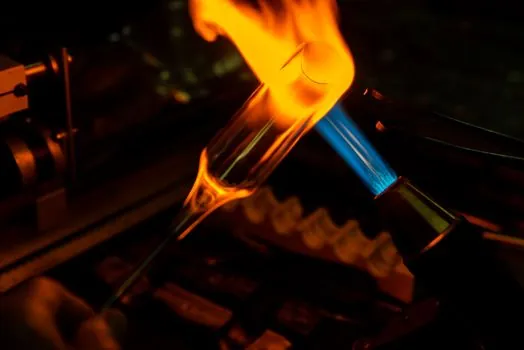
Two signals are worth tracking over the next two quarters. First, OEM process audits through 2026 continue to push for tighter chamber uniformity (±1°C control, ±5°C chamber), and suppliers quoting class-1 AMS 2750E furnaces with documented TUS (temperature uniformity survey) records are the lower-risk path for case-hardened gear work [S9].
Second, energy-cost volatility in 2026 is moving Tier-1 buyers toward fiber-lined mesh-belt furnaces with documented 40% energy savings versus brick-lined legacy units, and toward hybrid lines that combine continuous quench with vacuum or pit finishing on the same plant floor [S1][S2]. Plants commissioning a new line in 2026 should request chamber uniformity data, atmosphere-control architecture, and quench-pressure range on the data sheet, and they should treat those three items as gate criteria before price negotiations begin.
Background reading: Marine Resin Selection 2026: Four-Chemistry Map for Hulls, Decks, and Offshore FRP.