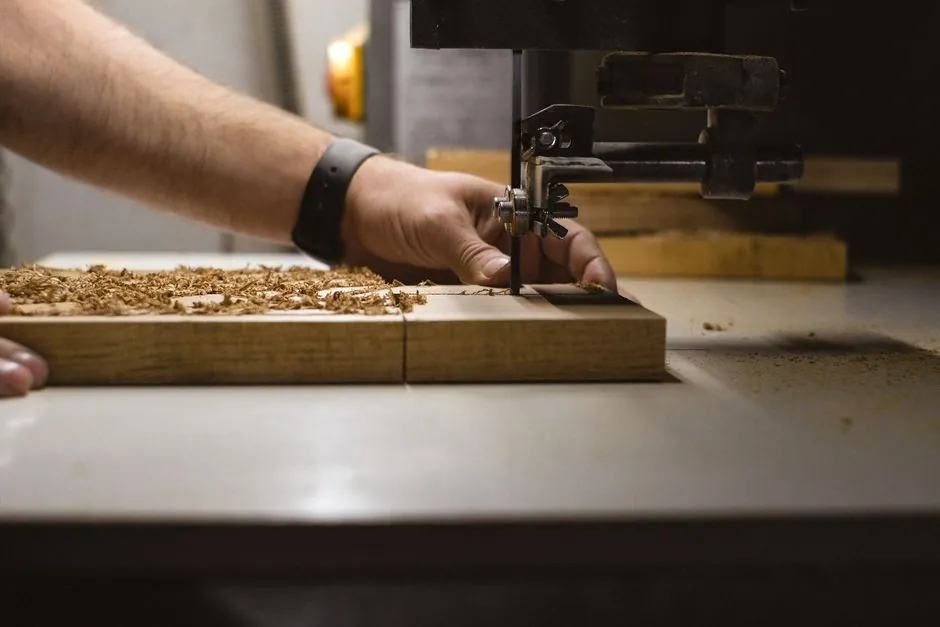
A riser cutting machine, in its 2026 industrial form, is a heavy-duty stationary shear or saw engineered to part 30–200 mm riser necks on gray iron, ductile iron, and carbon steel castings, and the spec band is now stable enough that buyers can pre-select architecture from throughput and alloy data alone [S1][S3].
The category splits into five architectures: hydraulic-piston shear (peak force 50–500 kN, common in automotive cells), pneumatic cylinder (0.5–0.8 MPa shop air, 20–80 mm neck), servo-CNC press (±0.5 mm repeatability), abrasive-wheel saw (300–800 mm wheel, 60–80 m/s peripheral), and band-saw/cold-saw derivatives for risers above 150 mm. Foundries pouring 30,000+ castings per month typically see payback inside 12–24 months, while jobbing shops under 5,000 castings per month rarely justify the capital [S1][S3].
Five Spec Gates That Lock Architecture Before You Quote
The first gate, drive type, is decided by riser neck diameter and alloy: pneumatic riser cutters (0.5–0.8 MPa shop air) handle 20–80 mm iron-foundry necks at 3–6 second cycle times, while hydraulic riser cutters at 10–21 MPa system pressure deliver 5–30 kN cutting force for necks above 80 mm and any high-hardness steel-casting application where pneumatic stall is a measurable risk [S3].
The second and third gates are blade architecture and wheel diameter. Shear blades carry 5,000–15,000 cuts between re-grinds on iron but chip on steel castings; abrasive wheels of 300–600 mm diameter running 2,000–3,800 rpm are the default for steel above 100 mm necks and burn through a 400 mm wheel every 200–400 cuts on hard risers [S1][S3]. The fourth gate, peripheral speed, sits at 60 m/s for general cast iron and non-ferrous work, stepping to 80 m/s for tool-steel gates and clean separation cuts [S4]. The fifth gate, swing-frame geometry, defines the operator's index range, with swing-frame foundry units (500–600 mm wheel class) typically delivering a 90° clockwise and 75° counterclockwise arc that lets a single operator part gates without repositioning the casting [S4].
Throughput, Cut Quality, and the OEE Argument
Hydraulic riser cutters paired with a dedicated indexing fixture routinely reach 200–400 cuts per hour on ductile-iron automotive castings, against 60–100 cuts per hour for handheld abrasive grinding in the same cell, a 3–4× throughput gap that usually shows up first on the OEE dashboard [S1].
Cut-face quality is the second commercial lever: a tuned hydraulic shear leaves a flat parting line that needs minimal fettling downstream, which is why fettling departments are typically the first to lobby for the cell. Riser heads fall as clean, unburnt scrap and return to the charge deck, so a 10 t/day iron foundry can redirect several tonnes of riser steel back to the melt per shift, lowering virgin pig-iron draw [S1]. Cycle counters, hydraulic pressure, and blade-life data feed the machine PLC and roll up to the foundry's OEE layer, which is now standard on cells quoted in 2026. For downstream integration questions, the related coverage in Fettling Grinder Selection for Electronics Housings maps the fettling chain that follows a riser cut.
Capital, Tooling Wear, Dust, and the Real Operating Cost
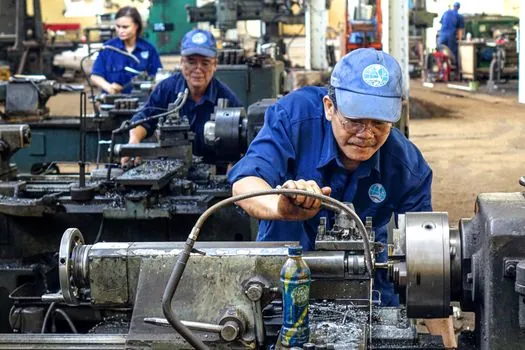
A mid-capacity hydraulic riser cutter carries a capital cost roughly 5–10× that of a manual chipping station, and the operating-cost stack does not stop at the machine: abrasive wheels, shear blades, hydraulic oil, filter elements, and dust-extraction filter bags all sit on a recurring monthly bill, with an abrasive-wheel variant burning through a 400 mm wheel every 200–400 cuts depending on riser neck hardness [S1].
Dust is the underrated problem on abrasive-wheel cells. Cutting cast iron produces metallic and silica-bearing dust that, without a correctly sized extraction unit (typically 4,000–10,000 m³/h for a single cell), breaches occupational exposure limits within minutes of continuous operation [S1]. Hydraulic shear noise sits in the 90–105 dB(A) range, which mandates hearing protection and pushes the cell toward a sound-attenuating enclosure on any line above two machines. Buyers comparing lifecycle cost should normalize on cost per cut, not purchase price, because the consumable line on abrasive cells can exceed the machine's depreciation in a three-year window. A wider view of adjacent process equipment is mapped on the cutting machine encyclopedia page.
Who It Is For, and Who It Is Not For
Riser cutting machines pay back inside 12–24 months on production runs of 30,000+ castings per month where riser neck diameter sits between 30 mm and 200 mm and the alloy is gray iron, ductile iron, or carbon steel, the dominant U.S. and EU foundry profile as of mid-2026 [S1].
They are a poor fit for low-volume jobbing foundries pouring under 5,000 castings per month, where manual chipping or a portable abrasive cutter remains more economic. They are also a poor fit for non-ferrous cells (aluminum, copper-alloy) below 80 mm neck, where band-saw or cold-saw derivatives usually win on cut quality and consumable cost. For specification work on adjacent machine classes, the riser cutting machine encyclopedia page collects the full spec checklist, and the welding cutting tool reference covers blade and consumable standards (ANSI/UAMA B7.1 wheel-speed compliance, ISO 12100 risk assessment, EU Machinery Directive 2006/42/EC) that govern a 2026 quote package [S6].
Comparison: Three Riser Cutter Classes on Four Decision Criteria
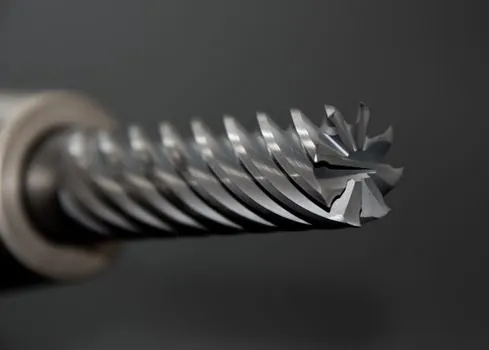
Foundries typically shortlist three classes: portable electric abrasive (240–355 mm wheel, 2000–2200 W), swing-frame rotary foundry cutter (350–600 mm wheel, 60 or 80 m/s peripheral), and dedicated hydraulic-piston shear (peak force 5–500 kN). On maximum riser neck diameter, the portable 355 mm class cuts to roughly 120 mm round bar at 2200 W and 3,800 r/min, the swing-frame class extends to 200 mm+ on steel, and the hydraulic shear handles 80–250 mm iron cleanly with the lowest flash [S1][S3][S4].
On consumable cost per 1,000 cuts, the swing-frame abrasive class is the highest (wheel changes every 200–400 cuts on hard risers), the hydraulic shear class is the lowest (5,000–15,000 cuts per blade regrind on iron), and the portable abrasive class sits between them. On compliance, the portable and swing-frame abrasive classes trigger dust-extraction and ANSI/UAMA B7.1 wheel-speed requirements, while the hydraulic shear class triggers ISO 12100 and EU Machinery Directive 2006/42/EC guarding rules plus a 90–105 dB(A) noise program [S1][S4][S6]. On automation fit, only the hydraulic shear and servo-CNC press classes integrate cleanly into a robotic pick-and-place cell with OEE data logging, and they are economically justified above roughly 1,500 t/year of single-part-number throughput [S3]. The same criteria-mapping logic used to compare Arc Welding Machine Selection for Bridge Construction: 2026 Spec Map applies here: lock the duty cycle first, then the consumable economics, then the compliance envelope.
Standards, Sourcing, and Selection Watchouts
Any 2026 quote package should confirm ANSI/UAMA B7.1 wheel-speed compliance, ISO 12100 risk assessment, and EU Machinery Directive 2006/42/EC conformity for the European market, plus a documented dust-extraction airflow rating (4,000–10,000 m³/h per cell) and a noise measurement against the 90–105 dB(A) operating band typical of hydraulic shears [S1][S6].
Sourcing reality: portable steel-cutting cut-off machines in current catalogues ship at 2200 W rated input, 3,800 r/min no-load speed, and dual 110/220 V, 50/60 Hz voltage capability, while higher-power bench-class units (J1G-ODL-MT240 pattern) push 2000 W in the 240 mm wheel class with a 300-piece MOQ typical from Zhejiang OEM channels [S4]. The Fabricalator's 2005 selection logic still applies: ROI is the gate, not the brochure, and a payback period outside 3–5 years is a signal that the machine class is wrong for the cell, not that the price needs renegotiation [S2]. The next trackable signal to watch is servo-CNC press penetration above the 1,500 t/year throughput line, where recipe-based parameter switching between part numbers is now a decisive buying argument against fixed-stroke pneumatic or hydraulic units.