
Aerospace-spec heat treatment furnaces sold in 2026 cluster around four performance numbers: 1,200°C ceiling, ±3°C chamber uniformity, ≤5 s door-open to quench immersion delay, and AMS2750H (formerly AMS2750E) pyrometric compliance with Nadcap accreditation [S1][S2]. The Dual Chamber Aerospace Steel Furnace from DELTA H, for example, is rated Class 2 (+/- 10°F at 1,950°F) and is built to heat treat titanium, A286, PH stainless steel, and tool steels in air or argon with manual quench in 2-5 s [S1].
Selection is driven first by metallurgical recipe, then by workload geometry, and only last by brand: the same furnace type that solves a forging-shop distortion problem can wreck a thin-wall aluminum extrusion if quench delay and ΔT are not specified up front [S2]. The rest of this map walks through atmosphere, temperature, quench, geometry, controls, and supplier scope for engineers sizing new aerospace cells or auditing existing ones, and ties each gate to verifiable 2026 figures rather than catalogue claims.
Atmosphere Class and Workload Chemistry
Atmosphere is the first filter on any aerospace RFQ because reactive alloys cannot tolerate oxygen or nitrogen ingress above a few ppm, while plain carbon-steel stampings run cleanly in air-fired box furnaces [S3]. Endothermic gas at roughly 20% CO / 40% H₂ / 40% N₂ balance remains the baseline for gas carburising and neutral hardening, whereas nitrogen-methanol or pure-nitrogen/methanol blends now dominate greenfield European plants because in-situ methanol cracking avoids stored endo gas [S3]. For tool steels, die steels and stainless parts requiring oxide-free surfaces, vacuum furnaces at 10⁻³ mbar-class partial pressure of N₂ or Ar with hot-zone graphite or molybdenum are the dominant choice across the 1,100-1,300°C envelope [S3].
Aerospace-grade reactive alloys and titanium-family melts further require a multi-stage vacuum train of rotary vane, Roots blower and turbomolecular pump, reaching 10⁻¹ to 10⁻⁵ Pa, as the default supplier configuration for high-temperature R&D and production systems [S5]. MFC gas manifolds with 4 independent lines at 5-500 sccm are listed as standard for split-tube and CVD-class furnaces used in aerospace materials R&D, giving direct control over inert vs reactive process gas composition throughout the heating cycle [S5]. For purely thermal-processing routes (annealing, solution treatment, aging) under AMS2750 the spec collapses to a sealed chamber with controlled atmosphere plus a documented 50-segment PLC profile, not a high-vacuum envelope [S5]. A separate reference on heat treatment furnace selection for automotive parts walks the same atmosphere logic for non-flight-rated lines, where endo-gas still carries the load.
Peak Temperature, ΔT and Heating Element Class
Peak temperature is non-negotiable because each alloy family has a narrow process window, and the chamber ΔT (the temperature uniformity envelope across the working zone) is the contractual number an aerospace buyer should write into the PO [S3]. Across 2026 supplier data, ±5°C at 850°C is typical for sealed-quench batch furnaces meeting AMS2750 Rev. E class 1 or 2 requirements on aerospace work; ±10°C is the common commodity-furnace baseline; ±15°C is the threshold above which metallurgical consistency on thin case-depth carburised gears becomes a scrap risk [S3]. The Nutec Bickley aluminum solution line on the same envelope is documented to meet AMS2750, AMS2770, AMS2771 and AMS2772 on the aerospace side, with ASTM B917/B917M plus B918/B918M on the standards side, and supports both gas-fired and electric-heated variants [S2].
Aluminum solution heat-treating furnaces on the market reach 650°C (1,202°F) maximum and 150°C (302°F) minimum, with ±5°F (±3°C) temperature uniformity, low-density Incoloy-sheathed electric elements, and high-velocity air recirculation through stainless baffles [S2]. That window covers the aluminum T6 / T7 solution band, the magnesium aging range, and most low-temperature stress-relief cycles for steel stampings; it does not cover austenitising, sintering, or high-temperature ceramic firing, which need 1,100°C+ ratings [S2]. For box-type aerospace builds, the HK Furnace Aero-engine Box-type Heat Treatment Furnace lists 30-150 kW power, 950°C max temperature, 400-900°C working window, 180-2,000 kg loading, and AMS2750G temperature-uniformity compliance, which is the practical shape of a mid-temperature aerospace cell [S8].
Quench Integration and Media
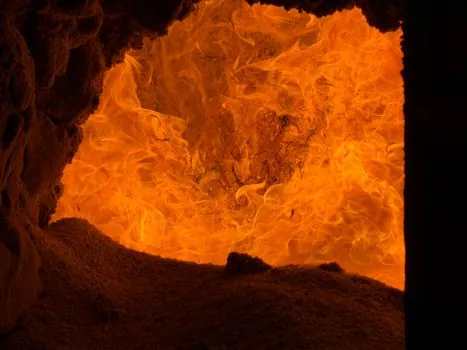
Quench is where most line stoppages originate, and the three structural options are (a) separate chamber furnace with manual transfer, the cheapest first cost and the longest cool delay, usually 8-30 s; (b) integral-quench sealed furnace with internal elevator or drawer quench, transfer ≤5 s, the industry default for alloy-steel aerospace and gear work; (c) continuous mesh-belt or roller-hearth with integrated oil or polymer quench tank, the throughput default for high-volume carbon-steel case hardening [S3]. A 5-second door-open to quench immersion delay, plus a high-agitation water or PAG (Polyalkylene Glycol) tank, are listed as standard features on the same aerospace-rated build, and the optional PAG management system stabilises cooling rate as the polymer ages [S2].
Quench media is a separate decision: fast-quench oil (10-15 s to reach martensite start on 4140), water for plain-carbon low-hardenability steels, and polyalkylene-glycol (PAG) polymer at 5-20% concentration for distortion-sensitive parts where cooling rate sits between oil and water [S3]. Vacuum furnaces almost always pair with high-pressure gas quench (N₂ or He at 6-20 bar) rather than liquid quench, which is why a holding furnace or a crucible furnace line cannot substitute for vacuum hardening on M2 or D2 tool steels [S3]. For aluminum aerospace lines, an optional PAG management system stabilises the polymer's cooling rate as it ages, removing one of the largest uncontrolled variables in solution treatment [S2]. Where induction or vacuum-arc melting replaces heat-treat-only duty, frequency choice inside the induction family is the first sub-decision: medium-frequency (roughly 1-10 kHz) suits ferrous and nickel-superalloy aerospace billets in 50-500 kg batches, while high-frequency units (above 50 kHz, typically 100-400 kHz) are reserved for small lots of 1-25 kg where stirring and melt cleanliness matter more than throughput [S5].
Workload Geometry, Throughput and Heat-Mass Index
Workload geometry is the line-design driver and the most common cause of "the furnace works, but production won't" [S2]. A pit furnace handles shafts, rolls and long cylinders; a top-loading bell furnace suits coils and large ring gears; a sealed-quench batch furnace handles discrete gears and tool-steel dies up to ~600 kg per load; a mesh-belt line processes washers, small pins and fasteners at 200-500 kg/h; a roller-hearth or pusher line serves plates, rings and large case-hardened shafts at 1-5 t/h; a rotary-hearth serves heavy forgings and large ring gears where footprint economy matters [S3]. The first sizing question to lock is the Heat-Mass Index, defined as work mass (kg) divided by effective working-zone volume (m³), and a useful 2026 rule of thumb is that this index should sit between 200 and 600 kg/m³ for sealed-quench batch furnaces, with values outside that band either over-loading elements or under-utilising chamber volume [S3].
For composite-curing duty adjacent to heat-treat cells, the HONGLING DG003 composite-material curing furnace (1-1,000 m³ chamber envelope, room temperature +30-250°C, ±3°C uniformity, 54-540 kW heating power, 5-50 t trolley load) is the kind of utility oven that frequently sits next to a metallurgical furnace in an aerospace build [S4]. Pit builds, as offered in HEAT CONCEPT's product line, are designed for vertical loading of long shafts, rolls and ring-type parts, with optional vacuum purge, oxygen-sensor atmosphere control, CO/CO2 analyser, and temperature recorder interfaces built around the same chamber [S2]. On the throughput side, a mesh-belt furnace running at 1,700°F (927°C) with a controlled endothermic atmosphere can process hundreds of pounds of parts per hour at a far lower labour cost per unit than a batch furnace, which is the trade-off that pushes aerospace fastener and small-gear lines toward continuous gear [S6].
Configuration Family Comparison

For aerospace RFQs, the practical decision sits between five configuration families, and the table below lines them up against the four criteria that drive 2026 purchase orders: temperature ceiling, ΔT capability, atmosphere class, and quench integration [S2][S3]. A sealed-quench batch furnace (e.g. DELTA H Dual Chamber) covers 1,100-1,300°C, ±3-5°C uniformity, air or argon, with manual or integral quench in ≤5 s, and is the default for alloy-steel aerospace and gear work [S1][S3]. A pit furnace (HEAT CONCEPT) reaches a lower temperature ceiling, runs endo-gas with oxygen-sensor loop, optional CO/CO2 analyser and vacuum purge, and is sized for vertical loading of shafts, rolls and ring-type parts [S2]. A box or chamber furnace (HK Furnace Aero-engine Box-type) delivers 400-950°C, ±3°C uniformity, 180-2,000 kg load, AMS2750G compliance, and is the right shape for engine sub-components and tool-room dies [S8].
A roller-hearth or pusher line (continuous gear) feeds 1-5 t/h throughput, runs endo-gas, and suits plates, rings and large case-hardened shafts where the line is the bottleneck, not the furnace [S3]. A mesh-belt line (e.g. fast-throughput fastener duty) runs at roughly 927°C with controlled endothermic atmosphere and processes hundreds of pounds per hour, but the setup and maintenance complexity is higher than batch processing methods, which is why it stays on the volume end of the aerospace supply chain [S6][S7]. A vacuum furnace with hot-zone graphite or molybdenum covers 1,100-1,300°C, ±3-5°C uniformity, 10⁻³ mbar vacuum or N₂/Ar partial pressure, and pairs with high-pressure gas quench (N₂/He, 6-20 bar) rather than liquid, which makes it mandatory for M2/D2 tool-steel hardening and any reactive-alloy cycle [S3]. Choosing between them is the heat treatment furnace decision, and it is driven by the metallurgical recipe before brand preference enters the room.
Controls, Standards and Audit Overhead
Plants specifying to AMS2750 must accept the pyrometric and instrument-calibration overhead the standard imposes; the furnace is only one line item, and thermocouple surveys, TUS (Temperature Uniformity Survey) cadence, and instrument calibration records carry the audit weight [S2]. The DELTA H Dual Chamber system is explicitly designed for AMS2750H compliance, Nadcap accreditation, and USAF/NAVAIR TO 1-1A-9, with supplies and spares for 3 years of service bundled, and supports simple TUS and SAT surveys as standard [S1]. A non-aerospace shop can drop those costs and run a simpler control loop, which is why generic "heat treatment furnace" listings on industrial marketplaces rarely quote a performance envelope [S2].
Specifying above the actual market requirement is one of the most expensive ways to over-capitalise on a heat-treatment cell, and the same logic applies to crucible furnace and cupola furnace lines that share pyrometric overhead but not flight-rated audit weight. A useful control-stack benchmark is the documented 50-segment PLC profile on resistance-heated chamber furnaces with replaceable crucibles, paired with ±1°C class uniformity under AMS2750 for finished or semi-finished aerospace parts [S5]. For the broader OEM view, SECO/WARWICK positions itself as a single-source supplier spanning atmosphere, vacuum and aluminium process lines, while Beacon Machinery sells matched work-handling accessories (retorts, baskets, fixtures) as the supplier's scope widens beyond the furnace shell, and the repair-retrofit-thermal-consultancy layer becomes a real line item once an asset reaches 8-15 years of service [S3]. Material-curing cells adjacent to metallurgical furnaces, such as composite-material curing ovens with 1-1,000 m³ chamber sizes, ISO 9001/14001/45001 certification, and Siemens/Omron/Yudian controls, are typically specified to the same ±3°C uniformity floor as the heat-treat cell they support [S4][S9].
Selection Criteria and Who Should (and Should Not) Specify an Aerospace Cell
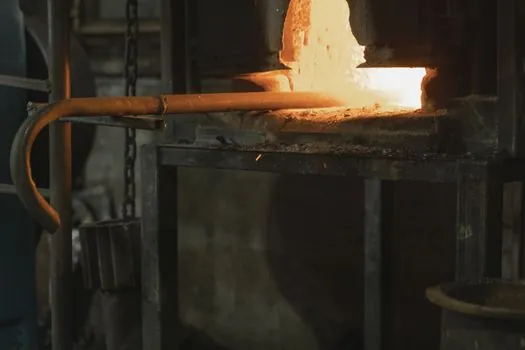
An aerospace heat treatment furnace is the right specification for Tier-1 airframe and aero-engine suppliers holding Nadcap accreditation, for MRO shops heat-treating titanium, A286, PH stainless or tool-steel parts in air or argon to AMS2750H Class 1 or 2 uniformity, and for any cell where the metallurgical recipe demands ≤5 s quench delay and ±3°C chamber ΔT [S1][S2][S3]. It is not the right specification for a general job shop running carbon-steel stampings in air, for high-volume fastener lines where a mesh-belt furnace at 1,700°F with endothermic atmosphere is the cheaper answer, or for a casting foundry that is really shopping a crucible furnace or vacuum arc melter rather than a heat-treat cell [S3][S5][S6].
Trackable signals worth watching: whether a supplier's datasheet actually lists AMS2750H Class 1 or 2 uniformity numbers (not just "AMS2750 compliant"), whether the quench subsystem documents ≤5 s door-to-immersion delay with a media-and-agitation spec rather than a generic "fast quench" claim, and whether TUS/SAT survey cadence is on the PO rather than buried in a service contract [S1][S2]. For 2026 buyers, the deciding question is rarely "which brand" but "which atmosphere-quench-geometry combination matches this alloy family and this Nadcap scope", because that is the spec the audit team, the metallurgist and the production engineer all have to sign off on the same PO.