
Low pressure die casting (LPDC) is the process of choice for automotive wheels, cylinder heads, suspension knuckles and high-integrity aluminium structural parts; in a 2026 supplier index of 13 die-casting OEMs and 52 catalog models, low-pressure platforms are explicitly listed alongside high-pressure cold-chamber, hot-chamber and gravity platforms, confirming LPDC as a standalone machine category rather than a gravity variant [S1].
The defining mechanical signature of an LPDC machine is a pressurised holding furnace mounted on top of a stationary mould, with a vertical shot tube, a low-pressure fill (typically a few hundred millibars to ~1 bar of compressed air or inert gas), and intensification only on the final stage — a fundamentally different pressure/time profile from the 300-1,200 bar cold-chamber fill on a HPDC machine. For buyers comparing low-pressure platforms, selection is driven by alloy, shot weight, platen size, holding-furnace capacity and automation interface, not by locking-force tonnage.
Process Envelope: Fill Pressure, Holding Pressure and Intensification
LPDC fill pressure at the metal surface is commonly 0.2-1.0 bar (20-100 kPa) for aluminium and magnesium, with holding pressure on the casting during solidification set by regulated air or gas on the furnace at 0.5-1.0 bar above the final fill setpoint; intensification stages, when used, raise the local pressure on the rising melt column to counter shrinkage on heavy sections [S2]. The pressurisation medium is dried compressed air or, for magnesium, a protective gas mix (typically SF6/N2 or HFC/N2) routed through a sealed furnace lid — a key safety gate that distinguishes an LPDC cell from an open-top gravity die casting machine.
For buyers, the spec sheet should disclose (a) regulated fill pressure range, (b) holding pressure range and ramp rate, (c) intensification pressure and the maximum intensification force on the shot cylinder (commonly 20-100 kN for mid-range LPDC cells), and (d) the pressurisation medium and its dew-point specification. If the OEM cannot quote a holding-pressure ramp rate in bar/s, the cell will struggle to feed thick-section cylinder-head or knuckle castings where the local solidification time exceeds 60 s.
Alloy, Furnace Capacity and Melt Hygiene
LPDC handles aluminium, magnesium and copper-base alloys; each alloy has a different melt temperature window (aluminium 680-750 °C, magnesium 640-680 °C, copper 1,050-1,150 °C) and a different furnace lining requirement, so the holding furnace is the first hard gate on the BOM [S3]. A 2026 reference casting-services list describes aluminium LPDC as a common production route for wheel and structural components, and the equipment maker list explicitly separates aluminium and zinc pressure die casting services by alloy, confirming alloy-specific furnace and shot-tube sizing in the LPDC class [S3].
Magnesium LPDC is a separate discipline: the holding furnace must be sealed, the cover gas system must maintain an inert or SF6-bearing atmosphere, and the shot tube must be purged before each cycle. The reference directory of 13 die-casting OEMs does not break out magnesium-specific LPDC platforms by name, so buyers running magnesium wheels or EV battery-housing covers should treat the magnesium die casting machine class as its own qualification track, with vendor audit on cover-gas consumption, oxide-removal practice and shot-tube preheat, not just platen size [S1].
Shot Weight, Platen Envelope and Die Stack Height
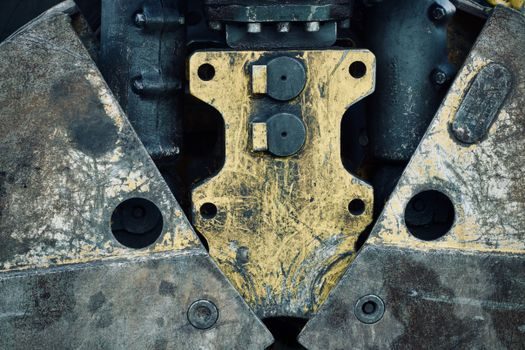
Shot weight on LPDC platforms is set by the shot-tube diameter and stroke rather than by intensifier tonnage; mid-range cells cover 5-30 kg of aluminium per shot, with the upper end of LPDC reaching 50-80 kg for large wheel and chassis castings [S2]. Platen size is the second hard gate: tie-bar clearance and die-stack height must accept the customer's die footprint with the sprue/riser on the lower die half. A 2026 supplier index shows that the most-active LPDC-class vendors list platen sizes from roughly 600×600 mm up to 1,400×1,400 mm, with proportional shot-tube diameters [S1].
If any of these three numbers is marginal, the casting will either under-feed or run with an unsafe sprue ratio, and the cycle-time benefit of LPDC over gravity die casting machine platforms is lost.
Locking Force, Clamp Architecture and Cycle Time
Locking force on an LPDC cell is much lower than on an HPDC cell of comparable platen size — typically 50-200 tonnes for mid-range LPDC platforms versus 800-4,500 t on cold-chamber HPDC — because the mould is not subjected to the dynamic injection load of a 300-1,200 bar shot [S4]. The same supplier reference shows hot-chamber HPDC at 15-90 t locking force and cold-chamber HPDC at 80-400 t, bracketing LPDC as the low-clamp-force, slow-fill alternative in the same OEM's catalog [S4]. Buyers comparing platforms should therefore compare locking force on a per-tonne-of-shot-weight basis, not as an absolute tonnage headline.
Cycle time on LPDC is dominated by solidification (30-120 s for thin-wall structural castings, up to 180-240 s for thick-section cylinder heads), not by clamp open/close, so machine selection should optimise for platen-parallelism stability and tie-bar heating under repeated thermal cycling, not for fast clamp actuation. A 2026 directory of 13 die-casting OEMs lists 52 products in total across LPDC, HPDC, hot-chamber and gravity platforms, with locking-force spread across the catalog rather than concentrated in a single tonnage class — confirming that the LPDC selection problem is multi-axis, not a "biggest tonnage wins" question [S1].
Automation, Controls and Sourcing Reality

The LPDC cell in 2026 is rarely a stand-alone machine: it ships with a PLC or industrial-PC control platform, a die-height adjustment system, a hydraulic or servo clamping unit, an extraction robot interface, and a furnace-skid or launder system that can be coupled to a dosing furnace. The OEM cluster for LPDC is concentrated in Europe (Italy, Germany, Switzerland) and China (Shandong, Zhejiang, Jiangsu), with Indian and Vietnamese job-shops adding capacity at the 1-3 cell scale [S1][S3]. A 2026 Chinese B2B listing of aluminium pressure die casting services quotes unit prices spanning roughly USD 0.90-15.60 per piece at 1-100 piece MOQ for finished castings, illustrating the spread of contract-foundry pricing that should anchor a make-vs-buy decision [S5].
For a buyer comparing an LPDC cell purchase with a job-shop contract, three signals matter: (a) the cell's quoted uptime (industry-typical 85-92% for LPDC versus 75-85% for HPDC, but vendor-specific), (b) the control platform's support for OPC-UA or analogous open protocol for plant-level integration, and (c) the OEM's regional service footprint. Reference foundry listings explicitly market "state-of-the-art technology" and end-to-end tool-design capability as a way to compete against in-house LPDC cells, which is the actual economic threat to a capex business case [S6]. For deeper context on how an LPDC cell's vacuum variant changes the spec gates, see Vacuum Die Casting Machine Sizing: Clamp Force, Shot Weight, Vacuum Level and Die Envelope; for OEM cluster and price-band reality on the related vacuum platform, see Vacuum Die Casting Machine Suppliers 2026: OEM Cluster, Price Bands and Spec Reality.
Limits, Failure Modes and When NOT to Specify LPDC
LPDC is the wrong machine class when (a) the required cycle time is below ~60 s for a thin-wall part, (b) the casting requires draft-free side-action cores that only an HPDC cell can hold against a 300+ bar fill, or (c) the part volume is below ~5 kg of aluminium per shot — in those cases, the cycle-time premium of LPDC cannot be recovered, and a die casting machine in the HPDC class delivers a lower cost-per-shot. The same 2026 supplier index that lists 13 OEMs and 52 products shows that HPDC and hot-chamber platforms dominate the catalog by model count, so LPDC is a specialist class, not the default [S1].
Common LPDC-specific failure modes are (i) oxide entrainment at the metal surface during fill (controlled by furnace cover-gas and shot-tube purge), (ii) under-feeding on thick sections when the holding-pressure ramp rate is below the local solidification rate, and (iii) die-cycle thermal fatigue when the die-stack height exceeds the machine's platen-parallelism spec — each of these is a procurement-spec item, not a maintenance issue. Casting-service literature on the LPDC class consistently emphasises "quality at every step" and process control as the differentiator between commercial cells, which is shorthand for the holding-pressure control loop and the die-cooling circuit, not the locking-force headline [S6].
Sourcing Steps and Trackable Signals
The spec pass-fail for an LPDC purchase in 2026 is: (1) required shot weight ≤ 80% of rated shot-tube capacity, (2) required die footprint plus 100-150 mm/side ≤ platen size, (3) die-stack height ≤ machine daylight, (4) holding-pressure ramp rate ≥ 0.05 bar/s for the local solidification time, and (5) pressurisation medium compatible with the alloy (air for Al, cover-gas for Mg). If any of these five gates is marginal, the cell will under-perform at run-rate and the cycle-time argument for LPDC over a gravity die casting machine collapses. For cross-process comparison, the squeeze-casting platform has overlapping gates and is worth a side-by-side review at Squeeze Casting Machine Sizing: Force, Pressure and Shot-Weight Gates. [S1]
Two trackable signals to monitor: (a) the OEM cluster is consolidating around Italian, German and Chinese suppliers, with 2026 catalogs showing 13 OEMs and 52 products — a ratio that signals steady, not disruptive, capacity addition [S1]; (b) job-shop LPDC pricing for aluminium castings spans roughly USD 0.90-15.60 per piece at 1-100 piece MOQ on Chinese B2B platforms, which is the make-vs-buy breakeven for any 2-3 cell in-house investment [S5]. Together these two signals — stable OEM supply and contract-foundry price floor — define the realistic procurement window for LPDC in mid-2026.