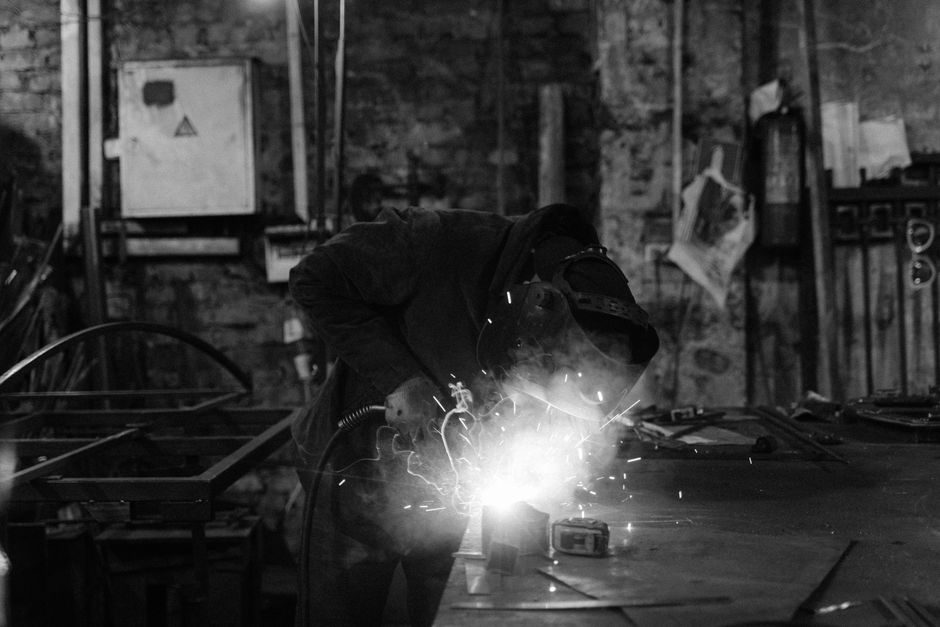
Spot welding selection is governed by four independent knobs: the apparent power of the transformer (kVA), the type of welding current (50/60 Hz AC, medium-frequency DC / MFDC, inverter, or 15 kHz medium-frequency), the electrode force and stroke, and the cooling architecture feeding the electrodes, arms, and transformer [S1][S2][S3].
The 2026 OEM catalog still spans 14 kVA hand-held/suspension units for sheet-metal lines [S1] all the way to 2/4/8 kVA medium-frequency micro-welding generators [S3] and inverter foot-pedal welders built specifically for copper [S2], so the buying decision is really a duty-matching exercise, not a brand exercise.
Match kVA to Material Thickness and Stack-Up
The transformer's kVA rating sets the upper bound on how thick a stack the machine can nugget through in a single shot, and WPI Taiwan's CH-CU series lists five discrete kVA options — 14, 27, 31, 48, and 72 kVA — to cover a single-phase shop from light steel/aluminum cabinets up to heavier automotive body-in-white sub-assemblies [S1].
A 14 kVA suspension unit is typical for thin steel/aluminum sheet on HVAC, enclosure, and steel-furniture lines; jumping to 31–48 kVA is the usual step for car-body sheet-metal where two-ply low-carbon steel exceeds roughly 1.5+1.5 mm [S1]. For 72 kVA class machines the buyer should already be planning a three-phase supply and dedicated water cooling to the electrode, both of which the CH-CU series specifies as standard pneumatic + water-cooled hardware [S1].
Pick the Current Type: AC, MFDC, Inverter, or 15 kHz
Conventional 50/60 Hz AC spot welders dominate the suspension gun and pedestal market, and they remain the most economical choice for mild-steel and aluminum sheet assemblies on automotive and HVAC lines [S1].
For copper, brass, and other high-conductivity non-ferrous stacks, an inverter topology with adjustable TIME and CURRENT potentiometers plus chrome-copper electrode holders is the established solution, as Tecna's 6010-11 foot-pedal inverter welder demonstrates for copper-specific duty [S2]. When the weld is small (sensors on turbines, filters, identification tags), a 15 kHz medium-frequency generator rated at 2, 4, or 8 kVA with up to 2500 A output gives finer thermal control than line-frequency AC at the same kVA [S3]. The trade-off is purely capital cost and control electronics complexity, since all four topologies are functionally resistance-welding processes.
Electrode Cooling and Force: Water-Cooled Is Non-Negotiable Above ~10 kVA
Electrode life is the hidden operating cost of any spot welder, and the two OEM datasheets that explicitly call out water cooling — the CH-CU suspension series and the 6010-11 inverter — both cool the transformer, arms, and electrode holders, not just the tip [S1][S2].
On the 6010-11 the electrode force is "adjustable" and a microswitch triggers the weld only when the pre-set force is reached, with an adjustable electrode stroke and chrome-copper holders for heavy-duty service life [S2]. A buyer who skips water cooling on a 27 kVA or larger AC machine to save on plumbing will burn electrodes faster than the cooling cost saving; the 14 kVA end of the CH-CU range is the practical lower limit where some air-cooled duty cycles are still tolerable on light-gauge sheet [S1].
Resistance, Ultrasonic, and Laser — the Boundary of "Spot Welding"
Resistance spot welding is the only technique that actually fuses metal via Joule heating between two electrodes under clamping force, and all three reference machines above (CH-CU, 6010-11, TRE.CI series) sit firmly in that category [S1][S2][S3].
Handheld ultrasonic spot welders use high-frequency vibration to generate internal friction heat at the joint interface and melt the base material without a second consumable electrode, which is why they appear in the 2026 catalog as a separate product class for plastics, nonwovens, and thin foil rather than for structural steel joints [S4]. Buyers looking at ultrasonic units for metal micro-joining should match to the medium-frequency TRE.CI-style 15 kHz resistance systems first, and only go ultrasonic when the stack is non-conductive or the heat-affected zone must be vanishingly small [S3][S4].
Selection Map: Four Realistic Options Against Decision Criteria
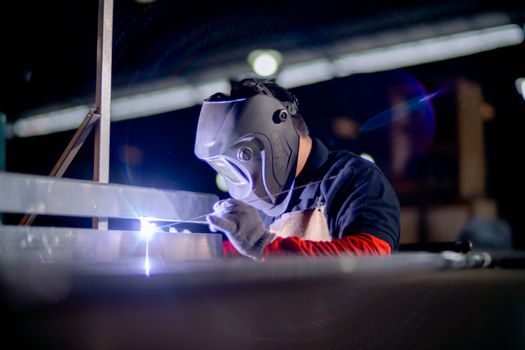
Line up the four reference machines a buyer will actually compare in a 2026 RFQ: the 14–72 kVA CH-CU single-phase AC suspension unit [S1], the 6010-11 foot-pedal inverter for copper [S2], the 2/4/8 kVA / 15 kHz TRE.CI micro-welding generator [S3], and a handheld ultrasonic spot welder for non-metallic or foil duty [S4].
On kVA / material thickness the CH-CU covers the widest window (14–72 kVA, steel + aluminum sheet) [S1], the 6010-11 targets copper/brass stacks with low-kVA inverter precision [S2], the TRE.CI tops out at 8 kVA but with up to 2500 A medium-frequency output for micro-joints [S3], and ultrasonic units trade electrical power entirely for frictional heat at the interface [S4]. On cooling, the first three are water-cooled to electrode and transformer [S1][S2][S3], while ultrasonic welders typically need only air cooling. On operator interface, manual foot pedal and potentiometer time/current control (6010-11) is the simplest; pneumatic suspension guns (CH-CU) require an air supply; and medium-frequency generators add an R1/R4 electronic command module on top [S1][S2][S3].
Who Should NOT Pick a Mainstream AC Suspension Welder
Buyers welding copper busbars, fine wire, or PCB-tag components should not specify a 50/60 Hz AC suspension gun like the CH-CU, because the high conductivity of copper wastes heat into the bulk and the AC waveform cannot be tightly current-modulated for small nuggets — an inverter unit with adjustable TIME/CURRENT is the correct tool here [S2].
Similarly, anyone joining thermoplastics, nonwovens, or aluminum foil micro-circuits should skip both AC and inverter resistance welders entirely, because no resistance current flows through a non-conductive stack; a 15 kHz medium-frequency micro-welder or a handheld ultrasonic unit is the only physically correct option [S3][S4]. Specifying a 14 kVA AC welder to "save money" on copper or plastic work is the most common and most expensive selection error in 2026 RFQs, judging by the parallel product lines every major OEM still publishes for those duties [S1][S2][S3][S4].
Shortlist Logic and Trackable Signals

For a 2026 purchase, lock the shortlist to (1) the kVA band dictated by your thickest stack, (2) current topology matched to the base metal (AC for steel/Al, inverter for Cu, 15 kHz for micro-joints), (3) water cooling to electrode + transformer above ~10 kVA, and (4) electrode force / stroke control with a microswitch-triggered weld sequence [S1][S2][S3].
Two signals to track before issuing the PO: confirm three-phase availability if you are stepping into the 48–72 kVA CH-CU range [S1], and verify that the chosen inverter or medium-frequency controller exposes a programmable weld schedule (TIME / CURRENT / PRESSURE) rather than a single fixed profile, since that is what determines downstream yield on copper and micro-welds [S2][S3]. A buyer who cannot answer those two questions is not ready to pick between the four topologies above. For context on where spot welding sits next to other joining methods, see the laser welding vs arc welder decision map and the 2026 laser welder selection map.
Component reference pages worth checking: coding machine, core machine, and cutting machine.