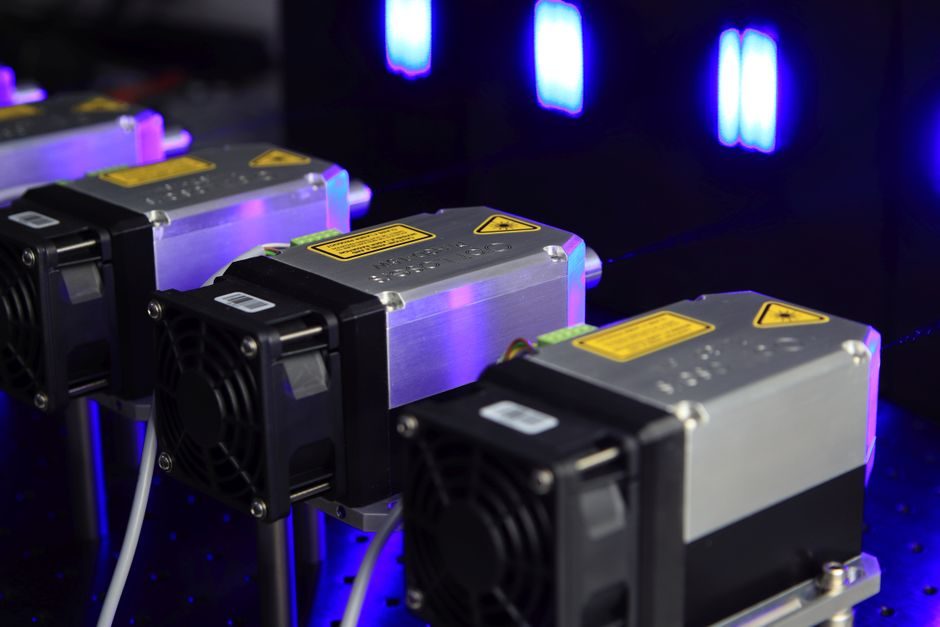
A laser welder should be picked by aligning the laser source type, continuous-wave power band, and beam-delivery option with the workpiece's material, thickness range, and reflectivity, then validating cavity life, seam-tracking, and minimum seam width against the real joint geometry [S1][S2][S3].
Three numbers dominate the buy decision: laser power in watts, minimum achievable seam width (sub-1 mm for precision spot work [S2], 1–3 mm for handheld), and the cavity/pump-source service life — for example, British-imported ceramic condenser cavities with xenon-lamp lives exceeding 8 million pulses and 8–10 year cavity life are a published benchmark for precision spot welders [S2].
Match the Laser Source to the Material You Actually Weld
Fiber-coupled laser welders deliver the high-energy beam through a flexible fiber for long-distance, non-contact work and are the mainstream choice for carbon steel, stainless steel, aluminum, copper, and alloy sheet [S1][S2].
For precision parts (optics, IT, medical, batteries, fiber-coupled devices, CRT electron guns, watch parts, mobile vibration motors) a 300 W-class fiber spot welder with CCD observation, uniform energy distribution, and sub-1 mm thin-seam capability is the published spec band [S2].
High-reflectivity metals (copper, aluminum, brass) and austenitic stainless still call for a 1064 nm source matched to a 1064 nm anti-reflection coated protective window with damage threshold above 1000 MW/cm² to keep spatter off the optic — verified field guidance for YAG/fiber spot welders [S2].
Compare the Main Laser Welder Types on Real Decision Criteria
Four variants dominate 2026 procurement: precision fiber spot welders (≈300 W, sub-1 mm seam, ceramic cavity), handheld fiber welders (1–6 kW, portable, multi-function control), automated gantry/four-axis-linkage fiber welders (fixtures, seam tracking, mass production), and YAG pulsed spot welders (legacy, 1064 nm, watch/jewelry/small-parts). [S2]
On cost vs precision, a 300 W precision spot welder with imported ceramic cavity, CCD surveillance, and custom automation fixtures targets micro-parts and mass production, while a 1–6 kW handheld unit (classic, lightweight, or thick-plate/multi-function series as published by Chinese OEMs) targets portable thick-plate and field work [S2][S7].
On duty cycle and consumables, ceramic-cavity precision welders quote 8–10 year cavity life and xenon-lamp life above 8 million pulses [S2]; fiber handheld welders have no flash lamp, which removes that consumable but adds a diode-laser service interval to factor in [S2][S7].
Power, Seam Width, and Penetration: The Three Numeric Gates
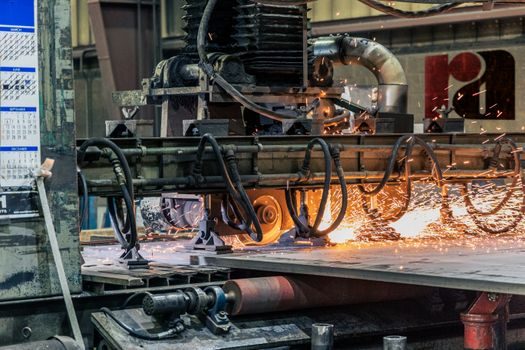
Published 300 W precision spot welders support spot welding and less-than-1 mm thin-seam welding, with multi-beam/time-energy-shared spectral control for fine joint conditions [S2].
Handheld fiber welders now ship in three tiers — classic (entry), lightweight (portable), and thick-plate/multi-function (1–6 kW band, multi-function control) — per OEM product line published in 2026 [S7].
For deep-penetration work (battery packs, automotive, structural stainless), the 1–6 kW handheld band is the entry point; for sub-millimeter jewelry, watch, and electronics seams, drop to 300 W-class fiber spot or legacy YAG pulsed at 1064 nm [S2].
Who Should NOT Pick the Mainstream Handheld Fiber Welder
If your production is high-mix precision micro-parts at sub-1 mm seam widths, a 1–6 kW handheld will overshoot the heat input and burn the part — step down to a 300 W precision spot welder with CCD observation [S2][S3].
If you weld highly reflective copper or aluminum at scale, a bare handheld unit without proper 1064 nm AR-coated protective glass (damage threshold >1000 MW/cm²) and without seam tracking will spatter the optic and fail QA [S2].
If your line needs in-line seam tracking, four-axis linkage, manipulators, and dedicated automation fixtures (mass production), a handheld is the wrong form factor — the published integration path is gantry + seam tracking + fixture + welding line [S1].
Quality Control, Safety, and Common Failure Modes
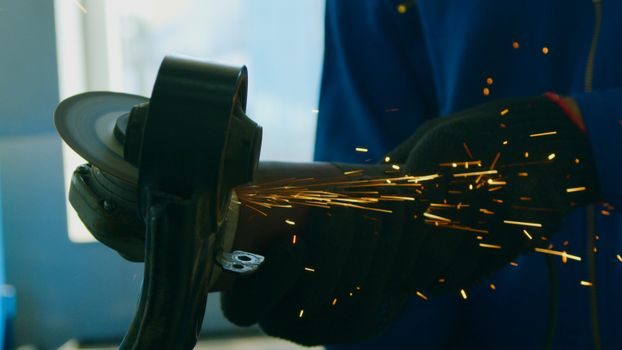
Visual inspection by experienced staff plus destructive testing (tensile, metallographic cross-section) is the published quality-control loop for laser-welded joints, and the first gate every production cell should run [S4].
On electrical safety, a half-start tripping fault on a production-line welder is typically a self-protection trigger — check for short circuits and confirm the ground wire is actually bonded before calling service [S2].
On automation safety, when a Z-axis overshoots its highest point only during laser cutting of geometric shapes (circles), the fault is often in the Z-axis main board or sensor board — escalate to the CNC maker (e.g. SIEMENS) rather than re-calibrating blind [S2].
Cost Drivers and Total-Cost-of-Ownership Reality Check
Two welders at the same headline wattage can differ in price by 30–60% because of the cavity, the pump source, the control board, and the automation fixtures — the published cost-drivers on Chinese OEM pages are hardware quality, manufacturer experience, and after-sales reach, not the kW label [S5].
Battery-industry laser welders (Li-ion PACK lines) are a separate cost segment because the line integration (cell holders, tab fixtures, in-line inspection) dominates the welder-head price; the laser head itself is a smaller share than buyers expect [S5].
For buyers comparing China-sourced machines, cross-reference the China laser cutting and welding machine supplier map for 2026 against the actual spec sheet, and use the laser cutting upstream/downstream industry map to see where welders sit in the broader fabrication value chain.
Selection Shortlist: From Requirement to One-Line Decision
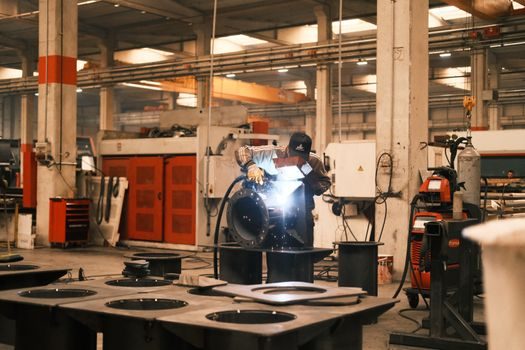
Sub-1 mm precision, micro-parts, mass production → 300 W fiber spot welder with ceramic cavity, CCD observation, custom automation fixture, 8–10 year cavity life [S2].
Portable field work, thick plate, repair, on-site fabrication → 1–6 kW handheld fiber welder (classic / lightweight / multi-function tier per OEM line) [S7].
Continuous-wave seam on stainless, carbon, aluminum, copper sheet in a fixed line → four-axis-linkage gantry fiber welder with seam tracking, manipulator, and dedicated fixture [S1].
For adjacent-process decisions (MIG/arc for the same workshop, or laser cutting upstream of the welding cell), see the MIG vs arc welding spec-first map; also worth grounding your optical terminology in the laser displacement sensor encyclopedia entry so the spot-vs-line terminology stays consistent across your spec sheet.
One trackable next node for buyers evaluating 2026 quotes: ask every vendor for (a) cavity or diode-source service life in hours or pulses, (b) minimum seam width at the named material and thickness, and (c) damage threshold of the protective window in MW/cm² — three numbers that collapse most "laser welder" quotes onto a comparable axis [S2][S5].
Detailed specification references: laser level, and laser marker.