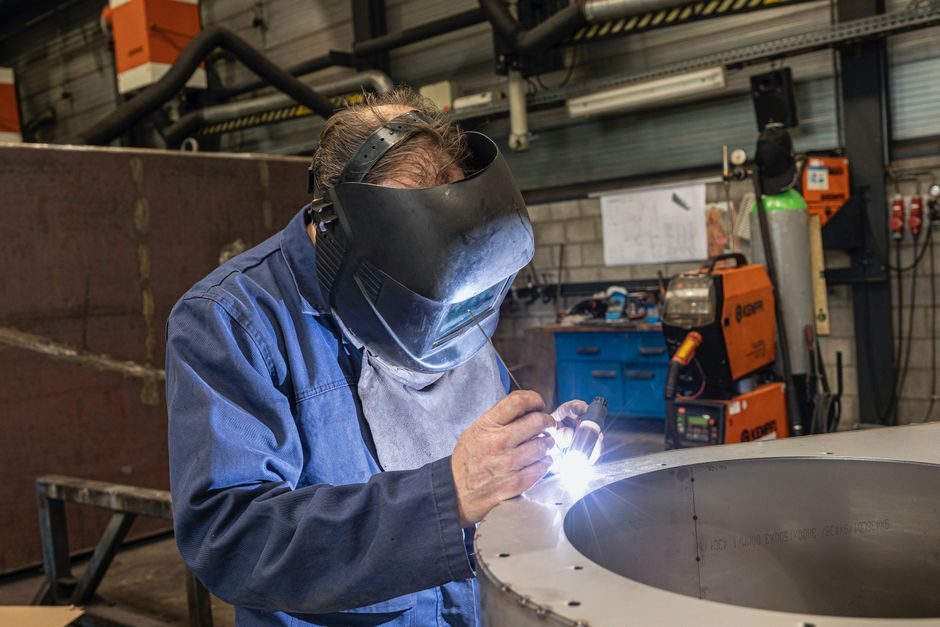
A fiber or CO₂ laser welding machine delivers a focused 10^4–10^7 W/cm² power-density window that drives a non-contact keyhole weld at travel speeds of several meters per minute, while an arc welder heats metal with a lower-density electric arc struck between an electrode and the workpiece [S2].
For a process engineer choosing equipment in 2026, the call is rarely "which is better" but "which fits the joint": laser wins on thin gauge, low distortion, and automation; arc wins on thick plate, field portability, and consumable-electrode simplicity [S3][S7].
Heat Source and Power Density
Laser beam welding concentrates energy into a keyhole cavity whose equilibrium vapor temperature sits near 2500 °C, and the cavity walls transfer heat into the surrounding metal — that is why laser can reach several meters per minute on thin sections [S2]. Conduction-mode laser welding, used when power density is held at the lower 10^4–10^5 W/cm² band, gives shallow penetration suited to electronics and jewelry rather than structural plate [S2].
Arc welding uses an electric arc between a consumable or non-consumable electrode and the base metal, with heat spread over a larger footprint than the laser keyhole; that is why distortion, spatter, and heat-affected zone (HAZ) are larger per unit of penetration [S7]. Specifying the correct mode (conduction vs deep-penetration keyhole on the laser side; MIG/TIG/stick on the arc side) is the first pass at any weld procedure qualification [S2][S7].
Joint Geometry and Material Thickness
Handheld fiber laser welders rated at 1000 W, 1500 W, and 2000 W cover butt, edge, corner, tee, and lap joints in carbon steel, stainless steel, and aluminum, with STYLECNC's LW1000 listed at USD 5,500–10,500 per set — a price band that fits job-shop and mid-volume fabricators [S5]. Automatic CNC laser welders such as the STYLECNC LWT2000 add programmable X/Y swing optics for irregular shapes and reflective alloys, and can run 24-hour continuous shifts in mass-production cells [S3].
Arc welding remains the default for thick-plate structural work, heavy fabrication, and field repair where portability and consumable electrodes outweigh cycle-time concerns; a vendor like Fervor welds advertises a 20,000 m² modern production base covering arc welding and cutting solutions as a one-stop package [S9]. As a rule of thumb that the engineering community treats as a starting point, laser keyhole becomes the economic default somewhere in the sub-3 mm range on stainless and sub-2 mm on aluminum, while arc keeps the lead above that.
Process Specs Compared Side by Side
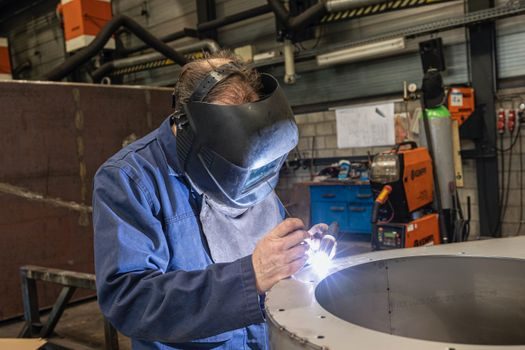
Decision matrix for typical shop-floor selection, drawn from STYLECNC and Megmeet guidance [S2][S3][S7]:
<strong>Power density at the joint:</strong> Laser 10^4–10^7 W/cm² vs arc roughly 10^3–10^4 W/cm² in the arc column — laser concentrates ~10–1000× more energy per unit area [S2]. <strong>Contact force:</strong> Laser = non-contact, no fixture pressure; arc (especially resistance spot variant) = contact force required [S2][S7]. <strong>Travel speed on thin stainless:</strong> Laser several m/min, arc typically below 1 m/min on the same gauge [S2]. <strong>Weld appearance:</strong> Laser leaves a fine seam "no color change, no need for later polishing" per STYLECNC; arc produces slag, spatter, and visible HAZ [S3][S7]. <strong>Shielding:</strong> Both need inert gas (laser argon shroud; TIG argon purge; MIG CO₂/Ar mix), but laser uses gas purely as oxidation protection while arc uses it also to stabilize the column [S2].
Operationally, STYLECNC's CNC laser welder can be ordered with QBH-connector laser sources, drawer-style protective lenses, and a swaying welding head driven by motor-driven X/Y vibrating lenses — features that target high-reflectivity materials (copper, brass, gold) that historically gave fiber lasers trouble [S3]. Megmeet's plain-English summary: laser "welds with minimal distortion and spatter and can be used for thin or delicate metals", whereas arc handles thicker and heavier sections at lower equipment cost [S7].
Automation and Production Fit
Laser welding machines are specified for unattended and 24-hour production: STYLECNC's automatic CNC model is explicitly described as continuous-duty for industrial mass production, and the same vendor notes that the fiber output "can be equipped with a robot or assembly line" [S3]. Ideeda Technology lists the same automation hook — automatic laser welding machine and optical fiber laser welding machine categories sit alongside its marking and cutting lines for non-standard automated laser equipment [S1].
Handheld laser welders fill a different slot: portable, ergonomic, no fixture, suited to one-off fabricators, repair shops, and on-site stainless work; the same LW1000 spec at 1000–2000 W is sold as a "perfect substitute for argon arc welding and electric welding in thin metal welding" [S3][S5]. For deeper reading on the four laser-welder form factors and where each fits, see this 2026 type map of fiber, handheld, robot, and plastic laser welders. For a process-by-process look at the arc-welding side — MIG, TIG, stick, and the variants in between — this arc welding machine types, process specs, and applications reference lays out the same decision logic from the opposite end of the bench.
Materials and Dissimilar-Metal Capability
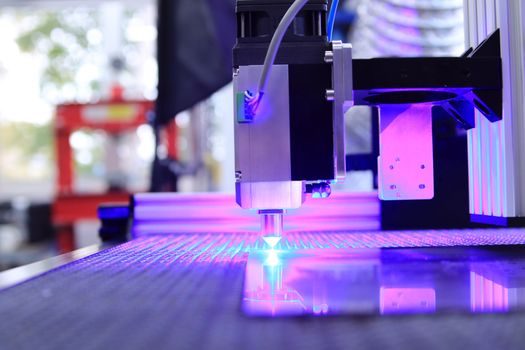
STYLECNC's automatic CNC laser welder is rated to join carbon steel, alloy steel, stainless steel, plus dissimilar combinations including stainless-nickel, nickel-cold-forged steel, bimetallic strips with different nickel content, titanium, nickel, tin, copper, aluminum, chromium, niobium, gold, silver, and their alloys, including copper-nickel, nickel-titanium, copper-titanium, titanium-molybdenum, brass-copper, and carbon-steel-to-copper pairs [S3]. That breadth is the practical reason laser has displaced micro-TIG in phone batteries, sensors, and watch cases.
Arc welding covers the same materials but with a different process window: thicker sections, larger fillet legs, and — for stick and MIG — tolerance of dirty or scaled base metal that a keyhole laser cannot tolerate without pre-clean. Laser mold-repair welding, a sub-category sold by Aohua since 2005 under names like "laser cold welder" and "laser argon welder", uses pulsed-YAG or fiber to add filler wire into die cavities — a niche where arc is simply not an option [S8].
Cost, Consumables, and Total Ownership
Entry pricing for a 1000 W handheld fiber laser welder sits in the USD 5,500–10,500 band per STYLECNC's published range, which is competitive with a mid-tier MIG package once robotics, fixtures, and the safety enclosure for a Class 4 laser are added [S5]. STYLECNC's automatic CNC platform lists "no consumables" as a headline feature versus consumable electrode, gas nozzle, and contact-tip consumption on the arc side [S3].
On the arc side, Fervor's value proposition is the breadth of consumables, transformer-based stick, inverter MIG/TIG, and plasma cutting under one roof — a model aimed at workshops that need to switch processes rather than automate one [S9]. Megmeet's frame is the inverse: pick laser when the seam must be invisible, the section must stay flat, and the cycle must shrink [S7]. For shop owners weighing the call, the long-run economics trend toward laser once annual volume on a given joint crosses the threshold where 24-hour unattended cycles and zero-electrode-cost operation pay back the higher capex [S3].
Standards, Safety, and Sourcing
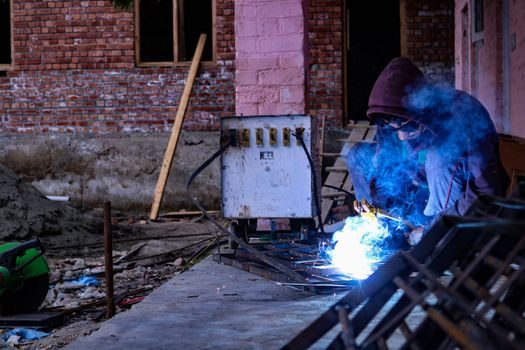
Any Class 4 laser welding system must be enclosed, interlocked, and fitted with the proper laser-eye-protective filters specified for the source wavelength — a baseline that any Chinese export supplier (Ideeda, STYLECNC, Aohua, TOCH TECH, Meera Lasers) will document in the operator manual [S1][S3][S6][S8][S10]. Buyers sourcing from these vendors should request the OEM's CE/UL file, the laser-source model (IPG, MAX, Raycus, JPT are common), the QBH connector spec, and the EN 60825 laser-product classification in writing before issuing a PO [S1][S3].
On the arc side, request the inverter's IEC 60974-1 arc-welding-equipment declaration, the duty cycle at the rated current (typically 60% at 40 °C), and the IP rating of the power source for the shop environment. Aohua's mold-repair laser, by contrast, ships as a Class 4 system but in a much smaller footprint aimed at tool-and-die rooms rather than fabrication lines [S8]. Across the global supply base — Ideeda (Shenzhen), STYLECNC, Fervor, TOCH TECH, Meera Lasers — lead times in mid-2026 are short on standard handheld and CNC laser welders, and longer on custom multi-axis automated cells [S1][S3][S6][S9][S10].
Trackable signals to watch over the next two quarters: (1) whether 2000 W and 3000 W handheld fiber prices drop below the USD 5,000 line as more Chinese OEMs release new SKUs, and (2) how quickly dual-light 3-in-1 laser cleaning/welding/cutting heads such as those listed by TOCH TECH penetrate sheet-metal job shops that today run separate laser-cleaning and arc-welding stations [S6].
The underlying component specifications are covered under arc welder, laser level, and laser marker.