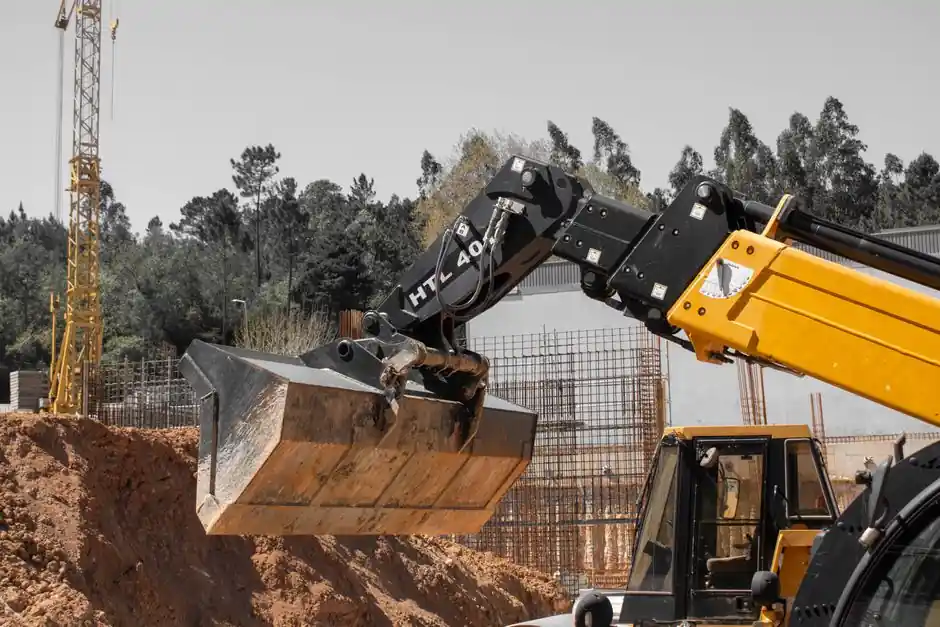
Selection comes down to five hard numbers: rated capacity, maximum lift height, horizontal reach at that height, tire/axle package, and attachment interface, all cross-checked against the job's load chart and ground conditions [S1][S3].
Most telehandlers lift between 5,000 lb and 12,000 lb, with high-capacity models above 50,000 lb; lift heights range from under 20 ft to more than 70 ft, and the hydraulic system routinely handles 5,000-20,000+ lb lifts smoothly when properly matched to the load chart [S1][S3].
What a Telehandler Actually Is and How OSHA Classifies It
A telehandler, short for telescopic handler, is a four-wheel-drive machine with a hydraulic, extendable boom that lifts, transports, and places loads on rough or uneven terrain; steel booms are heavier and more durable, while aluminum booms trade durability for lower machine weight and better fuel economy [S3].
OSHA groups telehandlers into Class VII rough-terrain forklifts, a class that explicitly recognizes the telescoping boom as the defining difference from a standard forklift [S1]. That classification drives operator-training, daily-inspection, and load-chart compliance rules that buyers inherit the moment the machine arrives on site, so a telehandler selected on lift height alone, without checking the Class VII operator and chart obligations, is a specification gap. The same hydraulic system that powers the boom also tilts and locks attachments through a quick-connect interface, so the boom, hydraulics, and attachment carrier should be specified as one subsystem rather than three independent parts [S3].
Match Rated Capacity to the Heaviest Load, Not the Average
Industry guidance is to size the machine to handle slightly more than the largest anticipated load, never the average load, because capacities vary with boom angle and extension and the load chart is the only legal reference for a given configuration [S1].
The standard 5,000-12,000 lb band covers the majority of construction, landscaping, and agricultural duties, while heavy industrial and port work pushes selection into the 20,000+ lb and 50,000+ lb ranges [S1][S3]. A common buyer error is to pick a 6,000 lb telehandler for a 5,500 lb pallet of pipe and then run it at full extension at 30 ft of lift height, where the same machine's charted capacity can drop to roughly half its rated value. The rule of thumb: read the load chart for the worst-case combination of reach, height, and attachment, and buy the next size up if that charted number is below your real load with a margin for shock loads and uneven load distribution.
Lift Height and Horizontal Reach Are Two Separate Specifications
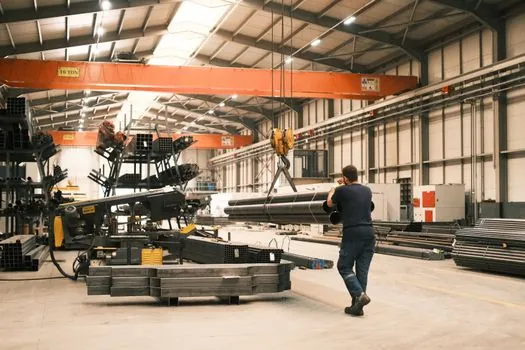
Maximum vertical lift height spans roughly 20 ft to more than 70 ft across the market, with 15-50+ ft being the typical operating envelope for general construction telehandlers, and horizontal reach determines how far the load can be placed into a structure without re-positioning the machine [S1][S3].
The two numbers are linked by physics: as the boom extends forward, lift capacity at the carriage drops, so a machine that lifts 8,000 lb to 30 ft vertically may only carry 3,000-4,000 lb at full horizontal reach. This is exactly the trade-off that separates telehandlers from forklifts on rough terrain, and it is the same trade-off that makes a telehandler useful as a light crane substitute on mid-rise jobs where a dedicated tower crane would be over-specified. For upper-floor placement on multi-storey builds, specify a machine whose vertical lift height exceeds the target floor by at least 5 ft so the operator can place, not just reach, the load.
Compact Size vs. Rough-Terrain: Pick by Site, Not Preference
Sprawling suburban and rural sites have room for full-size frames; urban infill, renovation, and crowded industrial sites call for compact telehandlers with tight turning radii to keep the boom productive [S1].
On rough ground, four-wheel drive, deep-tread rough-terrain tires, and a stable weight distribution let the machine work where a standard forklift would bog down or tip [S3]. A 360-degree visibility cab with backup cameras is non-negotiable on tight sites because the operator is regularly swinging a load over obstacles, personnel, and other machines; the cab spec should be written into the purchase order rather than left to dealer option lists. Tire choice is the second site-driven decision and has three options: pneumatic (best flotation and operator comfort, but puncture risk), foam-filled (no flats, sidewall damage possible), and solid (heaviest, longest life, harshest on operators and finished floors) [S1].
Attachments and Hydraulics: Spec the Carrier, Not Just the Forks
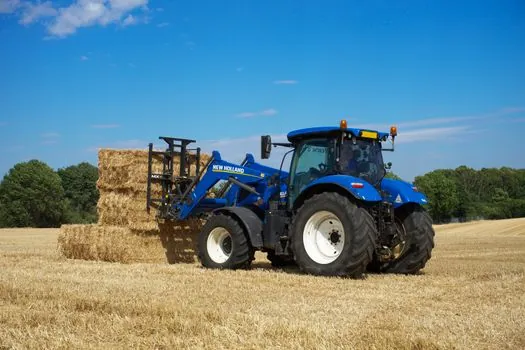
Quick-connect attachments, including forks, buckets, work platforms, truss booms, pipe grapples, and jibs, turn a single telehandler into a forklift, loader, and light crane in one machine, and the attachment interface is what unlocks that flexibility [S3].
Buyers who specify only the forks and add attachments later often discover the auxiliary hydraulic flow rate is too low to run a hydraulic attachment at full speed, or the electrical harness does not carry the control signals for a modern jib. The corrective move is to specify the carrier at the highest auxiliary flow and the most complete electrical interface you can justify, then rent or buy attachments against that spec, rather than the other way around. For heavy-load cycles, a high-quality hydraulic system rated for the full 5,000-20,000+ lb class keeps load movement smooth without jolts that would damage the load or the boom [S3].
Buy vs. Rent, and the Total-Cost Variables to Check
For intermittent or single-project duty below roughly 60-70% utilization, rental usually wins on total cost because the rental rate absorbs maintenance, transport, and the risk of under-utilized iron; above that utilization, ownership of a new or late-model machine wins, especially once dealer service response, parts availability, and residual value are factored in [S1][S2].
Three variables decide the crossover. First, utilization: track expected annual hours against the rental day rate converted to an hourly rate. Second, logistics: telehandlers over about 12,000 lb typically need oversize-load permits and lowboy transport, which swings rental economics for remote sites. Third, brand support: JCB, Manitou, JLG, Genie (SkyTrak), and Sany are repeatedly named by users and OEMs as trusted lines for reliability and parts availability, and dealer density for the chosen brand within a 50-mile radius of the job site is often the deciding factor between two otherwise-equal machines [S2][S3]. On heavy or specialised cycles, including demolition-handling and concrete-placement support, ownership tends to win faster because rental fleets rarely stock the high-capacity or specialized-attach machines those jobs need.
Who Should NOT Buy a Mainstream 6,000-8,000 lb Telehandler

A general-purpose 6,000-8,000 lb, 30-40 ft telehandler is the wrong tool for three common scenarios, and forcing it into those jobs is the single biggest spec error in the market. [S1]
First, multi-storey builds above roughly 5 floors where reach and charted capacity at full extension will leave the machine unable to place loads at the working deck; specify a high-reach or rotating telehandler instead. Second, port, steel, or heavy-industrial yards with regular lifts above 20,000 lb; the standard machine's chart will not cover those cycles, and a high-capacity model above 50,000 lb is the correct duty class [S1]. Third, indoor warehouse duty on finished floors where non-marking tires, electric drive, and tight turning radius matter more than rough-terrain ability; an electric telehandler with smooth tires is a different product class and a different duty cycle, and operators should weigh that before assuming a diesel rough-terrain unit will adapt [S2][S3]. The selection logic is straightforward: if any of those three conditions apply, the mainstream 6,000-8,000 lb class is automatically disqualified, no matter how competitive its price looks.
Sourcing, Standards, and What to Confirm Before Signing
Telehandler specifications are governed by OSHA's Class VII rough-terrain forklift classification, by the machine-specific load chart that ships with the unit, and by the operator-training and daily-inspection rules that travel with that classification [S1].
Beyond OSHA, buyers should confirm ANSI/ITSDF B56.6 (rough-terrain forklift) compliance, the telehandler's ROPS/FOPS structure rating for the cab, and any site-specific requirements such as emissions tier for urban low-emission zones. Verify the load chart for the worst-case combination of attachment, reach, and lift height, and require the dealer to demonstrate the charted capacity at that exact configuration during the acceptance inspection. Finally, confirm hydraulic-auxiliary flow rate, electrical harness pin-out, and tire brand/model on the delivery paperwork; those three items are the most common sources of post-delivery disappointment and the easiest to lock in writing before the truck leaves the yard.
Trackable signals for the next quarter: OEM announcements of higher-capacity electric telehandler models, OSHA enforcement actions on Class VII load-chart violations, and dealer-reported price moves on 50 ft+ reach units will be the three indicators worth monitoring for any buyer still finalizing a 2026 spec.
Spec-level background on the components involved: pressure transmitter, flow meter, and industrial valve.