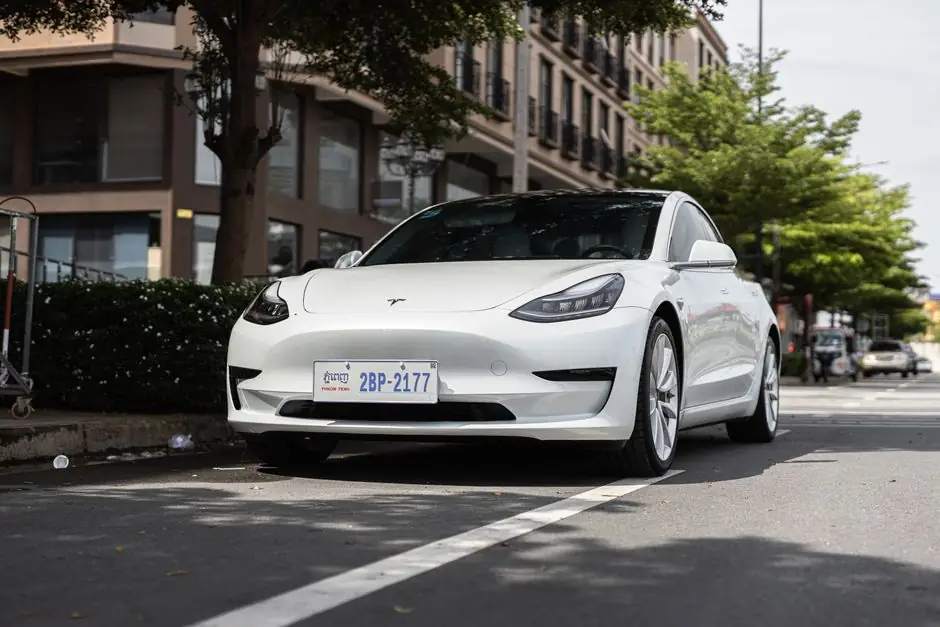
Sourcing an electric vehicle out of China in 2026 is a structured engineering procurement exercise, not a single-click import: every unit has to clear an exportable type-approval pathway (UN ECE R100 for high-voltage electrical safety, plus GB/T 18384-2020 for in-market homologation), satisfy destination-market homologation (e.g. EU GSR 2 / E-mark, GCC GSO, or US FMVSS / EPA + DOT), and ride on a logistics mode matched to volume, RoRo vs 40HC container [S1][S3].
The two dominant entry points in 2026 are OEM export departments (BYD, Geely-Zeekr, Chery New Energy, SAIC-MG, Changan, NIO) and B2B aggregator platforms such as China EV Pro, which list over 200 model SKUs with filterable powertrain, brand, and price-range parameters and quote inside 24 hours [S3]. Trading-company exporters like Chongqing Dingrao (founded 2015, Nanan District, Chongqing) sit in the middle and resell across new-energy sedans, SUVs, and used-EV stock [S2].
Source-channel map: OEM, aggregator, trading house
OEM-direct export is the lowest unit-cost path on lots of 20+ units because it cuts the 3-8% trading-house margin and lets the buyer pin options against a real BOM, but it requires an Importer of Record and a pre-shipment inspection regime that the OEM's export team schedules. Geely Holding Group houses Zeekr (established 2021, premium EV), Lynk & Co (SUV lineups starting around USD 16,870 listed on aggregator catalogues), and Geometry; FAW Group runs Bestune (mid-premium, est. 2006) and Hongqi (est. 1958, flagship luxury) [S3].
Aggregator platforms publish searchable databases of 200+ models across 10+ Chinese brands, market pre-shipment inspection, container and RoRo logistics, full export documentation, and after-sales warranty support; they quote inside 24 hours and act as a single-window procurement agent [S3]. Trading houses handle small-lot and mixed-SKU orders (1-10 units) where an OEM will not engage, including used-EV resale: a Chongqing-based trader currently lists 520 km-range Rising Auto ER6 used sedans alongside Tesla Model Y (4750 x 1921 x 1624 mm) and MG Cyberster 2024 (231 kW peak motor) inventory [S2].
Spec checklist: what to lock before the first wire
Three specifications drive 80% of import risk and must be frozen before signing an order: battery kWh and chemistry (LFP vs NCM), peak DC fast-charge rate in kW, and the connector standard (GB/T 20234.2 in China, CCS2 in EU, CCS1 / NACS in US). Lynk & Co SUVs and BYD Han-family sedans commonly publish CLTC ranges of 520-700 km per charge, with DC peak rates between 80 and 150 kW depending on pack configuration [S2][S3].
The same spec-first discipline used in CNC machine cost breakdown: setup vs per-unit drivers in 2026 applies: lock drive-unit, battery, and charger specs first, then price.
Vehicle options compared on four procurement criteria

Buyers typically choose between four vehicle classes, and the right answer is a function of fleet duty cycle, charging infrastructure, and homologation cost. Sedans (BYD Han, Rising Auto ER6, IM L7, MG7) deliver 500-700 km CLTC range at the lowest unit price, typically USD 16,000-28,000 FOB, with 6.6-11 kW AC onboard chargers suited to overnight depot charging. [S3]
Mid-size SUVs (Tesla Model Y 4750 x 1921 x 1624 mm, Lynk & Co 01/05, BYD Song Plus) are the volume sweet-spot for ride-hail and rental fleets because taller packaging fits 5-7 adults and the Model Y footprint translates cleanly into EU/US homologation. Performance / niche models (MG Cyberster 2024 roadster, 231 kW peak) and premium flagships (Hongqi E-HS9, Denza N7) target low-volume dealer showrooms and command 2-4x the unit margin but require regional after-sales infrastructure. The Fleet EV Procurement Spec Guide: Drive Units, Battery Sourcing, and Grid Flexibility article extends this comparison into depot-side load management.
Homologation, certification, and compliance evidence
Every Chinese-market EV leaves the factory with a GB/T 18384.1-2020 high-voltage safety certificate and a GB/T 31498-2020 crash post-impact safety test, but neither satisfies EU or US import on its own. EU import requires UN ECE R100 (Rechargeable Energy Storage System), R10 (EMC), and a Whole Vehicle Type Approval under Regulation (EU) 2018/858; US import requires an FMVSS conformed VIN, EPA Tier 3 emissions declaration (zero-tailpipe for BEV, but still a filed AFV certificate), and DOT tire / lighting compliance per 49 CFR Part 571 [S1].
GCC markets accept GSO ECE-based type approval with a Gulf Conformity Mark; ASEAN markets (Thailand, Indonesia, Malaysia, Vietnam) accept CB scheme test reports plus local content rules that often incentivise CKD assembly. The OEM's export contract should specify which certificates are bundled, which are buyer-obtained, and the lead time for any missing approvals, since missing ECE R100 alone can stall a vessel at Rotterdam for 30-60 days [S1][S3].
Logistics, payment, and inspection workflow
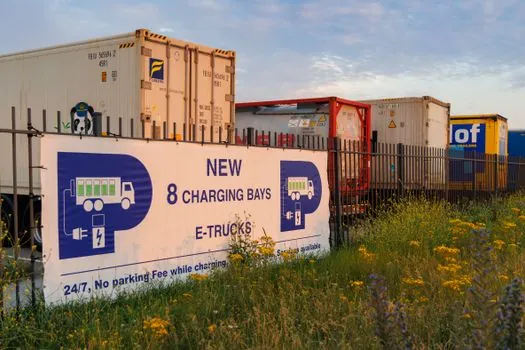
Containerised shipping in 40HC high-cube units fits 2-4 sedans per box and protects paint and interior on long-haul routes; RoRo (roll-on/roll-off) is cheaper per unit for SUV-heavy shipments of 20+ vehicles and is the default for BYD and SAIC's high-volume export lanes to Europe and the Middle East. Typical Shanghai-to-Rotterdam transit runs 28-32 days; Shanghai to Jebel Ali 18-22 days; Shanghai to Lagos 35-42 days [S3].
Payment structures on EV exports are roughly 30% T/T deposit against a signed proforma invoice, 60% against a copy of the B/L, and 10% retained until pre-shipment inspection (PSI) clears, with an irrevocable L/C at sight common for first-time buyers. Pre-shipment inspection is typically a SGS or Bureau Veritas third-party check covering VIN matching, paint depth, tyre date codes, and a 5-10 km cold-start drive; Chinese test-equipment suppliers such as Sinuo Testing Equipment (Guangzhou, est. 2019) manufacture the EVSE / EV connector / battery / ingress chambers used inside these PSI labs, so the same IEC 61851, IEC 62196, and GB/T 20234 test rigs that the factory uses are the ones the inspector will pull out at port [S5].
Risk register: who EVs are NOT for, and common failure modes
Three buyer profiles should not source directly from China: sub-5-unit buyers who will be price-shamed into small-lot trading-house margins, buyers without an in-country service partner (Chinese EVs often ship without a regional parts depot), and buyers in markets that require right-hand-drive homologation because the LHD-biased production mix makes RHD lead times 90-150 days longer [S1][S3].
The most common failure modes in 2026 export deals are: connector mismatch (GB/T cars cannot CCS-charge without an adapter, and adapters are not legal in EU after 2024), software region-lock (no Google Automotive Services / no Apple CarPlay / no English HMI on trim levels below export-spec), and battery state-of-health (SoH) drift on used-EV resale (520 km-rated used cars often arrive at 88-94% SoH, dropping effective range to 460-490 km).
Standards reference and a near-term sourcing signal

The governing standards for any 2026 EV import are: UN ECE R100 (REESS), UN ECE R10 (EMC), GB/T 18384.1-2020 (HV safety), GB/T 31498-2020 (post-crash), GB/T 20234.2 (DC charging connector), IEC 61851-1 (EVSE conductive charging), and IEC 62196 (plugs / sockets) [S5]. For the destination market, layer in Regulation (EU) 2018/858 (EU WVTA), 49 CFR Part 571 (US FMVSS), and GSO ECE rules for GCC. Each of these is a hard floor; the right supplier will volunteer the certificate numbers, not be asked for them [S1][S3][S5].
Trackable signals into Q4 2026: the 41st China Jiangsu International New Energy Electric Vehicle and Parts Fair in Nanjing (succeeding the 80,000 m², 700-exhibitor 2023 edition that ran 2023-10-26 to 2023-10-28 [S4]) is the most useful in-person venue for new-buyer due diligence, and the next round of GB/T 18384 revisions on thermal-propagation and BMS functional safety is the document to watch because it will reset the homologation baseline for any 2027 model-year export. For buyers evaluating chargers and connectors in parallel, the Industrial PC Sizing and Selection: A Spec-First Guide for Plant Buyers piece covers the depot-side control hardware that pairs with these vehicles.
Spec-level background on the components involved: linear guide, crossed roller guide, and electric actuator.