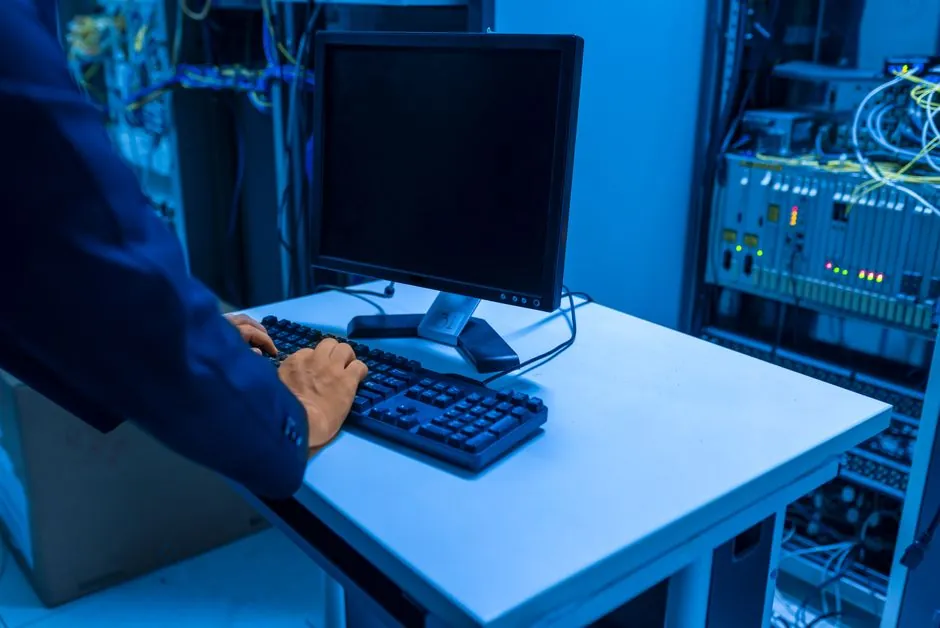
An industrial PC is not a panel-mount desktop in a steel box. It is a fanless or controlled-airflow embedded computer rated for 24×7 operation, surge-tolerant power input (commonly 9–36 VDC or 18–36 VDC), and shock/vibration loads that would kill a commercial motherboard within months.
Selection breaks into five independent layers, and the most common spec mistake is leading with CPU brand instead of ingress rating, certification class, and I/O count. Get those three wrong, and the fastest Xeon in the rack becomes a six-month replacement liability. A 2026 CESIPC product range explicitly segments its lineup by protection class (G-Grade IP69K stainless, S-Grade embedded stainless, L-Grade lite aluminum) and by application (panel PC, modular PC, AI computing on Jetson Orin NX), which mirrors how serious OEMs are organising their catalogues today [S3].
Define the duty envelope before touching the BOM
Ingress protection is the first filter, and the public-facing distinction most buyers confuse is IP65 vs IP67 vs IP69K [S3]. IP65 blocks dust and low-pressure water jets from any direction; IP67 survives temporary immersion to 1 m for 30 minutes; IP69K resists high-pressure (80–100 bar), high-temperature (80°C) washdown, which is the food-and-beverage and pharmaceutical cleanroom requirement. If the cabinet lives outside a sealed enclosure, IP65 is the floor; if it lives on a wet processing line, IP67 or IP69K is non-negotiable.
Operating temperature is the second filter, and it pairs with thermal architecture. Fanless designs use aluminium chassis as passive heatsinks, typically rated 0–60°C or -20–70°C wide-temp. Active-fan units tolerate higher ambient but introduce a moving-part failure mode with an MTBF ceiling around 50,000 hours for the fan itself. For 24×7 control rooms, fanless is the safer default; for >60°C ambient or AI inference workloads above ~30 W TDP, active cooling returns. Daisy Data's Zone 1 IECEx-certified explosion-proof PC line and ATEX Zone 2 Division 2 displays (2123AA, IP64-rated) illustrate how the hazardous-area layer sits on top of the ingress layer, not in place of it [S6].
CPU, memory, and storage: the over-spec trap
Most plant-floor HMIs and SCADA clients run comfortably on 4-core, 8 GB RAM, 256 GB SSD configurations. The trap is buying a Core i7 because the catalogue labels it "industrial", then watching the OS and application stack stay the same while the BOM doubles. Reserve higher tiers for three workloads only: machine-vision inference (where Jetson Orin NX or a discrete GPU pulls 40–75 W), multi-camera acquisition (the CESIPC 4-camera harvesting-robot build uses a 9×USB backplane specifically to host four vision streams concurrently [S3]), and edge analytics on time-series data with sub-second SLAs.
Storage architecture matters more than brand. Industrial SSDs (wide-temp SLC or pSLC) cost 2–3× consumer SATA SSD but survive -40 to 85°C operating ranges and write endurance of 3,000–30,000 P/E cycles. For OS-only partitions, 64–128 GB is enough; for local data buffering on disconnected edge nodes, 512 GB–1 TB. M.2 NVMe is now standard on most 2024-and-newer industrial boards and should be preferred over mSATA for new builds, with the caveat that thermal dissipation on M.2 in a sealed chassis is real and may force a thermal pad or heatsink add-on [S3].
I/O, expansion, and the bus-system decision
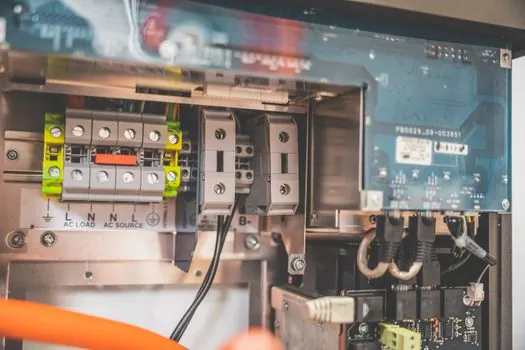
Count the physical signals first, then add 20% headroom. A typical machine builder undercounts by ignoring digital I/O breakouts, RS-485 termination for Modbus RTU nodes, and the second GbE port required for network segmentation (OT vs IT, or redundant ring topologies). CompactPCI and PXI extenders remain the standard where you need a backplane architecture with hot-swap or instrumentation-grade timing, and the extender concept isolates the unit-under-test from the motherboard while PC power stays on, eliminating the need to power-cycle the host during diagnostics [S2].
For most SCADA and PLC-replacement applications, however, a box-PC or panel-PC with native I/O is the lower-TCO path. EdgePi's Compute Module 4-based industrial PC/PLC/IoT device ships with 8× analog/digital inputs, 8× analog/digital outputs, 2× RS-485, 2× USB 3.0, 2× GbE, and a thermocouple input on the Pro tier, which is a useful real-world baseline for what a mid-range DIN-rail IPC actually delivers [S5]. Wireless (Wi-Fi 6, optional 4G/5G) is a separate add-on with its own antenna and grounding rules; do not assume it ships by default.
Compare the main form factors against four decision criteria
Four realistic options dominate plant selection, and they line up cleanly on cost, ingress, expansion, and AI-readiness. Panel PCs (integrated display + PC) are the lowest install cost and dominate operator HMI stations; their weakness is fixed display size and limited internal expansion slots. Box/ DIN-rail PCs (EdgePi, modular industrial PC) win on cabinet mounting, vibration tolerance, and I/O density per litre, but require a separate display. Rack-mount IPCs fit IT-room aggregation and edge gateways, with the trade-off of poor dust and washdown tolerance unless paired with an IP-rated rack. AI-edge industrial PCs (Jetson Orin NX-based) add 40–100 TOPS of inference at 15–60 W, the right pick only when local inference is a hard requirement [S3].
For a quick decision: cabinet with no washdown → box-PC, IP65 minimum; wet-line food/pharma → IP69K stainless panel PC; control room with multiple screens → rack-mount IPC plus IP65 monitors; machine-vision cell on a robot → AI-edge PC with discrete GPU or Jetson module. Daisy Data's 2123AA high-definition display with up to 1/4 mile remote connection to an offsite PC, engineered to IP64 and ATEX Zone 2 Division 2, is a useful reference for how far the rugged display layer has to be specified separately from the PC head [S6].
Standards, certifications, and the hazardous-area layer
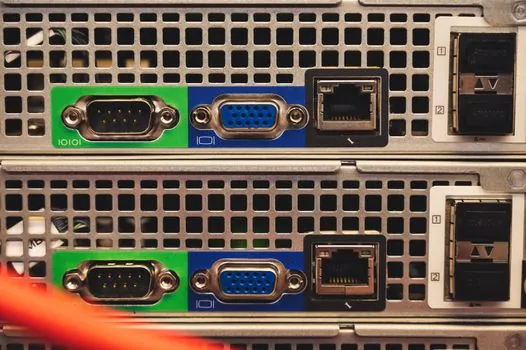
ATEX 2014/34/EU governs equipment for explosive atmospheres in the EU; IECEx is the equivalent international scheme under the IEC 60079 series. Zone 1 (continuous/intermittent explosive atmosphere likely in normal operation) requires the highest protection level, typically Ex d (flameproof enclosure) or Ex e (increased safety) implementations, and Daisy Data explicitly markets a Zone 1 IECEx explosion-proof transportable PC for field maintenance crews [S6]. Zone 2 (explosive atmosphere not likely in normal operation) accepts non-sparking Ex nA designs and is where most factory-floor panel PCs are specifiable. CE, UL, CSA, and CCC marks are baseline regulatory; BIS applies in India; for medical or rail deployments, add IEC 60601-1 or EN 50155 respectively.
For plants that need both production-IT and OT-network segmentation, look for two physical GbE ports minimum, and verify the firmware supports independent VLAN tagging rather than just dual-NIC bridging. For PoE-powered edge devices (cameras, sensors), confirm the IPC's PoE budget matches the planned load: 802.3at (PoE+) supplies up to 25.5 W per port, and a 4-port camera cell will draw 60–100 W total, which the IPC's power supply must be sized to deliver alongside its own CPU load [S3][S6].
Who should NOT pick the cheapest panel PC
Three duty profiles will punish an under-spec IPC within 12 months: any 24×7 line where downtime is unpriced, any line near a VFD or large motor (EMI requires surge-tested power input and galvanic isolation on serial ports), and any cleanroom with daily washdown cycles. The EdgePi platform's explicit listing of CE, CSA, and UL approvals, plus electrically isolated inputs to protect against ESD damage to the processor, illustrates what an entry-level industrial PC still has to clear before it belongs on a plant floor [S5]. A consumer mini-PC in a steel bracket does not.
For full turnkey skid builders and OEM machine builders, the modular industrial PC (LEGO-style stackable units) is the better long-term platform than a fixed panel PC, because the display, compute, and I/O modules can be reconfigured across machine generations without redoing the cabinet cutout [S3]. For one-off retrofit or pilot line work, a single panel PC with the right IP and certification is faster and cheaper to deploy.
Shortlist logic and trackable signals
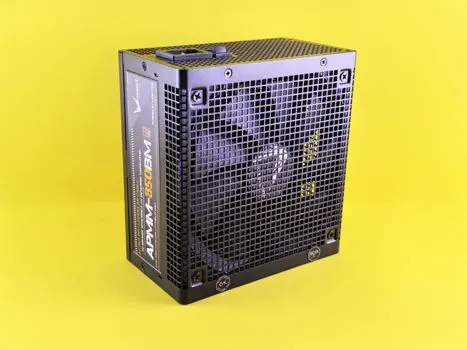
Build a three-vendor shortlist: one stainless IP69K specialist for wet-line duty, one modular DIN-rail vendor for cabinet builds, and one AI-edge specialist if machine-vision or LLM-edge inference is on the roadmap. Cross-check each one's published IEC 60079, ATEX, and CE/UL certificates against the actual certificate numbers (not the marketing claim), and confirm wide-temp storage (-40 to 85°C) and operating ranges explicitly in the datasheet, not in the brochure. [S3]
Trackable signals for the next buying cycle: vendors publishing Jetson Orin NX successor modules in late 2026, IEC 60079-0/-1/-11 revision drafts that may tighten Ex e component rules for industrial PC power supplies, and a growing number of suppliers offering both IP69K and Zone 2 dual certification in a single chassis [S3][S6]. For a parallel guide on selecting the AC motors these IPCs often command, see AC motor maker coverage of MV and DC lines for heavy industrial use; for the related lighting and electric-lamp spec layer inside the same control cabinets, see the lighting equipment and electric lamps reference.
Spec-level background on the components involved: linear guide.