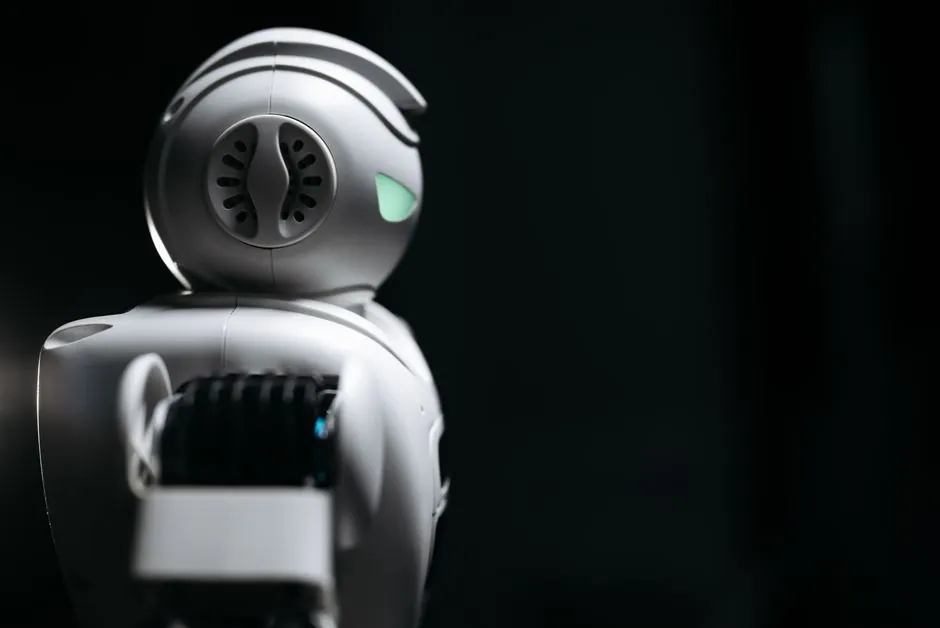
The 2026 commercial humanoid market runs from a $4,900 Unitree R1 entry point to a $420,000 Boston Dynamics electric Atlas, with 23 to 200 degrees of freedom, payload from near-zero on social units to 50 kg on Atlas, and battery life clustered between 2 and 5 hours under mixed duty [S2][S4].
Eight manufacturers now ship, deploy, or pilot: Unitree, Figure AI, Tesla, Boston Dynamics, Agility Robotics, Apptronik, Booster Robotics, 1X, and Fourier Intelligence, with cumulative venture funding above $6 billion since 2022 [S3]. The market crossed an inflection in 2025 when Unitree shipped over 5,500 units, Tesla began Optimus factory deployment, and Boston Dynamics launched the all-electric Atlas at CES 2026 [S2].
Price Bands and What Each Tier Buys
Entry-tier platforms under $20,000 target education, hobbyist developers, and budget-constrained research: Unitree G1 starts at $16,000 in the educational configuration without dexterous hands, $35,000-$45,000 with the Dex3-1 hand and upgraded compute, and the smaller Unitree R1 starts at $4,900 [S3][S4].
Mid-tier research and pilot units sit between $30,000 and $90,000: Booster K1 at $38,000-$65,000, Unitree H1 at $90,000-$128,900, and Booster T1 in the same bracket; Tesla Optimus Gen 2/3 targets $20,000-$30,000 at scale [S3][S1]. Enterprise pilots occupy the top tier with Figure 02 estimated at $150,000 and Agility Digit at $250,000+ RaaS equivalent, while Boston Dynamics electric Atlas is reported near $420,000 and is not sold to independent developers [S2][S3].
List prices are volatile and often negotiable, and Figure, Agility, and Apptronik do not publish retail rates because they sell through commercial pilot agreements bundled with service contracts [S3][S5].
Degrees of Freedom, Hand Dexterity, and Where They Matter
Total DoF ranges from 23 on the base Unitree G1 to 200 on the XPENG IRON (82 active), with Boston Dynamics electric Atlas at 56, Tesla Optimus at 72+ (22 per arm), Figure 02 at 51, and Unitree H1 at 27 [S1][S2][S4]. The emerging differentiator is hand DoF rather than whole-body count: Figure 03 lists 16 DoF per hand, the highest disclosed, while Tesla Optimus reaches 22 DoF per arm via tendon-driven actuation and 50 total actuators (25 per arm) [S2][S8].
1X NEO is the soft-body outlier, using 3D lattice polymer construction with 75 total DoF including 22-DoF hands, 68 kg lift capacity, 25 kg carry, 1.4 m/s walking and 6.2 m/s running, on an 842 Wh battery with 24-minute fast charge and 22 dB acoustic output, priced at $20,000 early access or $499/month subscription [S2]. For context on how industrial robot joint architectures evolved into these humanoid kinematic chains, the progression from 6-axis arms to 30+ DoF bipeds in seven years is unusual in factory automation.
Payload, Battery, and IP: Work-Grade vs Research-Grade
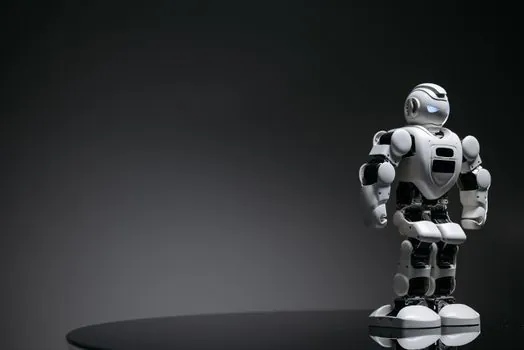
Payload-per-dollar separates research platforms from work platforms sharply: Fourier GR-1/GR-2 carries 40 kg at $150,000-$170,000, a 0.24-0.27 kg per $1,000 ratio; Unitree H1/H1-2 hits 0.20-0.33 kg per $1,000 at $90,000-$150,000; Agility Digit yields only 0.064 kg per $1,000 at $250,000, justified by autonomous tote-handling reliability rather than raw lift [S4].
Battery life clusters 2-5 hours: Unitree G1 around 2 hours, Apptronik Apollo about 4 hours, Agility Digit about 4 hours, Figure 02 rated 5 hours, Atlas at 4 hours with hot-swap, and 1X NEO at 4 hours on 842 Wh [S5][S2][S6]. IP ratings remain immature: most research units are not rated, Booster K1 leads at IP67 (body), 1X NEO lists IP68 hands and IP44 body, and only Unitree G1, Agility Digit, and Apptronik Apollo publish IP54 [S2][S5].
Onboard compute is split between NVIDIA Jetson modules and custom silicon: Unitree G1 runs Jetson Orin NX 8GB, Booster K1 runs Jetson AGX Orin, Apptronik Apollo uses custom NVIDIA-based hardware, 1X NEO pairs a custom SoC with NVIDIA Jetson Thor at 2070 FP4 TFLOPS, and Figure 02/Agility Digit compute is undisclosed [S2][S5].
Selection Criteria: Who a Humanoid Is, and Is Not, For
A humanoid is the right pick when the deployment site is human-built and cannot be re-engineered for wheeled or fixed-base automation: doorways, stairs, existing tool handovers, and shared workspaces are the genuine value zone [S3]. For a structured warehouse with tote flows, Agility Digit and Figure 02 are the deployed options; for a factory lifting 30-50 kg in industrial temperature ranges (-20 to 40°C), Atlas and Fourier GR-2 are the disclosed heavy-duty answers [S2].
A humanoid is the wrong pick when a 6-axis articulated robot on a fixed base covers the task at one-tenth the capital cost, or when a mobile base plus collaborative robot arm can do the same work without bipedal complexity. Goldman Sachs raised the 2035 humanoid TAM forecast to $38 billion, six times previous estimates, but most units shipping in 2026 are research and evaluation platforms rather than production workers [S2][S3].
For research teams, the structural difference is price per DoF: Unitree G1 at $314 per DoF in full configuration is mechanically the most efficient purchase on the market, Figure 03 projects to $455 per DoF if its under-$20,000 consumer target holds, Tesla Optimus Gen 2 lands at $714-$1,071 per DoF, and Fourier GR-1/GR-2 runs $2,830-$3,208 per DoF reflecting enterprise build quality [S4].
Software Ecosystem and Where Pilots Are Live
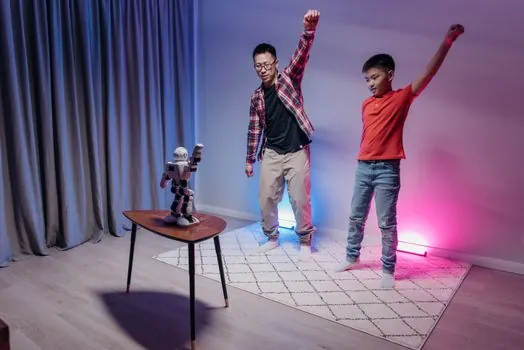
Software stack maturity is now a buying criterion equal to hardware specs. Unitree G1 has the largest third-party ecosystem and native ROS 2 support plus NVIDIA Isaac Sim compatibility, while Tesla Optimus runs end-to-end neural networks similar to FSD, Figure 02 uses vision-language models with 6 RGB cameras and dual GPU, and Atlas is committed to Hyundai and Google DeepMind pilots [S1][S2][S3].
Live commercial deployments in 2026 are concentrated: Figure 02 at BMW, Agility Digit at Amazon warehouse operations, Atlas at Hyundai, and Tesla Optimus internally at Tesla factories, while Booster K1 and Unitree G1 are the only platforms commercially available for direct purchase rather than pilot agreement [S1][S3][S5].
On data-collection suitability for imitation learning, OpenArm (an RCSV in-house 6-DoF manipulation arm at $4,500 purchase, $800/month lease) records synchronized multi-camera video, joint states, and actions at 50 Hz with sub-2 ms leader-follower latency, output HDF5/RLDS compatible with ACT, Diffusion Policy, and LeRobot [S5]. This sits below full humanoids in the SCARA robot and arm-tier category but addresses the data-pipeline gap that the larger bipedal platforms assume is solved.
Failure Modes and What the Specs Do Not Tell You
Reliability, autonomous capability, and battery life under real mixed duty remain the documented weak points of 2026 humanoids, and most published runtimes are best-case manufacturer ratings, not field data [S3]. Spare-parts availability, vendor support responsiveness, and documentation quality routinely decide a pilot's economics; a $16,000 platform with poor support costs more in engineering time than a $90,000 unit with mature documentation [S1].
DoF count alone does not capture actuation quality, control bandwidth, or sensor integration, and dexterous hand DoF is meaningless without compliant grasping and tactile sensing [S4][S8]. For autonomous mobile platforms with manipulation, the AMR robot reference architecture clarifies the navigation and fleet side, but bipedal humanoids add a balancing and gait layer that AMR stacks do not address.
Sourcing, Standards, and Trackable Signals

Verified sourcing in this article is restricted to manufacturer data sheets, CES 2026 disclosures, and hands-on evaluation reports published between January and June 2026; no ISO or IEC humanoid-specific performance standard was disclosed in the cited material, and no compliance certification (ISO 13849 for safety, IEC 61508 for functional safety, or ISO/TS 15066 for collaborative operation) was published in the research window for any of the listed platforms [S6].
Trackable signals for the next evaluation window: whether Tesla Optimus summer 2026 production start yields units outside Tesla internal use, whether Agility Digit's May 1, 2026 scale-up holds at the announced price band, and whether Figure 03's under-$20,000 consumer target survives contact with manufacturing cost [S2][S4]. Cumulative humanoid venture funding crossing the next billion-dollar mark and the first ISO-level safety certification issued to a bipedal platform are the structural gates a 2026 buyer should monitor.
Related analysis: Bridge Scaffolding Selection: System Types, Load Ratings, and 2026 Spec Map.