
IGBT raw material sourcing in 2026 is governed by four numbers: blocking voltage (650 V, 1200 V, 1700 V, or 3300 V classes), continuous collector current, package footprint (34 mm, 62 mm, or EconoDUAL), and thermal resistance Rth(j-c) at a defined case temperature [S2][S4].
The mainstream IGBT market is tracked at roughly USD 10.4 billion in 2026 with a projected climb to about USD 11.7 billion by 2029, a slower trajectory than SiC, which is taking share in 1200 V EV traction inverters, PV inverters, UPS systems, and industrial drives [S3].
Spec envelope: lock the three numbers before issuing any RFQ
The blocking voltage VCES must be sized at least 1.5x the maximum DC bus voltage to absorb switching transients and avalanche stress, which is why an 800 V DC system typically specifies a 1200 V class part [S4]. For industrial motor drives, 1200 V/75 A to 1200 V/600 A half-bridge modules dominate the BOM; for solar string inverters, 650 V/40 A to 650 V/300 A parts are the workhorse class; traction and UPS builds usually require 1700 V or 3300 V modules [S2].
Thermal performance is specified in watts at Tc=25°C and Tc=80°C, not in marketing language like "industrial grade" or "high power," because the 25°C figure overstates dissipation and leads to oversize heatsinks and wasted BOM cost [S2]. The next three numbers to pin down are short-circuit withstand time (typically 10 µs for most 1200 V modules), Vce(sat) at the rated current, and the integrated NTC thermistor resistance at 25°C, which sits near 5 kΩ on most modules [S2]. A practical reference example: the 650 V/300 A PGM300FF65GCE3SG module and its 650 V/400 A variant list 892 W total power dissipation, 1.7 V Vce, and 5.8 V Vge on the public datasheet, with a switching ceiling at 20 kHz [S2].
Discrete IGBTs require a separately supplied freewheeling diode in inverter and chopper topologies, and the diode's reverse-recovery behaviour belongs in the same loss and EMI budget as the IGBT's tail current, which is why paired IGBT/fast-recovery-rectifier lines are common at the discrete level [S3]. Discrete families typically span 600/650 V field-stop parts in TO-252 and TO-247 packages, plus 1200 V TO-247 devices such as the GIT065N50E1C2 (1200 V, TO-247AD) and the GIT065N75E1C2 (TO-247AD), with surface-mount options like the GIT065N06C1BF in TO-252 [S3]. Package thermal impedance, not just current rating, decides how hard a TO-252 or TO-247 part can be pushed inside a sealed enclosure, and 1200 V parts carry lower practical maximum junction temperatures because thicker drift regions store more charge that must be removed at turn-off [S3].
China vendor landscape: IDM vs packaging house
CR Micro, BYD Semiconductor, Silan, MACMIC, and China Resources Microelectronics are repeatedly cited as the top-tier Chinese IGBT houses, with CR Micro in particular covering chip design, wafer fab, packaging, and final test under one roof [S2]. Below that tier sit modular assemblers and trading brands that buy wafers or die from the fabs above and package into standard 34 mm, 62 mm, or EconoDUAL footprints.
For buyers, the practical split is between vertically integrated IDM vendors and packaging-only houses: IDMs can usually provide a full mask-set datasheet and PPAP-style documentation for automotive-tier customers, while packaging houses win on price and lead time for industrial SKUs [S2]. A 650 V/300 A half-bridge module in a standard 62 mm package lands roughly 30–60% below equivalent Infineon, Fuji, or Mitsubishi parts on FOB China price in 2026, though lot-to-lot variation is wider on packaging-only output [S2]. For more on how silicon, SiC, and GaN wafer supply chains diverge at the raw-material level, see this power semiconductor raw material sourcing breakdown.
Counterfeit and remarking risk: three checks that catch the bulk
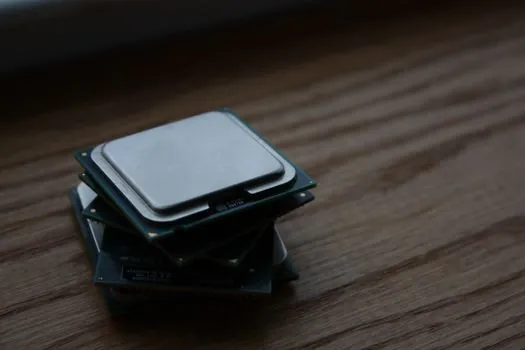
The most cited failure mode in China IGBT sourcing is the remarked or relabeled module: a lower-current die in a higher-current housing, sold at the higher-current price point [S2]. Three checks consistently catch the bulk of these parts: a capacitance test on the gate-emitter loop (Ciss and Cres mismatch versus the datasheet is a near-certain flag), a thermal imaging run at rated current for 60 seconds, and a decapsulation sample on a randomly drawn module from each lot [S2].
Documentation discipline is the first line of defence: the manufacturer date code, lot number, and country of wafer origin must appear on the shipping documents, and the absence of a date code is a near-certain red flag [S2]. Quality verification at the part level requires checking for ISO 9001 or IATF 16949 process certification, high-purity silicon wafers, robust gate oxide layers, proper die-attach techniques, and explicit confirmation that the die is not counterfeit or recycled [S6]. For a related perspective on how tier-1 verification workflows are structured in adjacent component categories, this MEMS sensor tier-1 supplier map outlines comparable documentation chains.
Mid-voltage topology choice: IGBT vs MOSFET vs SiC at 600–1200 V
At 600–1200 V and switching frequencies below roughly 20 kHz, an IGBT usually beats a silicon MOSFET on conduction loss, while a SiC MOSFET can beat both on switching efficiency; the right answer shifts with operating voltage, frequency, and thermal budget rather than brand preference [S3]. IGBTs dominate motor drives, UPS systems, and appliance converters, while SiC MOSFETs increasingly win high-frequency or high-temperature stages, with the crossover point depending on the design [S3].
Silicon remains the most common semiconductor material due to its cost-effectiveness and mature manufacturing processes, but silicon carbide is increasingly used in high-end applications because of its higher breakdown voltage to thickness ratio and better high-temperature behaviour [S5]. For grid-tied harmonic-mitigation hardware sitting downstream of an IGBT rectifier stage, this harmonic filter spec-anchored selection guide covers the matching reactive-component envelope.
Comparison matrix: how the main sourcing options line up

Four decision criteria structure the IGBT sourcing decision in 2026: voltage class coverage, thermal performance disclosure, documentation depth, and price gap versus Japanese/European equivalents. Chinese tier-1 IDMs (CR Micro, BYD Semi, Silan, MACMIC, China Resources Micro) typically cover the full 650/1200/1700 V range with mask-set datasheets, IATF 16949 documentation, and 30–60% lower FOB pricing than Infineon/Fuji/Mitsubishi equivalents [S2][S3]. Chinese packaging-only houses offer standard 34 mm, 62 mm, and EconoDUAL footprints at lower price points but with wider lot-to-lot variation and thinner documentation [S2]. Japanese/European majors (Infineon, Fuji, Mitsubishi) anchor the high-reliability and long-lifecycle end with mature PPAP packages, the trade-off being 1.5–3x the FOB China price of equivalent Chinese IDM output [S2].
Discrete IGBTs from lines like Good-Ark's 600/650 V TO-247 and TO-252 families, plus 1200 V TO-247 devices, suit low-channel-count designs where the designer supplies the freewheeling diode separately, while modules are mandatory for high-current inverter and chopper stages [S3]. For reactive-power stages that pair with IGBT-based inverters, the matching capacitor bank sizing logic is covered in this reactive power compensation sizing guide.
When IGBT raw material sourcing is the right call, and when it is not
IGBT sourcing fits motor drives, UPS systems, appliance converters, and traction inverters operating at 600–1700 V with switching frequencies below 20 kHz, where conduction loss dominates the loss budget and SiC's switching-loss advantage does not yet pay back its wafer-cost premium [S3]. It is the wrong call above roughly 20 kHz at 1200 V, where SiC MOSFETs pull ahead on switching loss, and at voltages above 3300 V where thyristor-based or IGCT topologies generally apply [S3][S4].
Buyers should also weigh traceability depth: IATF 16949-certified Chinese IDM parts suit automotive-tier builds, while ISO 9001-only packaging-house output is typically adequate for industrial SKUs but insufficient for safety-critical or automotive-qualified designs [S2][S6]. Trackable signals to watch: published 1700 V and 3300 V module datasheets from Chinese IDMs through 2026, the cadence of counterfeit-flag enforcement actions on cross-border IGBT shipments, and whether SiC price erosion shortens the payback window for SiC MOSFET adoption in 1200 V industrial drives [S2][S3].
Spec-level background on the components involved: linear guide, crossed roller guide, and advanced material.