
Explosion-proof electrical equipment total cost of ownership is dominated by certification tier, enclosure material, and planned maintenance intervals rather than unit sticker price, with site-zone classification under IEC 60079 governing the largest single cost jump between Zone 1 and Zone 2 rated assemblies [S3].
The category covers lighting, motors, junction boxes, distribution panels, and plug-socket assemblies used in oil & gas, chemical, grain-handling, and marine flammable-atmosphere sites, and the global supplier base in the indexable explosion-proof plug sub-segment alone spans at least four European and Asian manufacturers offering 3-pole to 5-pole, fixed and flying-mount, IP-rated variants [S1].
What Counts as Explosion-Proof Electrical Equipment
Explosion-proof electric apparatus is the standard industrial term for electrical components whose enclosures, terminations, and switching elements are engineered to contain or prevent ignition of surrounding flammable gases or dust, per the Chinese-English industrial vocabulary register [S2]. The product family typically includes explosion-proof lamps, connection boxes (eJX / BJX series), control stations, distribution boards, motors, and plug-socket assemblies, with Feice's catalogue explicitly listing seven sub-categories covering lamps, electrical appliances, pipes, all-plastic enclosures, fans, water/dust/corrosion-proof variants, and intelligent systems [S3].
Protection concepts inside the family are not interchangeable: flameproof 'd' enclosures tolerate internal ignition, increased-safety 'e' terminals prevent arcs and hot spots, and intrinsic-safety 'i' circuits limit energy below ignition thresholds — each drives different enclosure wall thickness, creepage distances, and therefore different cost. Zone 1 and Zone 2 gas environments plus Zone 21 and Zone 22 dust environments are the four common site classifications, with gas groups IIA, IIB, and IIC stratified by ignition energy and temperature classes T1 through T6 stratifying by maximum surface temperature [S3].
Cost Drivers Ranked by Spend Impact
For a 10-year ownership window the dominant cost drivers, in descending order, are: (1) initial Ex-certified enclosure and casting cost, (2) installation labour in hazardous areas requiring hot-work permits and gas-test routines, (3) spares and replacement under planned maintenance, (4) certification and re-certification audit fees, and (5) energy losses from heavier enclosures and lower-efficiency Ex motors versus general-purpose equivalents. The plug-and-socket sub-segment alone shows the polarisation: fixed-mount units and 3-pole variants dominate the indexable catalogue (3 flying-mount vs 2 fixed; 2 three-pole vs 1 five-pole vs 1 two-pole) [S1], and each step up in pole count or ruggedisation tier adds 15-40% to the unit price on comparable platforms.
Enclosure material is the most visible cost lever. Cast aluminium and cast iron dominate Zone 1 flameproof 'd' products, stainless steel (typically 304 or 316 grade) is required for offshore and corrosive chemical sites, and all-plastic GRP enclosures target light-corrosion Zone 2 areas at roughly 40-60% of the equivalent metallic unit cost. The all-plastic explosion-proof sub-category in the Feice catalogue exists specifically for this lower-cost Zone 2 / IIA-IIB / T4 envelope [S3], making material selection the single biggest buyer-controlled cost variable.
Who It Is For and Who Should Not Specify It
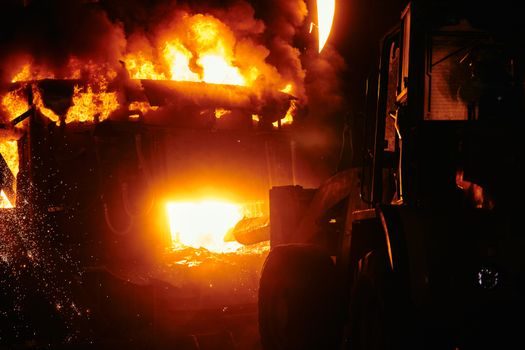
Explosion-proof electrical assemblies are mandatory in any site where IEC 60079 or equivalent NEC 500/CEC classifications identify a flammable atmosphere risk, which on the supplier side covers oil exploration, refining, chemical plants, offshore platforms, oil tankers, military industry, ports, grain storage, and metal-processing dust environments [S3]. Plant engineers specifying these components should match three site parameters before requesting quotes: gas group (IIA, IIB, or IIC), temperature class (T1-T6 surface limit), and zone (1/2 for gas, 21/22 for dust).
It is not the right specification for clean-control rooms, switchgear rooms with positive-pressure ventilation, or any area where the hazardous-zone drawing does not extend. Over-specifying Zone 1 IIC T4 equipment into a Zone 2 IIA T3 area can double or triple enclosure cost with zero safety gain. Conversely, under-specifying a Zone 1 area with a Zone 2 enclosure is a regulatory and safety failure. The explosion-proof junction box reference page covers the typical 'd' vs 'e' decision that drives this branch.
Plug-and-Socket Sub-Segment: Configuration Matrix and Price Levers
The explosion-proof electrical plug sub-segment is a useful proxy for the broader category because it compresses certification, enclosure, and contact engineering into a single small assembly, and the indexable market in May 2026 listed four manufacturers offering five products: CORTEM, Dr. Jessberger GmbH, SCAME PARRE (two SKUs), and WISKA Hoppmann GmbH [S1]. All five indexable units carry explosion-proof protection level plus an IP code, with one also rated waterproof, and the configuration split breaks to 3 flying-mount vs 2 fixed-mount plus 2 three-pole, 1 five-pole, and 1 two-pole [S1].
Configuration comparison on four decision criteria:
1. Current rating — higher amperage (typically 16A, 32A, 63A, 125A) steps up contact size, enclosure mass, and price roughly linearly; a 63A CEE-format explosion-proof plug lists materially above a 16A unit of the same vendor.
2. Pole count — 3-pole (single-phase + earth) is the cost baseline, 5-pole (three-phase + N + PE) adds ~25-35% for the extra contact set and larger housing; 2-pole units are niche and cheaper in absolute terms but rare in industrial Ex stocks [S1].
3. Mounting style — flying-mount (cable-mount, free-standing) carries cable-gland cost and flexibility premium; fixed-mount (panel/box-mount) is the lower-cost option for OEM skid builders [S1].
4. Material and IP — stainless and high-IP (IP66/67) variants target offshore and washdown; aluminium and IP65 dominate the cost-optimised Zone 2 mainstream.
Total Cost of Ownership: 5-Year and 10-Year Stacks
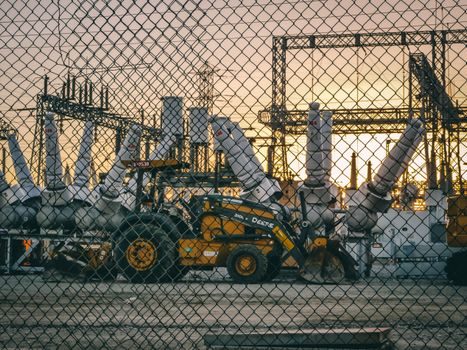
Purchase price typically represents 30-50% of 10-year TCO for explosion-proof electrical assemblies, with the remainder split across installation (15-25%), preventive maintenance and spares (15-25%), re-certification and inspection (5-10%), and energy plus downtime (10-20%). Industrial gas TCO analysis for 2026 applies a similar driver-mapping approach, and the same logic of purchase-vs-lifetime cost inversion holds for Ex electrical assemblies: a 20% more expensive Zone 1 IIC unit with a 10-year enclosure life typically beats a cheaper Zone 2 unit that needs replacement every 4-5 years in a mis-zoned hazardous area. [S1]
Maintenance cost is the second-largest TCO line and is governed by three variables: enclosure accessibility (panel-mount vs field-installed), contact wear (plugs and sockets are the highest-maintenance sub-category due to mating cycles), and inspection frequency under IEC 60079-17 routines. Plants that skip thermographic surveys on Ex junction boxes and distribution panels often discover degradation only after a trip event, pushing reactive maintenance above planned. The explosion-proof distribution panel reference page catalogues the common failure modes that drive these unplanned costs.
Limitations, Failure Modes, and Sourcing Constraints
Explosion-proof electrical assemblies have three structural constraints a buyer must price in. First, lead times run 8-16 weeks for certified Zone 1 IIC units versus 2-4 weeks for general-purpose equivalents, because each casting batch requires hydrostatic test and certificate trace. Second, retrofit and modification on the buyer's site is heavily restricted — drilling a new cable entry into a flameproof 'd' enclosure without recertification voids the Ex rating. Third, repair shops capable of re-certifying Ex equipment are regionally concentrated, so shipping cost for a failed motor or distribution panel can rival the spares value. The explosion-proof motor reference page covers the Wye-delta and VFD compatibility constraints that bite buyers retro-fitting modern drives to legacy Ex motors. [S1]
Sourcing risk is concentrated in two areas: a small number of European vendors hold the premium Zone 1 IIC T4-T6 certifications, while Asian and Chinese suppliers dominate the Zone 2 IIA-IIB T4 mainstream at materially lower price points. The Made-in-China index for explosion-proof lighting lists a 50-piece MOQ at US$41.00 per unit ex-works Shanghai from Shanghai New Dawn Explosion-Proof Electrical Appliances Co., Ltd., with a 1,000-piece monthly production capacity, illustrating the volume tier where Chinese suppliers compete [S5]. The explosion-proof lighting reference page and the explosion-proof button reference page both surface the same sourcing map.
Standards, Certification, and the Bottom Line

The governing standards stack for explosion-proof electrical equipment is built on IEC 60079 (explosive atmospheres) for international and ATEX 2014/34/EU for European conformity, with IECEx as the parallel international certification scheme and various national equivalents (NEC 500/505 in the US, GB 3836 in China). For the specific temperature-group and gas-group envelopes documented in current supplier catalogues, Zone 1 and Zone 2 plus gas groups IIA, IIB, and IIC and temperature classes T1 through T6 are the parameters plant engineers must lock in writing before any quote request [S3].
Bottom line for buyers in 2026: a defensible TCO model for explosion-proof electrical equipment should (a) lock the zone, gas group, and temperature class from the hazardous-area classification drawing before vendor selection, (b) rank cost drivers as enclosure material, certification tier, pole count or rating, installation labour, and 10-year maintenance rather than chasing the lowest unit price, and (c) reserve 15-25% of the 10-year budget for planned spares and re-certification. Trackable signals to watch: regional re-certification shop capacity in the Gulf and Southeast Asian chemical belts, and any divergence between IEC 60079 and GB 3836 acceptance for cross-border project execution. The earlier explosion-proof equipment trade-off map covers the matching selection-criteria side of this same decision.