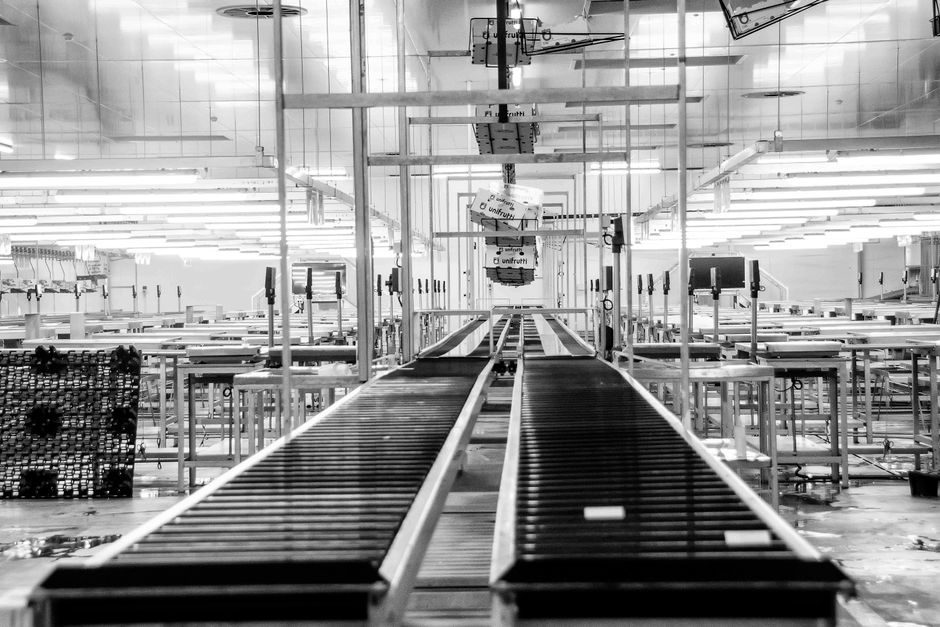
DirectIndustry's industrial-manufacturer index for "GPU PC / GPU computer" returned 59 products from 9 named manufacturers on 2026-05-29, with embedded Edge AI box form factors accounting for 29 entries, classic box PCs at 24, and dedicated GPU server SKUs limited to 2 [S1].
The same index categorises product configuration as 29 embedded, 22 wall-mounted, and a tail of eMMC and 32 GB storage variants, while supported operating systems break down to 33 Linux SKUs against a smaller Windows / Android tail [S1]. BIOSTAR's 2026-06-04 product page keeps discrete graphics cards grouped under "Graphic Card" for gaming, professional video editing, 3D design, and AI computing workloads [S2].
Manufacturer count, product count and product-type split
DirectIndustry's 2026-05-29 snapshot of the GPU PC category lists exactly 9 manufacturers with 59 products; per-vendor product counts are AAEON 3, Acnodes Corporation 2, ADVANTECH 3, ASUSTeK computer INC 2, DFI 11, e-con Systems 1, Estone Technology 1, and Winmate 4 [S1]. The product-type breakdown on the same index shows 29 Edge AI, 24 box, 23 "artificial intelligence", 14 "EDGE", 12 GPU, 11 expansion, 2 server, and 1 barebone entry — a long tail dominated by Edge AI inference boxes rather than rackmount GPU servers [S1].
Configuration tags from the same filter set show 29 embedded, 22 wall-mounted, plus a storage mix including 1024 GB (1 SKU), eMMC 128 GB (1), eMMC 64 GB (1), eMMC 16 GB (1), and 32 GB (1) — meaning only 5 of the 59 SKUs are tagged with a specific storage figure on the index page itself [S1]. Buyers scanning this category should treat the Edge AI embedded box form factor as the volume play and rackmount GPU server as a niche within industrial channels, not the mainstream.
Discrete graphics card line: BIOSTAR positioning and use-case split
BIOSTAR's 2026-06-04 product page groups its discrete GPU offering under "Graphic Card / Graphics Cards" and explicitly markets them across four workloads: gaming, professional video editing, 3D design, and AI computing [S2]. The page is positioned as a multi-platform GPU line rather than a single-chip product, matching the way DirectIndustry's embedded partners mix NVIDIA, Intel, and ARM-SoC GPUs inside Edge AI boxes [S1][S2].
For industrial sourcing, the practical split is: BIOSTAR-style discrete cards for workstation-class throughput on a PCIe slot, versus AAEON / ADVANTECH / DFI / Winmate Edge AI boxes for fanless or ruggedised inference at the line. Both segments overlap on the "AI computing" label, but their thermal, I/O, and lifecycle profiles are different — a workstation GPU card assumes a desktop chassis with active cooling, while an Edge AI box is specified for DIN-rail or wall mount — the same form-factor slot as a PLC — and a wider operating-temperature envelope [S1][S2].
Discrete GPU platforms referenced by NVIDIA compute-capability tables
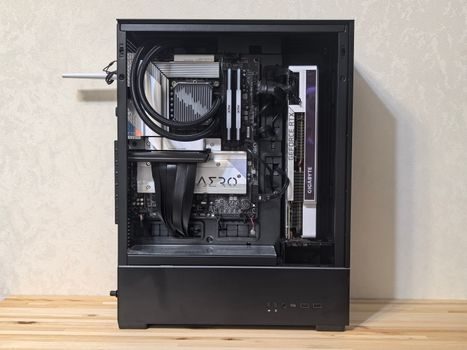
NVIDIA's CUDA GPUs page, mirrored on 2018-02-09 by cnblogs.com/alpencv, lists the consumer, professional and datacentre GPU families — GeForce, Quadro, and Tesla — that any industrial GPU PC ultimately integrates [S4]. Tesla is positioned for technical and scientific computing, Quadro for professional visualisation, and GeForce for consumer acceleration; workstation and Edge AI boxes reuse the same silicon across these brand lines [S4].
Procurement teams cross-referencing a vendor's "NVIDIA-based" claim should ask for the specific compute-capability number (e.g. 7.5, 8.0, 8.6, 8.9) and the TDP band, since compute capability governs CUDA feature support and TDP governs whether the SKU can be passively cooled inside a sealed Edge AI enclosure [S4]. The 2018 mirror is dated, so confirm the current list against NVIDIA's developer page before sign-off.
GPU resource management on LSF compute clusters
IBM Spectrum LSF's bjobs command exposes a -gpu flag that reports HOST, TASK, GPU_ID and (from Fix Pack 14) GI_PLACEMENT/SIZE — i.e. the location and size of the GPU instance within the GPU device — as documented on 2026-06-08 [S3]. This is the operator-side view of how a server-grade GPU is partitioned and assigned, and is the same model that GPU server SKUs in the DirectIndustry index (2 of 59 products) are expected to expose [S1][S3].
For a plant floor or lab buyer — the same buyer who specifies a pressure sensor for a process line — the LSF-level GPU_ID and MIG-style partitioning (GI_PLACEMENT/SIZE) matters when the workload is shared between inference and training on the same physical card. If the Edge AI vendor's datasheet does not state MIG support, do not assume multi-tenant GPU sharing is possible at the cluster scheduler level [S3].
Selection criteria: form factor, OS support, storage, cooling
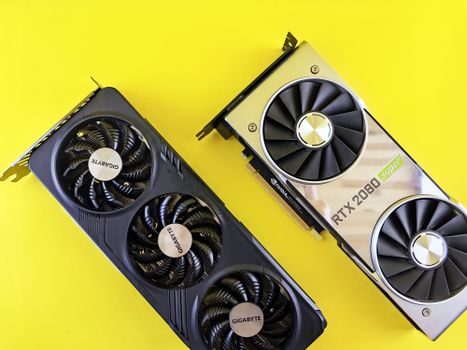
Across the 9 manufacturers indexed on 2026-05-29, the four filters that actually differentiate the SKUs are: configuration (29 embedded vs 22 wall-mounted vs the rackmount tail), operating system (33 Linux SKUs dominate), storage variant, and Edge AI vs generic box labelling [S1]. Linux share is the single most consistent filter on the index, which mirrors industrial customer reality — most Edge AI deployments run a Yocto, Ubuntu, or Jetson-style Linux image rather than Windows [S1].
For buyers weighing DFI's 11-SKU spread against AAEON's 3-SKU tighter portfolio, the decision reduces to whether you need a wide CPU/NPU/GPU matrix (DFI) or a narrower, longer-lifecycle platform (AAEON / Winmate) [S1]. The supply-chain discipline here is identical to other industrial equipment categories — compare suppliers on lifecycle, MTC traceability, and revision control, the same way you would audit a steel strand buying guide on diameter, grade, and MTC.
Comparison: Edge AI box vs discrete GPU card vs GPU server
On three decision criteria — form factor, workload fit, and OS share — the three main industrial GPU product types line up as follows. Edge AI embedded box: 29 of 59 DirectIndustry SKUs, Linux-dominated, fits line-side inference and machine-vision preprocessing, typically co-located with servo motor drives on the same machine. Discrete GPU card (BIOSTAR class): workstation-class, multi-workload (gaming / video / 3D / AI), assumes a desktop chassis with active cooling and a PCIe slot [S1][S2]. GPU server: 2 of 59 SKUs, cluster-managed, exposes LSF-level GPU_ID and GI_PLACEMENT/SIZE for multi-tenant training and inference [S1][S3].
The choice between them is not price-first; it is thermal-envelope-first, then I/O and lifecycle. A sealed cabinet on a factory floor cannot host a BIOSTAR discrete card without derating; conversely, a 2-SKU rackmount GPU server is overkill for a single vision cell. For a deeper BOM-cost comparison across industrial lines, the same triage logic used in a die casting machine price guide — match configuration to duty cycle, then size — applies directly to GPU PC selection.
Limitations, failure modes and sourcing signals to watch
Three failure modes recur across the 2026-05-29 DirectIndustry snapshot. First, the storage field is sparsely populated — only 5 of 59 SKUs are tagged with a specific storage figure, so a buyer cannot filter the index by SSD capacity and must drill into each vendor PDF [S1]. Second, the OS filter shows Linux as the only well-populated column, meaning a Windows-IoT or RTX Virtual Workstation requirement will narrow the field sharply and probably force a non-Edge-AI SKU [S1]. Third, GPU server SKUs are scarce (2 of 59), so any cluster-scale build will route through standard datacentre hardware channels rather than industrial-PC distributors [S1].
Trackable signals: the DirectIndustry manufacturer count (currently 9) and product count (currently 59) on 2026-05-29 [S1]; BIOSTAR's graphics card product page revision on 2026-06-04 [S2]; and IBM LSF Fix Pack 14's GI_PLACEMENT/SIZE field as the cluster-side proof point for GPU partitioning [S3]. For BOM-level sourcing discipline on adjacent lines, the alloy steel buying guide covers mill-source and MTC traceability in a way that maps cleanly onto Edge AI supplier audits.