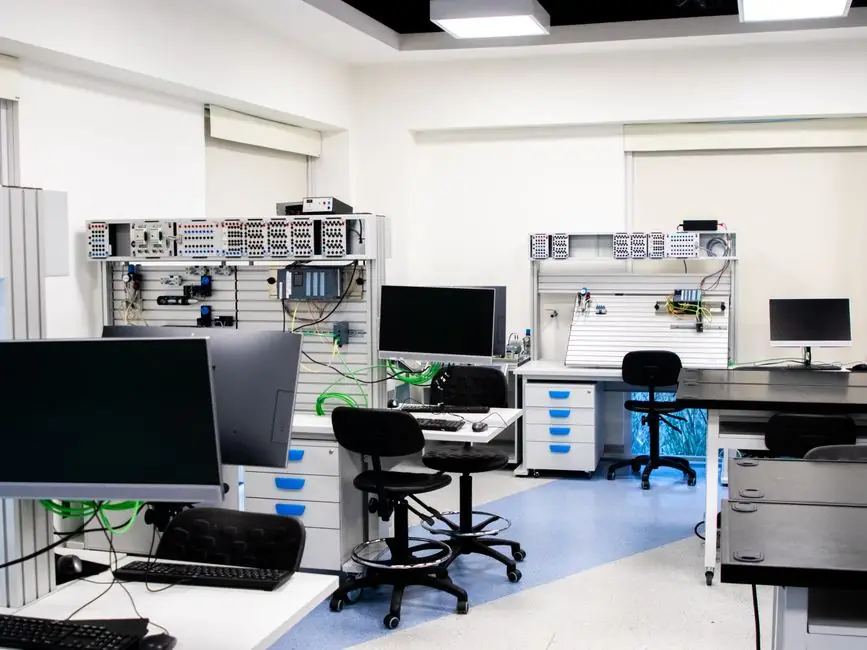
Industrial software recorded 123 transactions in H1 2026, an 83.6% year-on-year increase, with manufacturing operations management accounting for 31% of deal activity [S1].
The acquisition mix spans MES, PLM, simulation, AI, maintenance, quality, field service and utilities software, reflecting a shift from isolated applications toward integrated industrial technology suites [S1].
123 Deals Define the 2026 Industrial Software Market
Industrial software M&A comprised 123 transactions during H1 2026, up 83.6% from the corresponding period in 2025 [S1]. Operations management led with 31% of transactions, enabling and cross-cutting software followed at 29%, engineering and design represented 28%, and automation and controlling accounted for 12% [S1].
Buyers concentrated on applications that control production, integrate enterprise and plant data, or support recurring service revenue [S1]. The market covered automation and controlling, including SCADA, PLC, HMI and DCS, plus CAD, CAE, CAM, EDA, MES, SCM, EAM, predictive maintenance, field service management, quality, compliance, cybersecurity and analytics [S1].
This deal breadth matters because the acquisition target now sits within a wider industrial stack. A plant running SCADA software, HMI panels and industrial PCs may evaluate MES and PLM acquisitions as strategic extensions rather than isolated software purchases.
Vertical Integration Is the Central Deal Rationale
Manufacturing operations management produced the largest transaction share at 31%, while enabling and cross-cutting layers reached 29%, confirming that consolidation is concentrating around production-critical applications [S1]. Buyers were assembling one-stop-shop platforms, targeting specialists with positions in maintenance, quality, field service and vertical ERP [S1].
These transactions combine domain-specific workflows with recurring-revenue software portfolios, rather than simply adding generic analytics features [S1].
For buyers, the decisive metrics are operational leverage and integration feasibility. Industrial software spending is being tied to uptime, labor efficiency, working capital, quality and first-pass yield, while secondary analytics layers face more scrutiny unless embedded in execution workflows [S3].
AI and Simulation Are Becoming Transaction Catalysts

AI-native simulation, robotics and inspection software led the AI-led transaction set in H1 2026, while embedded AI, real-time IIoT integration and predictive maintenance also attracted capital [S1]. Industrial software M&A in H1 2026 featured strategic platforms consolidating AI, simulation, and vertical software capabilities into integrated solution suites, while private equity backed mission-critical applications with recurring revenues [S1].
Within PLM, AI functions include part-data classification, engineering-change impact prediction, simulation-model optimization, multi-tier supplier mapping, missing material and process-data completion, and BOM enrichment for cost, risk, carbon and compliance analysis [S5]. The buying test is whether AI operates at BOM level and affects decisions across engineering, sourcing and compliance, rather than whether an AI label appears on the product [S5].
Simulation platforms therefore matter beyond graphics and visualization. PLM, CAD and CAE systems hold product structures, engineering changes, BOMs and lifecycle data, and simulation extends those definitions into virtual validation and decision support [S3][S5]. Buyers should distinguish AI embedded in engineering workflows from applications limited to simulation or digital twins [S5].
MES Selection Is an Architecture Decision
The MES market is being organized around the MINT Stack: MES, an IIoT data layer, Namespace/UNS, and tools such as connected-worker, OEE and analytics functions [S2]. Siemens Opcenter is positioned for enterprise discrete manufacturing, DELMIA Apriso for global multi-site standardization, AVEVA MES for modular OEE-first deployments, Velotic for unified Level 1–3 ecosystems, Tulip for composable low-code workflows, and Rhize for commercial ISA-95 MES with UNS-native architecture [S2].
The comparison should be based on production model, data strategy, multi-site governance and integration architecture rather than feature count [S2]. Siemens Opcenter and DELMIA Apriso fit large operating environments, AVEVA MES suits modular OEE programs, Tulip addresses configurable workflows, and Rhize targets ISA-95 and UNS-centered estates [S2]. No single platform is positioned to win every discrete, process, and hybrid production mode [S2].
Operational ownership must also be explicit. ERP holds production orders, MES holds execution status, SCADA holds machine data, quality systems hold inspection results, and PLM holds manufacturing definitions; duplicated ownership turns integration into a permanent maintenance burden [S2]. Buyers should define one owner for each business decision before selecting a platform [S2].
PLM, MES and ERP Need a Defined Digital Thread
A manufacturing integration stack commonly combines PLM platforms such as 3DEXPERIENCE and CATIA, MES for shop-floor execution, ERP systems such as SAP and Oracle, CAD for design, and SCADA or IIoT platforms for machine connectivity [S4]. The ISA-95 three-layer model separates business planning in ERP, manufacturing execution in MES, and real-time process control in SCADA and PLC systems [S4].
Integration patterns include point-to-point links, enterprise service buses and API-led connectivity, with trade-offs in complexity, latency and maintainability [S4]. A unified data model linking BOMs and routings reduces mapping effort, while bidirectional work-order and material-consumption flows keep planning and execution aligned [S4].
PLM-to-MES continuity therefore requires more than an API. Manufacturing definitions, BOMs, routings, engineering changes, work orders and material consumption need governed ownership. The HMI panel and SCADA software layers must preserve the operational context needed by MES without turning every production event into a manual integration task [S2][S4].
Buyer Profiles and Deal Constraints
The buyer profile with the strongest fit is a multi-site manufacturer pursuing standardized execution, measurable uptime, quality improvement and labor efficiency through an integrated MES, PLM and data architecture [S2][S3]. This profile values open APIs, accessible data and direct workflow integration, with ROI tied to downtime reduction, throughput and working-capital performance [S3].
A smaller plant may gain less from a broad platform consolidation if it lacks the internal ownership, data preparation and integration resources needed to operate it. M&A can deepen vendor dependence by embedding production, quality, maintenance and supplier processes inside one suite [S1]. A buyer should test export rights, migration paths, data ownership and upgrade economics before accepting platform consolidation [S1].
Price discipline remains a constraint. Budget scrutiny is real, and platforms outside core execution workflows can face longer evaluation cycles [S3]. The relevant comparison is therefore total deployment and operating burden, including integration work, duplicated data ownership and ongoing maintenance, not license count alone [S2].
Track Consolidation Signals After 2026

Two signals provide a practical post-2026 tracking framework: the transaction share of operations, engineering and AI-led simulation assets, and the percentage of acquisitions that close into integrated product suites rather than standalone tools [S1]. Operational software represented 31% of H1 2026 transactions, engineering and design represented 28%, and enabling layers represented 29% [S1].
The second signal is buyer alignment with measurable plant outcomes. Software that improves uptime, quality, throughput and labor efficiency remains better positioned than disconnected analytics, while APIs, clean integration paths and data accessibility are becoming procurement filters [S3]. Buyers should use those outcomes, not transaction volume alone, to evaluate industrial displays, industrial routers, industrial switches and the surrounding shop-floor architecture selected for a new MES or PLM program.