
A concrete-grade infrared line level in 2026 is best specified as a dual-emission layout tool: a visible 635 nm or 660 nm reference line paired with a co-aligned 850 nm or 940 nm near-IR channel for machine-vision and line-receiver pickup, with a published accuracy band of ±0.3 to ±0.5 mm/m, a self-leveling range of ±3° to ±4°, and an IP54 or IP65 housing depending on whether the unit cycles between a dry interior and a wet pour site [S2][S3].
For slab, formwork and screed work, the three spec numbers that decide a tool are the deviation figure in mm/m, the detector-supported working range in metres, and the laser class of each channel, because a unit that washes out past 6 m under 500 lux interior lighting or that triggers a Class 3R visible beam cannot be safely handed to a finishing crew on a slab [S2][S4].
Wavelength Package: Why the IR Channel Matters on Concrete
Construction line lasers emit visible light, not true infrared, because the operator has to see the line to work to it; the "infrared" label in the category is a marketing carryover from 808-905 nm near-IR variants that require a detector to render the beam visible [S3][S4]. The visible 635 nm or 660 nm channel is the human-reference line because the eye peaks near 555 nm and falls off past 700 nm, while a co-aligned 850 nm or 940 nm near-IR beam lets a line receiver, AGV camera, or ceiling-mounted reference detector lock onto a beam the human eye ignores, which is critical on long concrete pour strips where bright daylight or wet sheen washes the visible red out past 4-6 m [S2][S4].
Credible 2026 datasheets list the visible channel and the IR channel separately, with the visible beam most often rated Class 2 (≤1 mW continuous) and the IR beam often rated Class 1, because the invisible IR channel carries a tighter legal exposure limit per the IEC 60825-1 family of laser safety rules; a 940 nm source at the same optical power is a safer choice than 850 nm around reflective wet steel or polished form-face, but neither replaces the labelled laser class on the housing [S2][S3]. Reject any spec sheet that lists only "laser line" with no wavelength data, no separate IR class, and no detector-matching spec [S2].
Accuracy Bands and What They Mean on a Slab
Three accuracy bands dominate 2026 SKUs and map cleanly onto concrete tasks: ±0.2 mm/m for precision cabinetry and raised-access floor grids, ±0.3 mm/m for general interior layout including partition walls and ceiling grid, and ±0.5 mm/m for rough plumbing, mechanical-rough-in and exterior formwork, where the formwork tolerance is already ±10 mm so chasing sub-millimetre line accuracy on a wet-pour setup is wasted spend [S2]. On a 10 m run the deltas work out to 2 mm, 3 mm and 5 mm respectively, which is the difference between a tile reveal that closes and one that daylights along a corridor, or a slab elevation mark that matches the structural drawing versus one that pours an extra 5 mm of concrete over a 50 m² pour [S2].
Field reality is that a ±0.2 mm/m handheld unit is sensitive to tripod flex, vibration and the thermal expansion of the housing itself, so the gain over ±0.3 mm/m disappears if the operator mounts the tool on a flexible stud or a wet-plywood formwork spreader; calibration intervals of 6-12 months are typical for 2026 stock, and flat-rate factory fees cluster in the 30-80 USD band for most pro SKUs [S2]. For exterior slab and formwork, a ±0.5 mm/m cross-line unit with a detector is the right ceiling, and the same physics that governs an infrared thermometer reading on curing concrete at 0.95 emissivity governs why a stable thermal environment, not a tighter accuracy band, drives repeatable line position on a hot slab in direct sun [S5][S6].
Working Range, IP Rating, and Power for Site Use
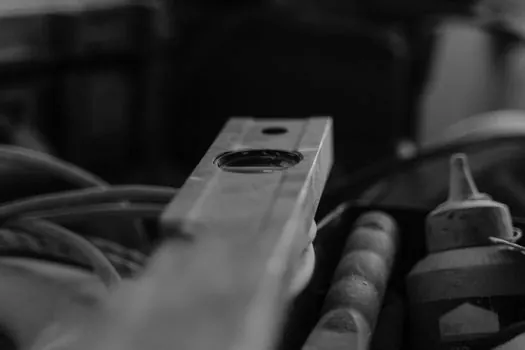
Rated range on a 2026 line level is almost always quoted two ways: visible line length (typically 20-30 m, sometimes 50 m in bright interior conditions with a target plate) and detector-supported range (typically 50-80 m with a matching line receiver); a 30 m visible / 60 m detector unit is a stronger fit for warehouse slabs and large-format commercial pours than a 10 m / 20 m economy unit sized for bathroom and kitchen work [S2]. For outdoor slab work past 15 m, verify that the IR channel and the bundled detector share the same wavelength band and pulse-modulation frequency, because a mismatched detector will simply ignore the line [S2][S4].
Ingress protection is a hard gate for concrete trades: IP54 is the realistic floor for indoor site use where dust and splash are occasional, and IP65 is the right floor for crews that cycle tools between a dry van and a wet pour strip, with running temperature spans usually landing in the −10 °C to +45 °C window and some pro SKUs extended to −20 °C for winter slab work in cold-climate markets [S2]. Power draw is dominated by the diode and the pendulum damper at 1-3 W from 2-4 AA cells for 8-20 hours of continuous run-time, which compares well with a rotary laser and detector pair that pulls 1.8-3.5 kg versus the line level's 0.4-1.2 kg, and at 60-85% lower retail cost on a like-for-like basis [S4].
Comparison: IR Line Level vs Cross-Line Green vs Rotary Red on Concrete
Three tool classes compete for concrete layout, and the decision turns on four criteria: visibility range under 1000 lux ambient, accuracy at 10 m, detector compatibility for outdoor slab use, and unit cost in USD retail. A Class II 650 nm infrared line level delivers 4-6 m visible and 20-30 m with detector, ±0.3 to ±0.5 mm/m at 10 m, full detector support via the 850 nm or 940 nm IR channel, and a retail band around 80-250 USD for typical 2026 SKUs; a 510-532 nm green cross-line unit extends visible range to 15-25 m because the eye is roughly four times more sensitive at 532 nm, holds the same ±0.3 mm/m accuracy class, supports the same detector family, and lands in a 200-450 USD retail band [S2][S4]. A rotating red-beam laser with detector pushes visible range past 50 m and accuracy to ±1.5-3 mm at 30 m, supports long-throw detector work out to 300-500 m, but typically retails at 500-1200 USD with the detector, and adds 1-3 seconds of spin-up time per setup that the line level avoids [S1][S4].
For interior slab and partition layout under 15 m, the cross-line green unit wins on visibility without a detector; for outdoor slab and formwork past 20 m, the rotating red with detector wins on raw range despite the cost and spin-up penalty; for the wide middle band of 6-30 m concrete pours, partition walls and mechanical-rough-in, the dual-emission infrared line level with detector is the cost-and-weight winner because the IR channel turns a cheap photodiode receiver into an effective 50-80 m reference without forcing the operator to chase a fading visible red across a wet pour [S2][S4]. Spec numbers across the three classes are not interchangeable: a line-level that quotes ±2 mm at 10 m extrapolates to ±200 mm per km, four orders of magnitude worse than a surveyor's automatic optical level specified under ISO 17123-2 / DIN 18723 at ±1.0 mm per km double-run, so for setting a structural slab elevation control grid a separate automatic level is still the right tool and a line level is not [S1].
Selection Criteria, Failure Modes, and Concrete-Site Limits
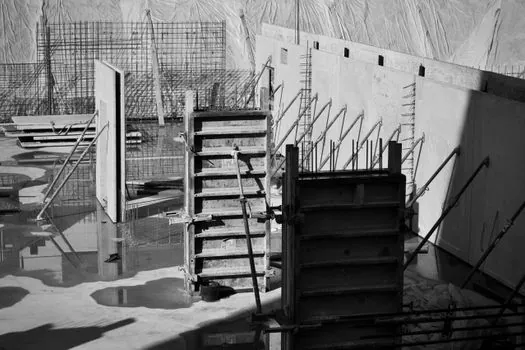
The right infrared line level for a concrete crew is decided by distance, ambient light, surface area, and the type of accuracy the pour actually needs; for 3-10 m interior fit-out a compact cross-line unit with 2-3 mm accuracy at 10 m is the right size, and for 15-30 m room-wide commercial layout a longer-throw line generator with 3-5 mm accuracy at 20 m is the right size, with both tiers sharing the same self-leveling physics but diverging on diode power, receiver compatibility and IP rating [S4]. Three constraints define where any line level fails on concrete: ambient light past 500 lux, which fades the dim red line to invisibility past 4-6 m without a detector; line geometry, because there is no rotary sweep, no plumb-up / plumb-down dual reference, and no slope-match mode, and on a floor outside a ±3-4° self-leveling envelope the unit beeps and refuses to project, which is the correct safety behaviour but eliminates it for drainage slope, grade work, and outdoor earthwork [S4]; and floor-flatness drift, where over 15 m on uneven substrate the line is a single plane rather than a swept cone and accuracy drift widens to 2-4 mm because a dip or crown in the slab translates directly into vertical offset at the far end [S4].
Temperature drift of the diode housing shifts line position by roughly 0.1-0.3 mm per °C once the unit has been moved from a cold overnight van into a heated interior, so for early-morning winter pours let the tool acclimatise for 10-15 minutes before locking the elevation marks, and avoid mounting on a flexible stud or wet-plywood formwork spreader where a ±0.2 mm/m precision unit loses its advantage over a ±0.3 mm/m rugged model [S2][S4]. Sourcing signals to watch through 2026: line-level vendors that publish a wavelength band, an output power in mW, and a detector-matching spec alongside an IP code and a calibration certificate, and that quote the visible and IR laser classes separately under IEC 60825-1, are the SKUs that survive a concrete-site procurement gate, while single-number "±X mm at Y m" spec sheets with no test procedure should be read as indicative rather than absolute and ranked accordingly [S1][S2]. For a broader cross-tool comparison on masonry measurement work, the masonry laser distance meter spec gate covers the complementary distance-measurement side of the same concrete layout kit.
For the relevant spec sheets and selection criteria, see infrared level, and aerial work platform.