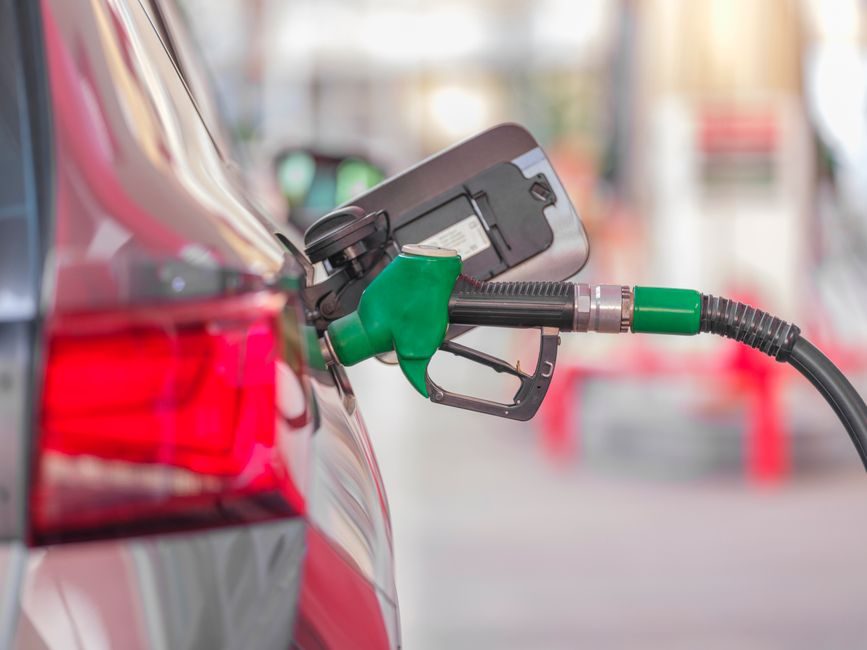
On 2026-07-19 the DirectIndustry catalog still shows inline centrifugal pipeline pumps rated for tens to hundreds of m³/h on clean water and chemicals, while the actively refreshed double-diaphragm (AODD) listings of 2026-05-31 to 2026-06-06 cluster in the 5–450 l/min range with self-priming and ATEX options as the headline feature [S1][S2][S4].
Decision-making is therefore binary: continuous high-flow clean service, or low-to-medium flow service on difficult fluids. The two pump families overlap only in a narrow 5–50 l/min envelope where duty cycle, viscosity, suction conditions and hazardous-area certification decide the winner.
What Each Pump Family Actually Is
An inline pipeline pump is a close-coupled centrifugal unit installed directly in the pipe run, with the suction and discharge ports on the same axis and the motor coupled to the impeller through a rigid or flexible spacer coupling; the family includes single-stage, multistage and ANSI/API process variants for water, glycol, light chemicals and HVAC duty. [S2]
A diaphragm pump — the industrial AODD form being catalog-refreshed through 2026 — uses two flexible membranes driven by compressed air in alternating half-cycles; Argal's QUANTUM (DDQ) [S1], WAGNER's Unica series [S2] and FLUIMAC's P400 ATEX [S4] are all double-diaphragm, self-priming, stationary units aimed at chemical, paint and adhesive service. The reference page for diaphragm pump outlines the same operating principle and the same limitations the OEM data confirm.
Flow, Pressure and Head Compared
AODD units are flow-throttled by supply-air pressure; the QUANTUM (DDQ) is published at 450 l/min at 8 bar (116 psi) and 70 m head [S1], the FLUIMAC P400 ATEX sits in the same high-flow AODD bracket for chemicals and food fluids [S4], the WAGNER Unica series is published at 5 l/min over a 1.5–21 bar (21.76–304.58 psi) material-pressure range with a 3:1 pressure ratio [S2], and the Pro-Tek PRO-1SS is a 5–10.5 l/min pneumatic paint pump at 0.06 kW (0.08 hp) with 11.5 CFM air consumption [S3].
Inline centrifugal pipeline pumps run at fixed speed on three-phase power and move much larger volumes per hour; the published AODD ceiling of 450 l/min (27 m³/h) at 8 bar [S1] is typically the upper bound of the diaphragm class, whereas the smallest end-suction inline centrifugal units start at 2–5 m³/h and run past 500 m³/h. The spec detail behind pipeline pump confirms the same 50 Hz / 60 Hz three-phase duty profile that no air-driven AODD can match on continuous kWh cost. A WAGNER Unica 3-125 at 5 L/min and 15 bar material pressure with 3:1 ratio is the AODD benchmark for paint circulation [S2], while a small inline ANSI pump on the same duty would draw 0.55–1.5 kW continuously rather than burning 11.5 CFM of plant air [S3].
Viscosity, Solids and Shear Behaviour
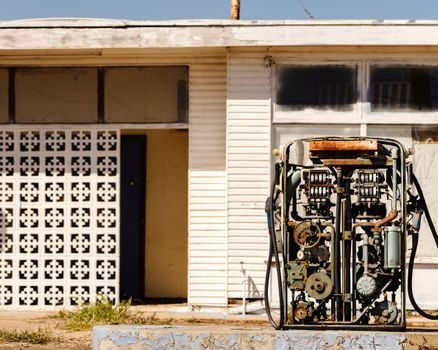
WAGNER states the Unica series handles "higher-viscosity material" and "long hose lines" in circulation systems, with shear-sensitive and high-viscosity fluid specifications listed [S2]; Pro-Tek's PRO-1SS targets paint transfer with a 1:1 free speed of 5 200 RPM and 160 cycles/min maximum pump speed [S3]; the QUANTUM (DDQ) is explicitly described as "for aggressive liquids, highly-viscous and/or heavy liquids, shear-sensitive liquids, inflammable liquids" [S1].
Inline centrifugal pumps tolerate only thin fluids (typically < 50 cP for standard end-suction designs, up to ~400 cP with open-impeller heavy-duty variants), are intolerant of entrained gas above ~5 % by volume, and shear shear-sensitive polymers. AODD units pass particles up to the ball-valve lift size, run dry without damage, and shear only by check-valve action; on slurries, pigments and adhesives that combination is decisive. The reference article on diaphragm pump vs multistage centrifugal pump walks the same viscosity-vs-flow trade-off and reaches the same conclusion: pump AODD when fluid is hostile, pump centrifugal when flow is clean.
Priming, Suction Head and Run-Dry Tolerance
Every AODD in the 2026 catalog is self-priming; the QUANTUM (DDQ) is listed as "self-priming" [S1], the FLUIMAC P400 ATEX is "self-priming" and offered stationary or mobile [S4], the SAMOA Industrial UP03 3/8" is "self-priming, submersible" [S5], and the WAGNER Unica is "normal priming" only because it is a feed pump fed from a pressure-pot [S2]. Dry-running without damage is inherent to the AODD principle and confirmed across the same data set.
Inline centrifugal pipeline pumps must be flooded on the suction side, tolerate only a short dry run before mechanical-seal damage, and lose prime instantly if vapor forms; spec practice is therefore flooded suction, foot valve or priming pot. On tank-to-tank transfer, drum emptying, intermittent batch duty or any suction lift above 2 m, AODD is the default; flooded clean circulation picks the inline centrifugal. The reference centrifugal pump entry spells out the same NPSH-r and priming-port requirement that no AODD has to meet.
Hazardous-Area, Hygiene and Material Certification
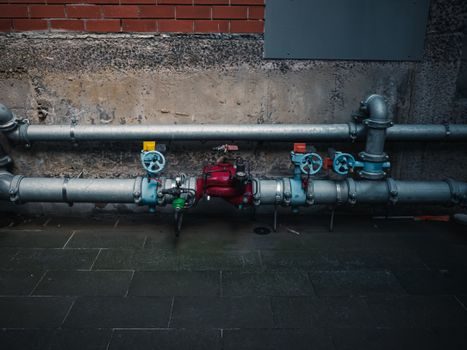
The QUANTUM (DDQ) is published with ATEX, explosion-proof, corrosion-resistant and chemical-resistant protection levels and solid-block PTFE / thermoplastic / polyethylene wetted construction for sizes 1/2" – 1" – 1 1/2" [S1]; the FLUIMAC P400 ATEX is in the FLUIMAC catalogue under that ATEX code, with chemical, food and pharmaceutical industrial domains [S4]; the SAMOA UP03 3/8" lists paper, chemical, steel and renewable-energy industrial domains with pneumatic operation [S5].
Inline pipeline pumps reach ATEX/IECEx only on selected Ex-d or Ex-e motor builds, and hygienic or sanitary variants (polished 316L, EHEDG, 3-A) carry a 30–80 % price premium over the same hydraulic. When the application is ATEX zone 1 or hygienic-grade diaphragm service with chemically aggressive fluids, AODD is the lower-specification-risk path; the FLUIMAC P400 ATEX and the QUANTUM (DDQ) are direct responses to that buyer profile [S1][S4].
Decision Matrix: When to Pick Which
Pick the inline pipeline pump when duty is continuous (> 8 h/day), flow > 5 m³/h, fluid viscosity < 50 cP, suction is flooded, fluid is clean and the budget justifies three-phase power; the standard unit is a single-stage end-suction inline with stainless or cast-iron wetted parts. [S2]
Pick the AODD when flow < 30 m³/h, viscosity is high or variable, fluid is abrasive, slurry, shear-sensitive or flammable, suction lift is required, and ATEX/IECEx hazardous-area certification is mandatory; the spec ceiling from the 2026 OEM data is 450 l/min at 8 bar for the QUANTUM (DDQ) [S1] and 5 l/min at 21 bar for the WAGNER Unica [S2]. For a directly comparable duty between the two — say 20 m³/h clean water circulation — the inline centrifugal wins on energy cost (kWh vs compressed-air CFM), footprint and noise; for the same flow on a 30 % solids slurry the AODD wins on survivability. Hybrid plants that need both behaviours often run an inline pump on the bulk recirculation loop and a parallel AODD on the transfer / offload / sample line.
Trackable signals worth watching over the next quarter: any 2026-Q3 OEM update that pushes the QUANTUM (DDQ) past 8 bar / 450 l/min, any new ATEX/IECEx rating on the FLUIMAC P400 line beyond the 2026-05-31 entry [S4], and any China-factory ODM activity on micro-diaphragm pumps that overlaps the existing Kamoer 61-SKU diaphragm-pump catalog [S6] and the Zhejiang thermal-pump OEM/ODM service listing [S7].