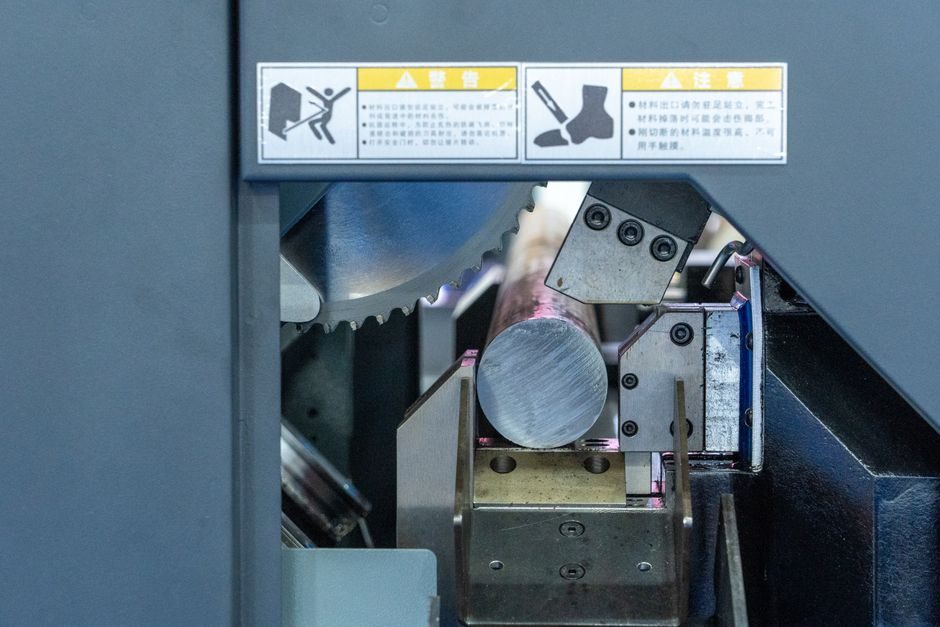
Jaw couplings transmit torque through a compressible elastomer spider captured between two intermeshing hub jaws, giving them a characteristic soft-start, vibration-damping, and fail-safe behaviour that distinguishes them from rigid, disc, and gear couplings [S1][S2].
The decision path is short: pick a service-factor-adjusted torque, pick an elastomer shore rating, confirm bore size and fit tolerance, then verify the misalignment envelope against your shaft alignment budget and the ambient (chemicals, temperature, hazardous-area class) of the install [S3][S4].
Torque Rating and Service Factor Math
Lovejoy's H-type jaw coupling is published as the "highest torque" jaw design in the Lovejoy jaw family, signalling that jaw couplings as a class span roughly a 5-10x torque range inside a single product line, with size and spider durometer doing most of the work [S3]. The standard selection move is: nominal torque × service factor = required continuous torque, then choose the next size up; Lovejoy publishes a free Jaw Coupling Selection Worksheet (PDF) that walks the user through nominal power, RPM, service factor, and resulting torque on a single page [S3].
Service factor is the single largest swing variable in the spec — a uniform load on an electric motor can run a service factor near 1.0, while a reciprocating compressor or punch press typically lands at 1.5-2.5 depending on cylinder count and stroke. Hayes Couplings (Fife Lake, MI) explicitly markets its jaw-coupling line for engine-driven pump and compressor packages, where SF 1.5-2.0 is the working range, and stocks SAE adapter housings and stub shafts to match common engine flywheel bell patterns [S2]. Skipping the SF step is the most common field failure cause: the coupling runs, then the spider cracks, then the hub teeth shear.
Spider (Elastomer Insert) Durometer and Shore Selection
The spider is the wear part and the torsional-spring element; its shore hardness controls three coupled properties — torsional stiffness, damping, and the misalignment envelope. Lovejoy's standard spider set typically covers 80, 92, 95, and 98/99 shore A in most sizes, with 80 shore being the softest (best damping, lowest torque, largest angular misalignment) and 98/99 shore being the stiffest (highest torque, smallest misalignment, least damping) [S3].
The fail-safe design rule: if the spider fails, the jaws still drive — unlike a shear-pin or disc-pack coupling, a jaw coupling will continue to transmit torque with a missing or shattered insert until the operator catches the imbalance. That makes the jaw coupling the default choice for pump skids, conveyor drives, and general industrial mixers where unplanned downtime costs more than a controlled shutdown [S2][S6]. For low-shock applications, run a softer spider (80-92 shore) to absorb torsional vibration; for high-torque, low-vibration drives like a servomotor-to-ball-screw link, a 98/99 shore spider is the right call.
Bore, Hub Material, and Balance
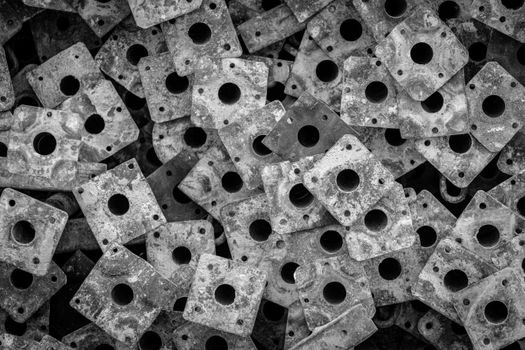
Jaw couplings are offered in three hub material bands: sintered steel/carbon steel (the default, lowest cost, used in Hayes' standard line and most Lovejoy H-type sizes), aluminium (low inertia, for high-RPM or weight-sensitive spindles), and stainless steel (corrosive, washdown, or food/pharma environments) [S1][S3]. Huco's 702.44 series is published as a stainless-steel jaw coupling — the standard fit-out for chemical, marine, and food-grade skids where mild-steel hubs would pit or rust in [S1].
Bore specification: most jaw couplings are stocked in imperial (3/8" to 3") and metric (8 mm to 80 mm) bores, with pilot-bore, finished-bore, and keyway options. Rokee publishes a custom-bore service on its jaw coupling line, sized from small-frame taper-lock bores up through large-frame hydraulic-pump bores [S4]. For high-RPM service (above roughly 3,000 RPM, scaling with size), check the published balance grade — Lovejoy H-type is offered in balanced versions for servomotor and encoder-feedback applications [S3].
Misalignment Envelope: Parallel, Angular, Axial
Jaw couplings accept three types of offset simultaneously, and the envelope is what makes them forgiving on real skids where soft-foot and frame deflection push shafts out of perfect alignment. Typical published limits for an average mid-size jaw coupling (size 14-24, 95 shore spider) are roughly 0.2-0.4 mm parallel offset, 0.5-1.5° angular offset, and 1-3 mm axial end float, with the exact numbers scaling up or down with coupling size and spider durometer [S3][S6].
KTR's ROTEX DF is the published reference for a flanged-face jaw-coupling variant — both sides carry a flange face, allowing close-coupled mounting to a pump or gearbox input flange without a separate adapter plate, which tightens the axial envelope but holds the angular/parallel budget at standard jaw-coupling levels [S6]. The engineering trade-off is straightforward: if your equipment alignment can be held to a few tenths of a millimetre, run a smaller jaw size for cost; if you're on a welded skid in a dirty environment, oversize the jaw and let the elastomer eat the misalignment.
Comparison vs Other Coupling Types

For a typical pump-or-compressor drive, jaw, disc, and gear coupling are the three practical options. The trade on four decision criteria: jaw wins on cost and misalignment tolerance, disc wins on torsional stiffness and zero-backlash, gear wins on torque density and high-RPM service. On a soft-start electric-motor-to-centrifugal-pump drive with normal alignment, the jaw coupling is the lowest-cost correct answer; on a servomotor-to-ball-screw or resolver-feedback drive, the disc coupling is the correct answer because the elastomer spider's angular windup adds positional error. [S1]
For a fluid-drive alternative where torque limiting and soft-start are needed, a fluid coupling does the same job without a wear part but adds slip-loss and oil maintenance; jaw is cheaper, fluid is longer-lived under heavy shock loading. For direct in-line shaft-to-shaft on a simple conveyor or mixer where misalignment is small, a shaft coupling of the rigid or flexible sleeve type is sometimes cheaper still — but loses the over-torque bump-absorption of an elastomer spider. The base reference geometry of the jaw — two hubs with interlocking jaws and a captive spider — is described in the jaw coupling page on this site.
Environment, Standards, and Hazardous-Area Use
For washdown, food-grade, or outdoor chemical exposure, the hub material switches to 304 or 316 stainless, as in the Huco 702.44 series, and the spider material may need to switch from standard nitrile (NBR, ~-40 to +100 °C, oil-resistant) to a higher-temperature elastomer such as HNBR or polyurethane for sustained operation above 100 °C or in aggressive chemicals [S1][S3].
For hazardous-area drives (Group II/III, Zone 1/2 or Zone 21/22), jaw couplings in standard steel-hub/NBR-spider build are widely accepted as non-sparking drive elements when the spider is the only polymeric part and the housing is conductive; for true Group I M1/M2 mining or hydrogen-rich service, verify the ATEX/IECEx certification on the specific part number, because the elastomer compound and anti-static rating drive the certification, not the hub geometry. Standard catalogue selections from Lovejoy, KTR, and Hayes include catalogue-torque, bore, and service-factor data; running the actual SF-derated torque against the published continuous-torque curve is the audit step that catches over-spec'd spiders and under-spec'd hubs before they ship [S3][S4][S6].
Trackable signals for the next review window: KTR's ROTEX DF flange-face variant is one of the few jaw designs with a factory-published dual-flange pattern suitable for direct pump/gearbox mounting, and Hayes' SAE stub-shaft + housing-adapter program is the published reference for engine-bell-to-pump alignment packages [S2][S6]. For cost and material detail on a related flex-element coupling class, see the Disc Coupling 2026 Price and Cost Guide.