
Large power transformer unit prices have risen 77% since 2019, and distribution-class units have climbed 78% to 95% over the same window, with power transformer lead times stretching to 128 weeks and generator step-up (GSU) units to 144 weeks in the second quarter 2025 Wood Mackenzie survey [S4][S5].
The squeeze is structural: U.S. power-transformer demand has risen 119% since 2019, and GSU demand has grown 274% over the same period, while domestic manufacturing capacity has lagged, producing an estimated 30% shortfall for power transformers and 10% for distribution units across the national fleet as modeled in August 2025 [S5]. For utilities and EPC firms planning 2026 and 2027 energization dates, procurement is now the schedule-locking variable, not construction labor or permitting.
What the price data actually shows, by segment and year
Headline percentages obscure large variance by kVA class, voltage, and contract type. At Jefferson Public Utility District (JPUD), a Pacific Northwest utility, 25 kVA pad-mount distribution units, the workhorse for residential subdivisions, rose nearly 400% from 2020 per-unit pricing, and 50 kVA pad-mount units jumped 900% over the same period [S3]. A Congressional Research Service report from November 2022 documented distribution-transformer lead times stretching from a few months in 2020 to well over a year in 2022, with unit price increases of up to 400% or more reported by smaller utilities [S1]. Grid Assurance CEO Dave Rupert stated in December 2022 that large-transformer costs were up 20% to 50% since 2020 across bulk power system spares stockpiles [S6].
By April 2024, Wood Mackenzie reported transformer prices had risen 60% to 80% on average since January 2020, with grain-oriented electrical steel (GOES) prices surging almost 100% over the same window [S2]. A January 2026 industry roundup confirmed the trajectory: since 2019, unit prices were up 77% for power transformers and 45% for GSUs, with some classes moving harder [S5]. A September 2025 distributor advisory cited unit-level price increases of up to 150% since 2020 on certain stocked lines [S7]. The pattern is consistent: smaller pad-mount distribution units see the steepest spikes because they sit on the longest production queues and depend on the same GOES, copper, and transformer oil supply chains that feed larger substation builds.
Cost drivers, ranked by weight in 2025 and 2026
Grain-oriented electrical steel (GOES) is the single largest material cost driver, with prices nearly doubling since January 2020 according to Wood Mackenzie tracking, and remains concentrated among a handful of global suppliers [S2]. (See copper-linked power cable pricing data for adjacent commodity cost context.)
Labor and factory capacity rank third. A power transformer requires long winding and vacuum-impregnation cycles measured in weeks, and U.S. factory expansion announced through 2024 and 2025 will not materially relieve supply until 2027 at the earliest. Lead-time surcharges, freight, and engineering-change-order fees act as the fourth-tier amplifier, and brokers report that quoted delivery dates have slipped 12 to 24 months from original purchase-order acknowledgements for high-voltage units. For procurement teams evaluating a dry-type transformer as a substitute on lower-voltage applications, the substitution case is real but bounded: dry-type units are not interchangeable above about 35 kV class where the GSU and substation power-transformer categories dominate.
Large power vs. GSU vs. distribution, side by side
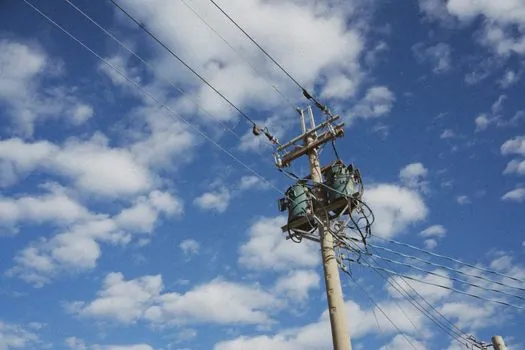
Comparing the three main categories on four decision criteria drawn from the 2026 sourcing data: price increase since 2019, demand growth since 2019, typical lead time in Q2 2025, and 2025 modeled supply shortfall versus national fleet. [S2]
Large power transformers: 77% price increase since 2019; 119% demand growth; 128-week lead time; 30% modeled shortfall [S4][S5]. GSUs (generator step-up, the transformers coupling generating plants to the transmission grid): 45% price increase since 2019; 274% demand growth; 144-week lead time; included in the power-transformer shortfall figure [S5]. Distribution transformers (pad-mount, pole-mount, and substation distribution class): 78% to 95% price increase since 2019, with extreme cases of 400% to 900% on small pad-mount units; 34% demand growth; lead times improved from 2022 peaks but still measured in many months; 10% modeled shortfall [S3][S4][S5].
The trade-off: GSU demand is growing fastest because of the data-center and large-scale generation build-out, but the GSU price increase is the lowest of the three categories because utilities typically pre-purchase, lock long-lead slots early, and amortize via multi-year frame agreements. Distribution units show the wildest price dispersion because spot-market buyers (small municipal utilities, electric cooperatives, and developer-led subdivisions) compete against investor-owned utilities running centralized procurement.
Who pays the premium, and who should not specify large units in 2026
Large power and GSU units are the right answer for transmission-class projects, utility-scale generation interconnections, and data-center campus substations where voltage class, impedance, and short-circuit withstand requirements rule out smaller or alternative equipment. They are not the right answer for behind-the-meter industrial loads below about 10 MVA, where a dry-type transformer or a packaged power distribution box on a shorter queue will hit energization dates that a 128-week large-unit lead time simply cannot meet. [S5]
For municipal utilities, rural electric cooperatives, and developer-led residential projects absorbing the 400% to 900% small-unit price increases documented since 2020 [S3], the practical answer is not waiting for prices to fall; it is right-sizing specification (e.g. 25 kVA versus 50 kVA pad-mount where load calc allows), pooling purchase orders through joint-procurement agencies, and locking frame agreements with two qualified vendors rather than running spot procurement. Pole-top unit substitution and used/refurbished small units have re-entered utility procurement playbooks in 2025, an option that does not exist for large power transformer classes where rebuild economics rarely pencil out against the lead-time premium of new-build.
Standards, sourcing risks, and what the 2026 numbers do not yet capture
Procurement contracts are increasingly written against IEEE C57 series delivery and loss-evaluation clauses, with NEMA TP 1 and DOE 10 CFR 431 efficiency tiers driving material choices on the low-voltage side. For substations destined for utility interconnection, IEEE C57.12.00 and C57.12.90 still govern the general and test requirements, and IEEE C57.91 guides loading; buyers should confirm the issue dates their RFP cites because the 2026 fleet is in mid-cycle between the 2010s standards base and pending efficiency revisions. [S5]
What the published 2025 and 2026 data do not yet fully capture: a 2026 GOES price movement (the prior 100% jump was the January 2020 to early 2024 window, and a separate 2026 copper tracker would need to be overlaid), the impact of announced U.S. factory capacity coming online in 2027, and the price effect of Section 45X advanced-manufacturing tax credits on domestic sourcing premiums. These three vectors will determine whether the 77% power-transformer figure stabilizes, decelerates, or accelerates through 2027.
What to track next, two concrete signals
First, the Q4 2025 and Q1 2026 Wood Mackenzie lead-time survey: if the 128-week power-transformer figure prints below 120 weeks, the capacity expansion announced in 2024 and 2025 is starting to clear the queue; if it holds above 130 weeks, the 30% modeled shortfall is still binding and procurement teams should assume continued upward pressure on 2026 and 2027 contract prices. Second, the U.S. GOES import duty and domestic capacity utilization data: any sustained drop in domestic GOES line utilization below roughly 80% would signal that the upstream steel squeeze, the single largest cost driver per the 2024 Wood Mackenzie analysis [S2], is loosening.