
For steel-structure erection the workable envelope is a rotary or 3x360-degree green-beam laser with ±1/16 inch accuracy at 100 feet for grade work, IP54 or better ingress protection, and detector-coupled range beyond 1,000 feet for column and anchor-bolt layout across a full bay [S2][S4].
Steel differs from concrete or wood in three ways that drive the spec: surfaces are dark, often galvanised or primed, and reflect poorly; the reference plane has to hold across long uninterrupted spans between columns; and the tool sits on steel deck, magnet-mount-friendly framing, or pipe tripod. That pushes selection toward green-beam line/rotary units with strong magnetic mounts, 1/4-20 or 5/8-11 tripod threads, and a published accuracy figure at the working distance, not the marketing headline [S4][S5].
Three Laser Families and What Each Does on a Steel Site
Line lasers (cross-line and multi-line) project one or more fixed beams, typically horizontal plus vertical, with a published range of 50-100 feet and accuracy around ±1/8 inch at 30 feet, making them the default for interior steel-stud framing, elevator-shaft layout, and dry interior alignment [S2]. Rotary lasers spin a single beam at high speed to create a 360-degree plane and, paired with a detector, reach 500-2,000+ feet at accuracies of ±1/16 inch at 100 feet, which is the family used for outdoor column line, anchor-bolt grid, and slab-on-grade work around a steel build [S2][S4]. Dot or point lasers project 3-5 stationary dots for plumb transfer up a multi-storey column and for setting hanger points on the underside of steel deck; they do not draw continuous lines, so they are a complement, not a substitute, for the other two families [S2][S5].
Accuracy Bands That Matter for Steel Erection
Consumer-grade units sit at ±1/8 inch at 30 feet and are sufficient for hanging pictures and basic shelving, not for setting a 60-foot steel column plumb to code [S5]. The pro-grade cross-line benchmarks in 2026 testing landed at 1/9 inch at 33 feet for the Huepar HM03CG, 1/8 inch at 30 feet for the DeWalt DCLE34020G and Bosch GPL100-50G, and 3/32 inch at 33 feet for the Klein Tools 93LCLS [S1]. On a longer baseline the Klein 93PLL is rated ±4.5 mm per 10 m (about ±3/16 inch at 33 feet) and trades raw accuracy for three full 360-degree planes, which matters when you need a continuous reference around an open steel floor [S4].
For a single accuracy yardstick, anything tighter than ±1/8 inch at 30 feet is over-spec for interior fit-up, while anything looser than ±3/16 inch at 30 feet will not pass a steel-column plumb check on a multi-storey frame. Rotary units cross the same threshold differently: ±1/16 inch at 100 feet is the published benchmark for outdoor steel and site work, with the Topcon RL-H5A, Spectra Precision LL300S-47, and Milwaukee 3702-21/3704-21T all sitting in that envelope with a detector [S4][S7].
Range, Beam Color, and Detector Pairing
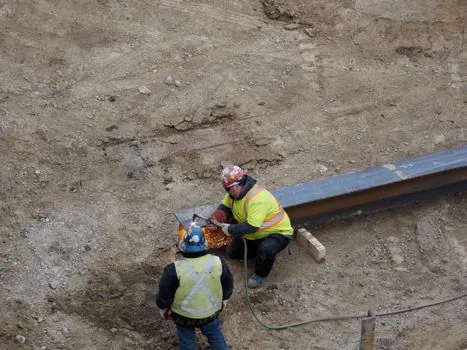
Visible-beam range is the second hard gate. A green beam is measurably easier to see indoors on dark galvanised steel than a red beam at the same output, which is why pro-tier line and rotary units targeted at steel framing are now overwhelmingly green: Klein 93PLL (91 ft), Klein 93MCLG (100 ft), DeWalt DCLE14221GB (150 ft), Bosch GPL100-50G (125 ft), Makita SKR001Z rotary (2,600 ft with receiver) [S4]. Red remains common where cost or battery life matters and where the detector, not the eye, is doing the reading.
For outdoor work past about 50 feet in daylight the beam is read by a detector, not by eye. Rotary kits such as the Milwaukee 3704-21T and 3702-21 are rated 1,000+ ft with a receiver, the Spectra Precision LL300S-47 reaches 2,000 ft with a receiver, and the Makita SKR001Z stretches to 2,600 ft with a receiver, which covers a mid-size industrial bay end-to-end without moving the tripod [S4].
Durability: IP Rating, Drop Spec, and Mounting on Steel
Any laser that lives on a steel site needs an IP54 rating at minimum (dust-protected and splash-resistant from any direction), with the Klein 93PLL and similar pro models now commonly quoting IP54 as a baseline [S4]. Hard-case kits, metal latches, and over-moulded housings are the differentiators in pro reviews: the DeWalt line laser kit is repeatedly cited for a durable hard case with sturdy metal latches rather than plastic clips [S3].
Mounting matters as much as the IP number because the laser has to lock to steel without slipping. The Klein 93PLL integrates a magnetic mounting bracket that holds on steel studs and metal framing, plus a 1/4-20 tripod thread for a conventional surveyor's tripod; the Bosch GPL100-50G and the DeWalt DCLE14221GB use the same combined magnetic-plus-threaded pattern [S4]. For multi-storey column work a 5/8-11 tripod thread is the surveyor's standard and the one to specify if the unit will share a stick with an optical level. Coverage of the broader tool-selection landscape for layout tasks on a jobsite is catalogued in the construction tools reference family.
Trade-Matched Picks Drawn From 2026 Test Results
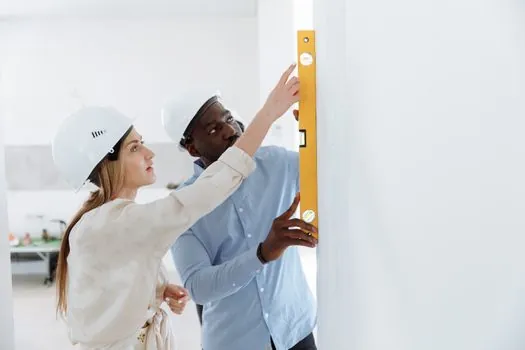
For interior steel layout (electrical conduit on steel deck, drop-ceiling grid hung from bar joists, panel and switchgear rooms inside a steel building) the Klein 93PLL 360-degree three-plane green laser covers 91 ft at ±4.5 mm per 10 m with a magnetic mount and IP54, and a rechargeable Li-ion pack rated past 9 hours per charge [S4]. The DeWalt DCLE14221GB cross-line plus two-spot green unit pushes the working range out to 150 ft and is the framing and finish-work pick in the same trade comparison [S4].
For exterior steel work (column line on a pad, anchor-bolt layout, slab-on-grade around a steel build, fencing and grade around the footprint) the rotary kits dominate. The Milwaukee 3704-21T dual-slope rotary kit is the exterior-grading pick at 1,000+ ft with a receiver, the Spectra Precision LL300S-47 is the civil-survey pick at 2,000 ft with a receiver, and the Makita SKR001Z is the long-range pick at 2,600 ft with a receiver [S4]. The Topcon RL-H5A self-leveling rotary sits in the same envelope, marketed specifically at demanding construction tasks where accuracy has to hold across a full working day [S7]. For a broader read on heavy-equipment layout and how lasers integrate with machine guidance, the laser screed entry covers the concrete-pour side of the same workflow.
Comparison Matrix: Steel-Erection Laser Options
Cross-line and multi-line units (Klein 93PLL, DeWalt DCLE14221GB, Bosch GPL100-50G) win on interior fit-up because the 360-degree planes eliminate re-tripod steps, but they top out at 91-150 ft of visible range and need a controlled-light environment. Rotary units (Milwaukee 3704-21T, Spectra LL300S-47, Makita SKR001Z, Topcon RL-H5A) trade the visible-beam convenience for 1,000-2,600 ft of detector-coupled range and ±1/16 inch at 100 ft accuracy, the right tool for column line and anchor-bolt layout but overkill for an interior fit-out [S2][S4]. Dot-only units (DeWalt DW08302, Bosch GPL100-50G in dot mode) handle plumb transfer up a column and ceiling-hanger layout but cannot lay a continuous reference plane, so they sit beside a line or rotary unit, not in place of one [S4].
Failure Modes and Constraints Worth Naming
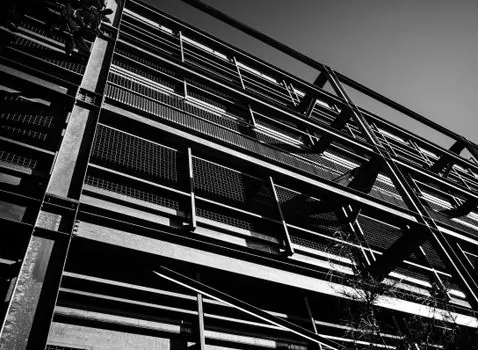
Green beams cost battery life: a green rotary or 3x360 unit typically pulls 9-15 hours on a single Li-ion charge versus 20-40 hours for an equivalent red unit, so spares or USB-C in-field charging (as on the Klein 93PLL) is not optional on multi-day steel work [S4]. Receiver-dependent rotary beams are unreadable by eye past about 50 ft in direct sun, so any spec written without a detector in the system is misleading for outdoor column-line work. Self-leveling pendulums have a published compensation range (commonly ±4 to ±5 degrees) and will fault or shut off outside that, which on a deliberately sloped steel surface means switching the unit to manual mode rather than expecting automatic compensation [S2]. Background reading on adjacent rigging and access decisions for a steel site, including decisions on equipment staging around a build, sits in the construction machinery and equipment reference cluster.
Track three signals before purchase: the published accuracy number at the working distance, not the headline figure; the IP rating and drop spec for the housing; and whether the kit ships with a detector (rotary) or magnetic mounting hardware (line/multi-line) sized for steel. The laser level encyclopedia entry consolidates the underlying beam, pendulum, and receiver principles behind those numbers.
For related coverage, see Diaphragm Wall Grab Selection for Agricultural Sites: Mass, Reach, and Soil Match.