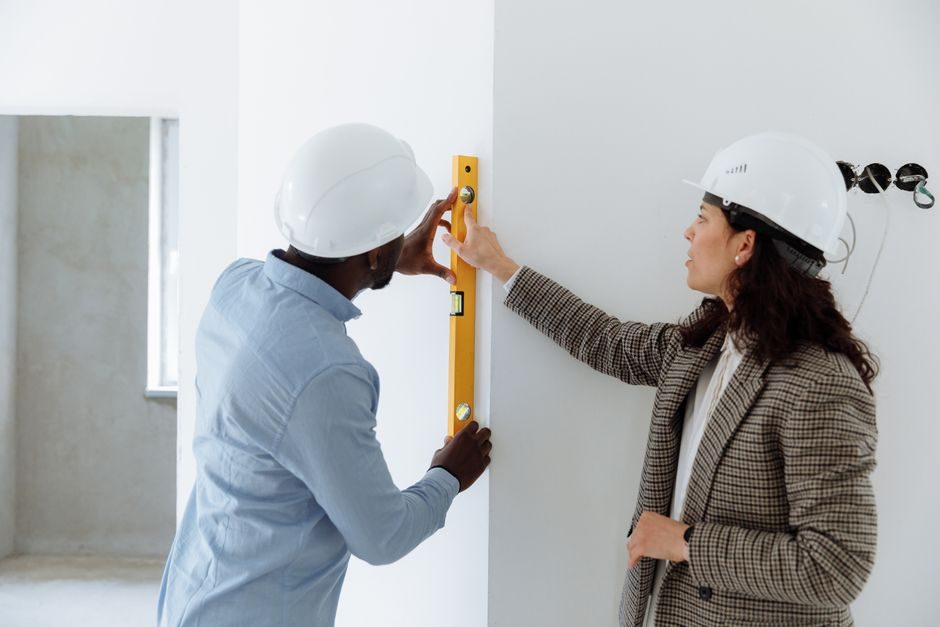
Self-levelling cross-line and rotary laser levels for surveying and construction work now retail between roughly $25 for short-range point-and-line units imported via B2B wholesale channels [S6] and $4,000+ for motorised, self-levelling construction rotary kits from Leica, Topcon and Spectra [S2], with mid-range 360° self-levelling line generators typically clustering in a $300–$900 band across 2026 UK and US dealer listings.
Industrial laser level sensors (the process-automation class, not the construction class) are listed by 6 manufacturers carrying 9 active product families on the DirectIndustry index as of 31 May 2026 [S1], while construction-grade laser levels are stocked in much higher SKU counts: a single UK specialist (Laser Levels Online) carries 16 Leica Lino line generators, 13 Leica rotary levels, 26 Spectra rotary models and 25 laser receivers, each individually calibrated before dispatch. A separate UK site (Laser Level Shop) groups its catalogue into rotary lasers, digital levels, distance measures, survey instruments, alignment lasers and cross/pipe lasers [S4], confirming the breadth of the price/spec spectrum buyers must navigate.
Construction rotary lasers: $839 to $4,000+ band
Topcon's RL-H5A self-levelling rotary laser kit was advertised at £839.28 in mid-June 2026 by an authorised UK dealer, with calibration and free DPD delivery included as standard service terms. A1 Equipment, another UK specialist, breaks the rotary/line category into Leica Laser Levels (13 SKUs), Leica Lino line generators (16 SKUs), Spectra Laser Levels (26 SKUs) and Laser Level Receivers (25 SKUs) [S2], with prices scaling on working range, accuracy class and IP rating. High-end automated motorised rotary lasers from Leica and Topcon cross the £2,000–£4,000+ mark in current 2026 retail, with the price premium driven by slope-matching, radio remote control and machine-control compatibility rather than raw self-levelling accuracy. For buyers cross-shopping process-automation gear, the laser level reference page lays out the optical and self-levelling principle that construction rotary models share with industrial alignment sensors.
Cross-line, point and Lino-class: $25 to $400 band
The budget tier on Made-in-China.com's wholesale index for laser angle levels sits at $23.00–$24.00 per piece at a 500-piece MOQ from TWX Trade Co., a Tianjin-based audited trading-company supplier [S6]. Those units are typically diode-based point/cross-line generators aimed at tile setting, interior fit-out and short-range alignment; the consumer review portal Laser Level Hub tracked "Best Laser Level For Tiles" and "10 Best Laser Levels of 2026" as concurrent top-traffic pages on 23–24 June 2026 [S3], reflecting where entry-level demand sits. Leica Lino-class self-levelling cross-line generators in the £250–£400 zone bridge the budget and professional tiers [S2]. For a deeper look at the cross-roller and linear-guide hardware that the higher-end automated lasers ride on, see the linear guide and crossed roller guide references.
Industrial laser level sensors: spec, not sticker price, drives cost
Industrial laser level sensors used for tank, silo and bin level measurement in process plants are a distinct SKU category from construction lasers, and the DirectIndustry industrial-manufacturer index lists only 6 vendors and 9 products as of 31 May 2026 [S1]. Cost in this segment is driven almost entirely by measurement range, beam class, Ex certification (ATEX/IECEx zone ratings) and output protocol (4-20 mA, HART, IO-Link), not by display or self-levelling features. Buyers in this segment typically follow standard instrument-engineering practice rather than consumer price bands; pairing a laser level sensor with the laser profiler or laser screed references can help clarify the optical-engineering boundary between classes.
What really moves the price: range, accuracy, IP and calibration
Four specification levers account for most of the price spread across both construction and industrial laser-level products: (1) working range, where each doubling of metres roughly adds a price tier; (2) levelling accuracy, where sub-1.5 mm @ 30 m units sit a tier above the 3 mm @ 30 m baseline; (3) environmental sealing, where IP65+ and drop-rated housings add cost versus IP54 indoor units; and (4) detector/receiver compatibility, since matching a rotary laser to a machine-control receiver locks the buyer into an ecosystem. UK dealers explicitly advertise "checked, calibrated and prepared before dispatch" as a service term on every rotary kit, meaning the quoted price bundles a traceable calibration certificate — a hidden cost line on grey-market imports. For SBM buyers comparing concrete and AAC block plant capex — where laser screeds and rotary alignment lasers are line items — the AAC block 2026 price and cost guide and rotary drilling rig 2026 price and cost guide put the laser-level line item in context against plant-scale capex. [S1]
Where the bargain SKUs break: calibration, service and warranty
The $23–$25 wholesale angle levels on Made-in-China.com ship without factory calibration certificates traceable to a national metrology institute, and 500-piece MOQ terms mean the unit price is conditional on container-load commitment [S6]. Mid-tier retailers such as Laser Level Hub and Best Levelers surface this trade-off directly: their 2026 review pages explicitly warn first-time buyers that a "best laser level" decision hinges on application match (interior tiling, outdoor grading, machine control) rather than headline price [S3][S5]. Authorised-channel rotary kits at £839+ (Topcon RL-H5A) include pre-dispatch calibration, UK stock, warranty honoured in-region and a service loop for firmware/laser-tube replacement; grey-market units typically do not.
Sourcing channels and what each one costs you
Four channels dominate 2026 laser-level sourcing, each with a different price/real-cost profile: (1) authorised brand dealers (Leica/Topcon/Spectra/Fukuda) — highest sticker price, bundled calibration and in-region warranty; (2) specialist online retailers such as Laser Level Shop and A1 Equipment, carrying multi-brand catalogues with the calibration service baked into the SKU [S2][S4]; (3) B2B wholesale portals (Made-in-China, Alibaba) — lowest unit price, MOQ-gated, no calibration certificate by default [S6]; (4) direct from industrial OEMs via the DirectIndustry manufacturer index, where pricing is quote-only and tied to Ex/protocol spec [S1]. Lead time typically scales in the reverse order: dealer stock ships next-day, B2B wholesale runs 4–8 weeks at MOQ, and OEM-direct industrial sensors run 6–12 weeks for specials. Buyers sourcing complete production lines — for example a lost-foam casting line where alignment lasers are a sub-assembly — should treat the laser line item against the broader capex in the lost foam casting line price and cost guide.
Decision criteria comparison: budget vs mid vs pro rotary

Lining the three main rotary/line laser tiers against four decision criteria: working range — budget cross-line units 10–20 m, mid Lino-class 25–50 m, pro rotary 300–800 m+ with receiver; accuracy — budget ±3 mm/10 m, mid ±2 mm/10 m, pro ±1.5 mm/30 m typical; environmental — budget IP54 indoor, mid IP54, pro IP65/IP67 with drop rating; ecosystem — budget none, mid brand-locked, pro brand-locked with machine-control receiver support [S2][S3]. The pro tier's £2,000–£4,000+ price point is therefore buying a receiver ecosystem and a calibration certificate as much as a beam, which is the line item a first-time buyer most often under-counts. Per a UK dealer's stated service policy, every rotary laser is "checked, calibrated and prepared before dispatch" rather than shipped factory-direct — a quote worth weighting against the $23 wholesale angle of a no-calibration import.
Track these signals through Q3 2026: the DirectIndustry industrial-laser-level-sensor vendor count (6 manufacturers, 9 products as of 31 May 2026 [S1]), the Leica Lino and Spectra SKU counts at A1 Equipment (16 and 26 SKUs respectively [S2]), and the Topcon RL-H5A street price at Laser Levels Online (£839.28 as of 22 June 2026) — all three are useful mid-year benchmarks for buyers re-quoting laser-level lines on plant or site capex.