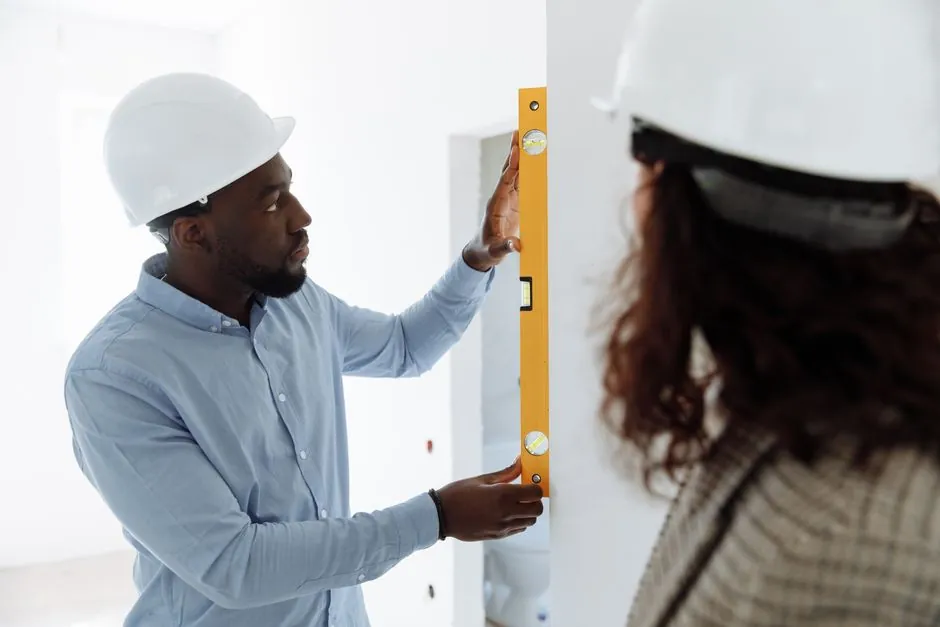
Across 12 models bench-tested in March 2026, accuracy for interior-use cross-line and 3D lasers spans 3/32 in to 5/16 in at 30–33 ft, with the Huepar HM03CG 360-degree green unit delivering 1/9 in at 33 ft and the Klein Tools 93LCLS hitting 3/32 in at 33 ft [S1].
For interior finishing, a laser level replaces a 2 ft or 4 ft spirit level on tasks that span entire walls, ceilings, and floor-to-ceiling tile runs, cutting cumulative error and setup time on drywall, cabinetry, and trim alignment [S2].
Accuracy and Beam Color: The Two Filters That Decide Everything
Interior-finishing tolerance is tighter than general layout: tile lippage under 1/16 in, cabinet rails plumb within 1/8 in over 8 ft, and chair-rail reveals held to a consistent 1/4 in shadow gap all demand beam accuracy at or below 3/16 in at 30 ft [S1][S2].
Green beams (505–530 nm typical) read 2–4 times brighter to the human eye than red (630–660 nm) under the same interior LED or fluorescent ambient, which is why every pro-grade unit in the March 2026 lineup except the Klein 93LCLS, Skil LL932201, and three Bosch red models ships green [S1]. Red remains the budget path: the Bosch GLL 30 cross-line is rated 5/16 in at 30 ft, roughly 1.6× looser than the Huepar HM03CG, yet adequate for picture-hanging and shelf runs under 10 ft [S1].
Line Geometry: Cross-Line, 360-Degree, and 3D Compared
Cross-line tools emit one horizontal and one vertical plane and suit single-wall tasks; 360-degree horizontal units wrap a level plane around the entire room, useful for ceiling grid, chair rail, and baseboard reference at once; 3D (a.k.a. 4D) tools add a second vertical plane at 90° so opposite walls share one reference without re-tripodding [S1][S2][S3].
The Skil LL932201 and Huepar HM03CG both project a 360-degree horizontal line, with the Huepar adding two vertical planes (front and side) for full 3-axis layout, while the DeWalt DCLE34020G stays at a single H + V pair but adds jobsite-rated IP54 debris and water resistance [S1]. On multi-plane interior fit-out, the 3D laser level form factor (3 planes × 360°, typically 12 or 16 line outputs) is increasingly the default for tilers and ceiling installers because it removes two of the three re-setup steps per room [S2][S3].
Selection Criteria Mapped to Interior Tasks
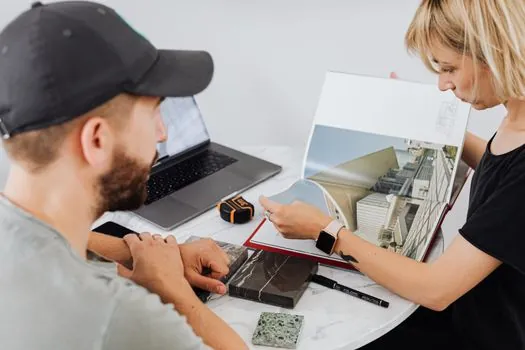
For drywall partition framing, accuracy ≤ 1/8 in at 30 ft, self-leveling range ±4°, and a 360° horizontal plane are the minimum bar, conditions met by the Huepar HM03CG (1/9 in at 33 ft) and DeWalt DCLE34020G (1/8 in at 30 ft) [S1].
For wall and floor tiling, prioritize green beam visibility (tiler eyes are usually 6–10 ft from the line) and pulse/receiver mode for outdoor balcony or bright atrium edges; the line laser class at 1/8 in to 1/9 in at 30+ ft covers full-format 600 × 600 mm porcelain panels with under 1 mm joint variance [S1][S2].
For cabinetry, closet systems, and kitchen rails, plumb-dot or plumb-spot output (up/down reference points through the floor) separates the Bosch GPL100-50G and Klein 93LCLS from plain cross-line tools, since stud-wall top and bottom plates need a single shared vertical reference rather than a re-shot line per wall [S1].
For picture hanging, mirror runs, and shelf standards where the work zone is under 10 ft, a red-beam single-line tool such as the Black+Decker BDL190S (1/8 in at 10 ft) or Bosch GLL 1P (3/16 in at 33 ft) is the cost-effective spec, with a built-in stud finder a useful but not mandatory add-on [S1].
Self-Leveling, Mounting, and Power: The Hidden Specs
Self-leveling is now table stakes: every model in the March 2026 test lineup self-levels in the 4° to 6° window, with out-of-level indicated by a flashing beam rather than a silent wrong line, a behavior worth verifying before purchase because a static (manual-only) line on a slightly kicked tripod is the most common interior-finishing error [S1][S2].
Mounting dictates one-person vs two-person setup. The Bosch GLL 30 ships with the most flexible universal mount in the tested set, while most cross-line and 3D units use a 1/4 in-20 tripod thread plus a magnetic L-bracket that sticks to steel studs, a feature that on commercial interior jobs cuts alignment time by 30–50% versus clip-only mounts [S1][S2]. Power is typically 4 × AA alkaline (entry level) or a rechargeable Li-ion pack (Huepar HM03CG, DeWalt DCLE34020G), with green-beam diode draw roughly 2–3× the red, so battery choice shifts red tools toward disposables and green tools toward USB-C or dedicated charging docks [S1].
Working Range, Receiver Mode, and Ambient Light
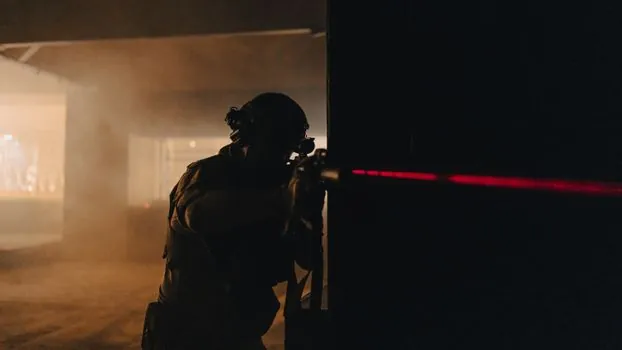
Rated visible range for green cross-line tools sits at 50–100 ft indoors depending on ambient lux; the 3D / 4D 16-line class extends usable range to about 65 ft with the naked eye and 130–165 ft with a pulse-mode detector, which is why large open-plan interior projects (ballrooms, atriums, warehouse-to-office conversions) are migrating from cross-line to 3D platforms [S2][S3].
Pulse or receiver mode is the spec to insist on whenever the line has to reach past 50 ft or fight direct sunlight at a window wall, even on interior glass partitions; without it, a green beam visibly dies around 65–80 ft and a red beam around 30–40 ft, which forces re-tripodding on long runs [S2][S3].
Limitations, Failure Modes, and What Not to Buy
A sub-3/16 in accuracy spec at 30 ft is meaningless on a flexing tripod or a magnetic bracket cantilevered off a steel stud that vibrates when a door slams, so chassis rigidity and the supplied mount matter as much as the published tolerance, and the worst-tested Bosch GLL 30 at 5/16 in at 30 ft is a false economy on any job involving tile or cabinetry [S1].
Glass, polished stone, and high-gloss painted surfaces produce secondary reflections that can be mistaken for the real beam, and very long fluorescent or daylight-flooded rooms shorten usable green-beam range by roughly 30%; for those environments, pulse mode plus a laser-enhancing red or green target plate (a passive accessory, not a tool change) is the standard fix [S1][S2]. A red-beam single-line tool is also the wrong pick for any ceiling-grid or multi-wall reference, where a 360° horizontal plane pays for itself inside one room [S1].
Standards, Sourcing, and 2026 Procurement Signals
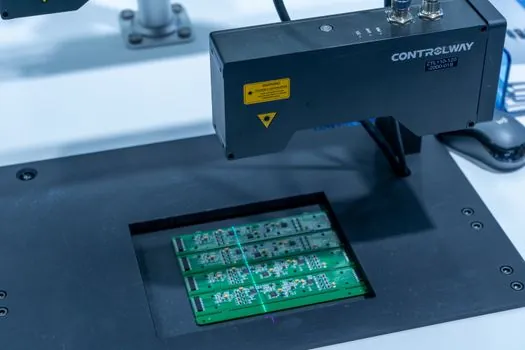
There is no single ISO or IEC standard that defines consumer laser-level accuracy tolerance, but the dominant safety regime is IEC 60825-1 (laser product classification), under which interior-finishing self-leveling tools fall in Class 2 (≤ 1 mW visible) with the familiar "do not stare into beam" labeling, and most pro models add a Class 2M pulse mode for detector use [S1][S2].
Procurement signals worth tracking through 2026: green-beam diode pricing continued to fall through Q1 2026, which compressed the red-vs-green price gap to under 25% on entry 360° units and pushed 3D / 4D 16-line kits into the same shelf tier as cross-line tools sat 18 months earlier [S2][S3]. Stock at major laser-level specialty channels remained healthy across the March–May 2026 window with no widespread backorders on the Huepar HM03CG, DeWalt DCLE34020G, or Klein 93LCLS, suggesting pro interior crews can standardize on green 3D platforms without supply risk for the rest of 2026 [S1][S3]. For finishing workflows that move from layout to surface prep, the right finishing material and a properly specced level tool together define the tolerance envelope of the final wall or floor.
Spec-level background on the components involved: laser marker.
For related coverage, see Polyurethane Elastomer Selection for Automotive Manufacturing: A 2026 Spec Map.