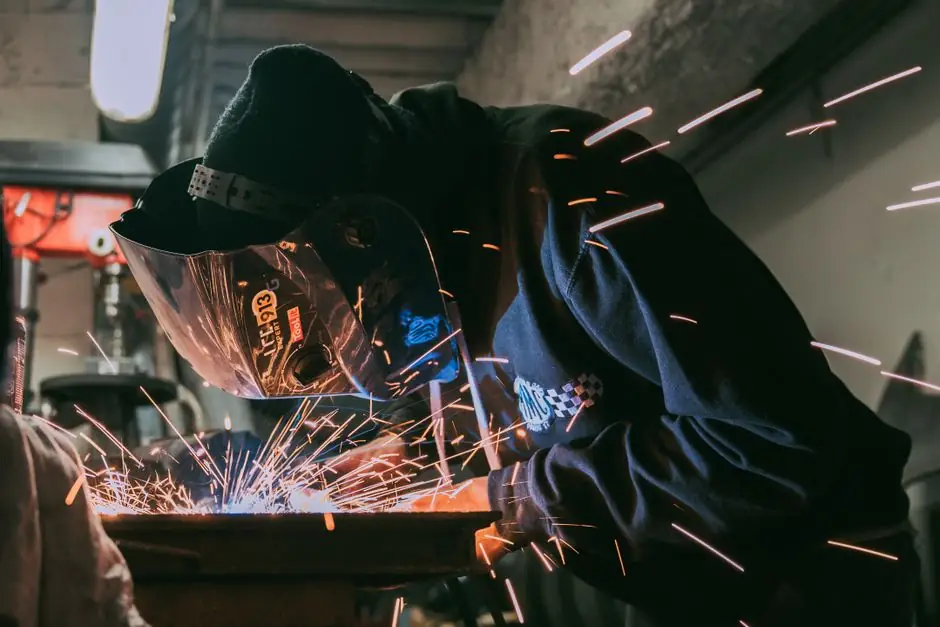
Three national clusters dominate laser welding machine manufacturing in 2026: Germany (Trumpf), the United States (IPG Photonics, Coherent, LaserStar Technologies, AMADA WELD TECH, Laser Photonics, Denaliweld), and China (Herolaser, SENFENG Laser, Han's Laser), per industry roundups published 2025-09 through 2025-12 [S2][S4].
Across these suppliers the dominant laser source is fiber, with Nd:YAG still specified for micro-welding of jewelry, medical devices, and microelectronics, and direct-diode units sold for plastics and lower-duty tacking [S3]. Buying criteria split cleanly along power class, automation depth, and sector certification (CE, SGS, WPQR, ISO 9001 are the codes most commonly requested on data sheets) [S1][S2].
Three national clusters and what each does best
German suppliers (Trumpf) lead in high-power multi-kW fiber platforms with closed-loop process monitoring: the Trumpf TruFiber S Series is specified at 12 kW output with ±0.5% power stability, paired with VisionLine OCTCheck optical coherence tomography for real-time penetration depth control on aerospace and automotive lines [S2]. American suppliers split between vertically integrated source makers (IPG Photonics, Oxford, Massachusetts, founded 1990) and system integrators (Coherent, LaserStar, AMADA WELD TECH, Laser Photonics) [S4].
Chinese suppliers (Herolaser, SENFENG, Han's Laser) lead on cost-per-watt and handheld ergonomics: Herolaser's handheld line is rated at welding speeds of 3–5 m/min with minimal thermal distortion, aimed at small and medium fabrication shops and field repair crews [S2]. The geography matters for service, lead time, and certification paperwork: European plant builds tend to default to CE-marked systems, while U.S. automotive and aerospace buyers more often require WPQR (Welding Procedure Qualification Record) documentation, which Denaliweld explicitly lists on its Chicago data sheet [S1].
Laser source choice: fiber, Nd:YAG, and direct diode
Fiber lasers now dominate new orders because the source offers better wall-plug efficiency, smaller footprint, and lower cooling demand than lamp-pumped Nd:YAG; IPG Photonics publishes component lifespans above 100,000 hours for its fiber pump modules, a figure that drives total-cost-of-ownership arguments in favor of fiber on multi-shift lines [S4]. Nd:YAG remains specified for micro-welding where pulse-shaping and lower thermal input matter (jewelry, medical device hermetic sealing, micro-electronics), and AMADA WELD TECH sells both Nd:YAG and fiber heads from the same catalog for that reason [S3].
Direct-diode lasers are the third option: they are used for plastic welding and selective laser soldering, typically at lower peak powers than fiber or Nd:YAG, and are listed by AMADA WELD TECH as a distinct process category rather than a drop-in replacement for metal welding [S3]. When comparing the three, fiber wins on uptime and beam quality for metal, Nd:YAG wins on pulse control for micro-joints, and direct-diode wins on cost for plastics and selective soldering. Buyers should match the source to the joint, not the other way round.
How the major brands line up on decision criteria
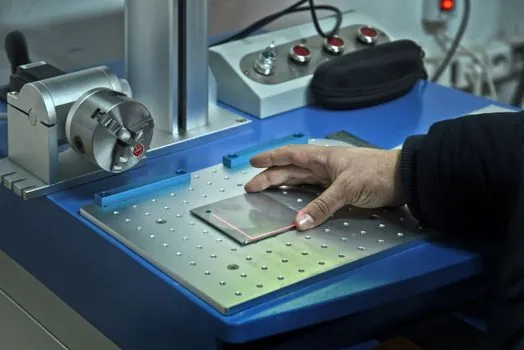
Selection in practice is a four-axis decision: power class, automation depth, source technology, and sector certification. A useful comparison against the most-named brands in the 2025 roundups: Trumpf targets the high-power aerospace and EV-body niche with kW-class fiber and in-line OCT monitoring; IPG Photonics sells both the source (to OEMs) and its own LightWELD handheld/automated systems aimed at general fabrication; Coherent focuses on precision and medical-grade systems, with a stated target of 100% in-house production of core components for its Edge series by 2025 and an 18% R&D-to-revenue ratio [S2][S4].
For the SME and job-shop tier, the tradeoff is between Chinese handheld units (Herolaser, SENFENG) at lower unit cost and American handheld/cobot systems (Laser Photonics WeldTech CW-6010 handheld, IW-7010 robot-operated, IR-7020 enclosed workcell) with deeper local service networks [S5]. AMADA WELD TECH and LaserStar fill the micro-welding and Nd:YAG niche, with LaserStar marketing over six decades of micro-welding experience into jewelry, medical, and micro-electronics [S2][S3]. Distributor catalogs (Welder Supply) list handheld fiber laser welders starting around $6.50 in accessories and climbing into the four-figure range for complete handheld units, illustrating the wide price spread across this market [S8].
Process capability and the role of automation
Handheld fiber welders are the fastest-growing form factor for thin-gauge sheet (the Laser Photonics WeldTech CW-6010 handles materials up to 4 mm thick with operator-selected seam patterns), because they let a single operator cover gap-filling, butt joints, and lap joints without retooling [S5]. For higher throughput and consistent seam quality, robotic six-axis workcells such as the WeldTech IW-7010 and IR-7020 are specified, with continuous-path control and enclosed Class 1 laser-safe housings for production-line duty [S5].
Closed-loop process monitoring is now a procurement checkbox, not an upgrade. Trumpf's VisionLine OCTCheck monitors weld penetration depth in real time, and Coherent has framed vertical integration of its Edge series components as a reliability strategy for medical-device customers who must validate every weld [S2]. Buyers in regulated sectors (medical, aerospace, automotive safety components) should treat real-time penetration or seam monitoring as a requirement and verify the sensor type on the data sheet, since optical coherence tomography, photodiode-based back-reflection, and CMOS camera-based seam tracking have very different price points and integration paths.
Who these suppliers are FOR, and who they are NOT for
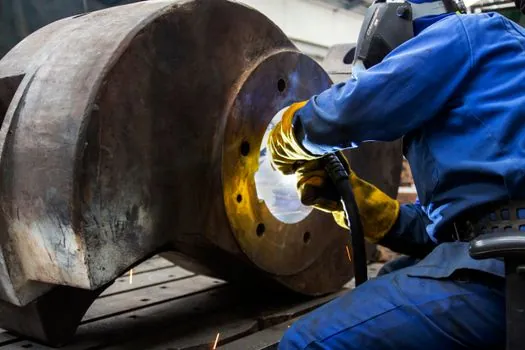
High-power kW-class fiber platforms (Trumpf TruFiber S, IPG high-power units) suit thick-section aerospace, automotive structural, and heavy fabrication; they are not the right tool for micro-joints below 0.2 mm or for jewelry, where Nd:YAG and fiber-pulse micro-welders (LaserStar, AMADA WELD TECH Nd:YAG line) still hold the accuracy advantage [S2][S3]. Handheld fiber welders (Herolaser, SENFENG, Laser Photonics CW-6010) fit small fabrication shops, field repair, and quick-turn prototyping, but are not the right choice for high-mix automated production that requires documented, repeatable WPS/WPQR records, where robotic cells with monitoring are the safer pick [S1][S5].
Chinese handheld lines win on acquisition cost for budget-constrained shops; American and European systems win on documented service networks, certification paperwork, and spare-parts lead time. Procurement for a regulated line should not default to the lowest unit price, because downtime cost on a multi-shift cell dwarfs the hardware delta. For broader shop-floor context on selecting adjacent metal-joining and cutting tools, see this circular saw portability and precision comparison and the abrasive vs toothed-blade cut-off machine classification.
Certification, standards, and the procurement checklist
The certifications that show up on laser welding machine data sheets fall into three buckets: product safety (CE marking for Europe, FCC for the U.S.), quality management (ISO 9001 at the manufacturer), and welding-procedure qualification (WPQR / WPS per ISO 15614-series, or AWS D17.1 for aerospace) [S1][S2]. CE marking is held by Trumpf, AMADA WELD TECH, and Denaliweld among the suppliers cited; Denaliweld also advertises SGS audit and WPQR certification, which is a useful shorthand for buyers who must hand a qualified procedure to an end customer [S1].
Beyond certification, the procurement checklist should include laser class labeling (Class 1 for fully enclosed workcells, Class 4 for open handheld heads, with the operator PPE chain defined accordingly), declared MTBF or source lifetime in hours, the seam-monitoring sensor type, and the wire-feeder compatibility if filler wire is part of the process. Standardization on the buyer side also helps: aligning internal WPS templates to ISO 15614-1 for steels and ISO 15614-2 for aluminum reduces requalification cost when the next machine arrives. The two missing pieces in most early-stage RFQs are the integration story (focal-length range, head weight, robot payload requirement) and the service contract (response time, loaner pool, consumables stocking), and those are the items that drive multi-year total cost far more than the headline kW rating.
Trackable signals to watch over the next two quarters: OEM announcements on in-house component verticalization (Coherent has flagged 100% in-house Edge-series production as a 2025 milestone [S2]), expansion of WPQR / WPS libraries for thicker-gauge handheld work, and further price compression on Chinese handheld fiber units as the 1.5–3.0 kW class becomes commoditized. For a related read on precision tooling used alongside welding in metal fab shops, see the demolition hammer classification spec map and the broader construction machinery and equipment reference.
The underlying component specifications are covered under welding cutting tool, and lamps and light fittings.