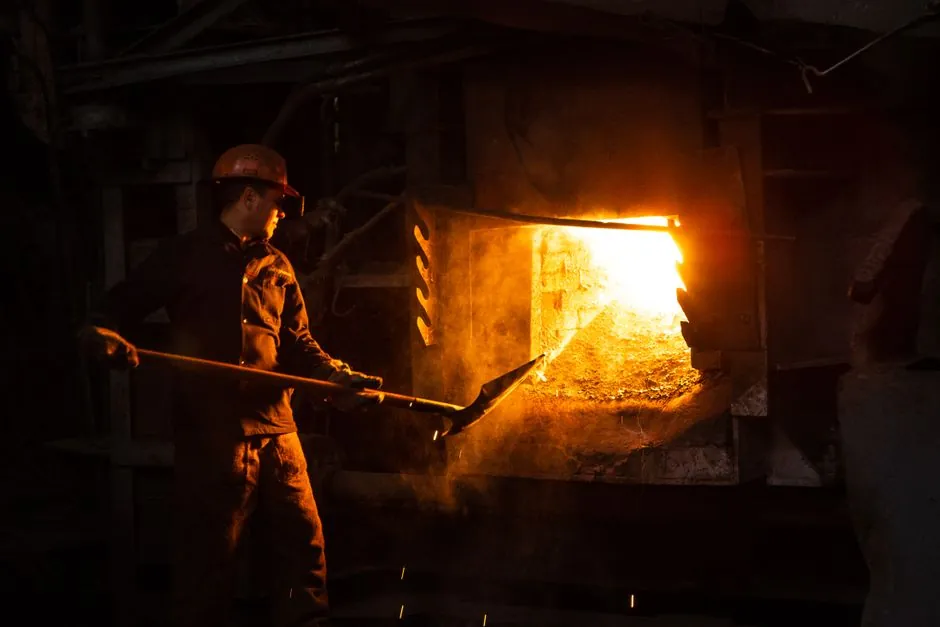
For hardware foundries, a line frequency furnace is defined as a 50 Hz or 60 Hz mains-frequency induction melting or holding unit, with channel-type and large coreless designs both in the family [S1]. The segment matters because hardware output is dominated by iron and steel, and ferrous melt remains the chemistry where mains-frequency units still win on kWh per ton at 5 t/h and above [S3][S6].
Selection drivers in 2026 are not exotic: power-supply stability, scrap cleanliness, melt rate per shift, and whether the line has space for scrap preheat, launder, and deslagging. Process engineers treat the line frequency decision as a capital-versus-throughput trade, with architectural hardware and building-pipe hardware casters (locks, hinges, pipe clamps, malleable fittings) sitting firmly in the ferrous bucket where the unit is most economic.
Where line frequency wins, and where it loses
Line frequency coreless furnaces (typically 1.5–3.0 MW at 50 Hz, hearth diameters 0.9–2.0 m, melt rates 2–8 t/h for steel) hold the lowest published kWh/ton for iron and steel at sustained high throughput, because the coil is fed directly from the mains transformer and skips the rectifier and inverter stack losses that penalise VFD-fed medium frequency sets [S6][S7].
The trade is flexibility: a 1 t/h steel melt cycle in a 50 Hz coreless furnace needs 45–55 minutes from cold charge, while a 1 t/h medium frequency set on the same mains hits the same tonnage in 35–40 minutes [S2][S7]. High melt-rate foundries therefore size the line frequency unit for base-load iron and add medium frequency for short-cycle and alloy swings, a pattern consistent with the multi-furnace layouts described in 2026 selection guides [S3][S4].
Selection gates tied to hardware castings
Hardware foundries face five spec gates that decide between channel, coreless, and medium frequency alternatives: (1) nominal tonnage per shift, (2) ferrous-versus-non-ferrous mix, (3) charge makeup (returns, borings, swarf), (4) power-supply fault level and harmonic limits, and (5) downstream casting cell cadence [S3][S4].
Channel-type line frequency furnaces (also called submerged-arc channel or induction channel furnaces) are normally specified as duplexing/holding units behind a primary melter, holding 10–200 t at 150–250 kW of induced power with reported thermal efficiencies above 95 percent in iron service [S5][S6]. Hardware plants that pour malleable iron pipe fittings, ductile iron hinges, and similar building-pipe hardware components almost always run at least one holding furnace to buffer the casting line.
Coreless line frequency units dominate when the shop has a single-shift or two-shift iron pour above 2 t/h and steady returns, because the magnetic stirring and bath surface dynamics suit large flat heats; the same furnace running below 1 t/h loses the stirring benefit and burns refractory on idle [S3][S7].
Comparison of the three main line-frequency architectures
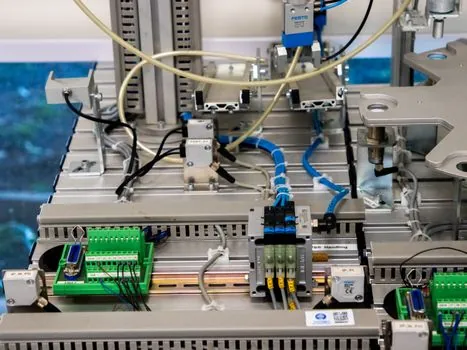
Across the three architectures that show up in 2026 hardware bids, the decision matrix is short and verifiable. Channel furnaces (LF-channel): lowest kWh/ton for iron holding, 150–250 kW typical, bath 10–200 t, 95 percent-plus thermal efficiency, but cannot melt from cold reliably and is paired with a primary melter [S5]. Coreless line frequency (LF-coreless): 1.5–3.0 MW, 2–8 t/h for steel, melts from cold, best for high tonnage and steady ferrous returns, poor for light loads [S6][S7]. Medium frequency (MF) coreless on a VFD stack: 250–1500 kW, 0.3–4 t/h, 8–10 kHz typical, fastest cold start, best fit for short cycle and non-ferrous, but the rectifier and inverter cap efficiency at 2–4 percentage points below direct mains [S2][S7].
The process-engineer shortcut: pick LF-coreless if your daily ferrous pour exceeds 8 t and your supply is stable; pick MF-coreless if your daily ferrous pour is under 4 t, or if aluminium, brass, or copper hardware are also on the line; pick LF-channel only as a holder in front of a casting line that already has a primary melter [S3][S6].
Power supply, harmonics, and infrastructure
Line frequency units draw heavy inrush and continuous reactive power, so 2026 vendor guidance for new hardware plants specifies: dedicated MV transformer with at least 8–10 percent impedance, power-factor correction to 0.92 or better at the furnace bus, and harmonic filtering for the 5th and 7th harmonics, since direct-on-line coil coupling generates strong odd-order content on the same bus that feeds the VFD drives on the casting conveyor [S4][S7].
Foundries that ignore this pay in two ways: utility penalty clauses (typically 2–5 percent of the bill at 0.85 power factor) and nuisance trips on adjacent variable-frequency drives that share the LV switchboard [S4]. The point matters because a single 3 MW line frequency unit can pull a 6 MVA short-circuit contribution from the grid and swamp the harmonic budget of a 400 V casting cell if the design is left uncoordinated.
What 2026 foundries actually buy from the top ten
The 2026 top-ten list, Canroon, Inductotherm Group, EFD Induction, SMS Group, Electroheat Induction, ABP Induction Systems, Radyne, OTTO JUNKER, Megatherm, and Electrotherm, all ship line frequency hardware in some form, with Inductotherm, ABP, OTTO JUNKER, and Electroheat dominating the LF-channel and large coreless segments used in iron hardware foundries [S4]. Customisation depth varies: SMS Group and Inductotherm lead on process monitoring and coil design, while mid-tier suppliers like Canroon and Megatherm compete on price and faster lead times for 1–3 t coreless units typical of medium hardware shops [S4].
Specifiers should ask three verifiable questions before signing a PO: what is the quoted kWh/ton at the rated melt rate on the same scrap mix, what is the coil and refractory campaign life in number of heats, and what is the guaranteed power-factor and harmonic performance at the PCC. The 2026 buyer-guide authors flag the same trio, with the additional warning that published ratings often assume clean steel scrap, not the borings-and-returns mix that hardware plants actually feed [S3].
Failure modes and operational limits
The most common failure modes in line frequency service are: refractory erosion at the slag line (typical campaign 300–800 heats for iron, shorter with basic slag practice), coil water leak on copper tubing (design uses heavy-walled high-conductivity copper, but water quality still gates life), and inductor clogging on channel furnaces during low-tap-rate operation [S5][S6].
Operating limits a hardware plant should hard-code into the procedure: never idle a channel furnace below its minimum tap rate, hold line frequency coreless units at a minimum 30–40 percent of nameplate load between taps, and treat any water conductivity above 500 µS/cm as a coil-scale risk that halves refractory life [S5]. Vendors also flag that additive-manufacturing material feedstocks, such as powder and reclaim, are not appropriate charge for any line frequency iron furnace because ignition and entrainment loss will ruin the bath, even though both terms sometimes appear in the same procurement scope.
Reference articles for further reading

For adjacent selection logic on capital equipment in metals and construction, see the crawler crane guides for quarrying and tunneling, which use the same 2026 spec-gate framing for hard-rock duty: Crawler crane selection for quarrying: 2026 spec gates and Crawler Crane Selection for Tunneling: Five Engineering Gates. Casting-ladle selection is the natural companion to furnace selection when the line frequency unit is feeding a mechanised pouring cell: Casting Ladle Selection Gates for 2026 Energy Equipment. [S3]
Two trackable signals to watch through the rest of 2026: first, the price delta between 1.5 MW LF-coreless and 1.5 MW MF-coreless, which has narrowed as silicon-carbide rectifier stacks move into the medium-frequency segment, and second, IEC and utility-side revisions to harmonic and power-factor limits that typically re-rate existing furnace bus compensation. Both items are visible in vendor technical bulletins and are how 2026 procurement teams can sanity-check a line frequency bid before the pour test.