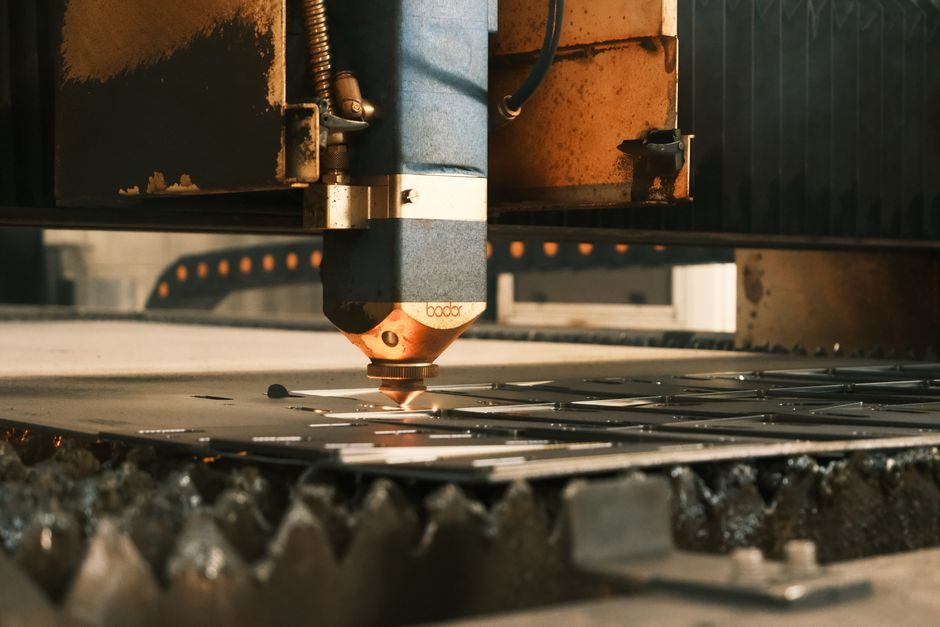
A linear module ships as a complete ready-to-install linear-motion subsystem — guide rail, bearing block, drive screw or belt, and protective housing supplied as one part number — while a linear guide is the bare recirculating rail-and-carriage assembly that the machine builder mounts inside their own frame [S1].
For a 2026 line design, that distinction controls three variables the buyer actually pays for: stroke length, integration engineering hours, and the maximum speed/acceleration envelope the OEM will warranty. LinMot's linear-module catalog positions modules as compact, energy-efficient, ready-to-install systems with minimal installation space, sized for high dynamic performance over short to mid strokes [S1]. LIMON's broader linear-motion catalog covers guideways, ball screws, linear bearings, and linear actuators as separate part numbers that the buyer integrates [S2].
What a Linear Module Actually Contains
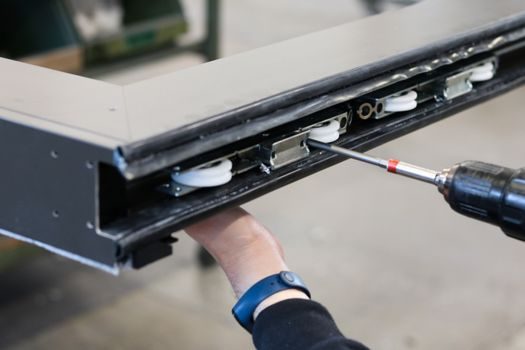
A linear module bundles four sub-systems into one assembly: a recirculating bearing rail (ball or roller), one or more bearing blocks, a drive element (ball screw, trapezoidal lead screw, timing belt, or linear motor), and a protective bellows or steel cover [S1]. The housing is sized so the customer only specifies stroke, mounting interface, drive interface, and feedback — the alignment, lubrication path, and dynamic limits are factory-validated [S1].
Typical stroke envelope for belt-driven and ball-screw modules sits between 50 mm and 2,000 mm per single-axis unit, with maximum linear speeds commonly in the 1–5 m/s band for belt drives and 0.5–1.0 m/s for ball-screw units, though specific limits vary by screw lead and bearing-block size. A linear guide on its own has no such ceiling — stroke is set by rail length, and travel is bounded only by the customer's frame and the bearing block's dynamic load rating.
What a Linear Guide Actually Contains
A linear guide — also called a linear guideway — is the rail plus the matching bearing block (or slide) sold as a matched pair. LIMON and other Asian manufacturers list these as standalone items: HGR/HGH profile rails, flange or slim block, with accuracy classes (commonly C, H, P, SP) and preload grades (Z0, Z1, Z2, Z3) defined per the rolling-bearing linear-guide family of standards [S2].
The guide has no drive element, no cover, and no frame. The buyer adds the screw or belt, the motor mount, the lubrication circuit, the way-cover, and the limit switches. This is exactly the trade-off: a guide-only design can hit longer strokes, higher rigidity (because the block sits on a rail the customer can support continuously along the machine bed), and lower unit cost on long axes — but it pays in engineering hours and in guaranteed-speed paperwork.
Decision Criteria: Module vs Guide, Side by Side

For a 2026 line-design review, the four criteria that drive the buy are stroke length, repeatability, integration effort, and total cost per axis. The table below lines up the two options against those criteria. [S1]
Stroke length: linear modules cluster between 50 mm and 2,000 mm of usable travel; linear guides scale with rail length, with multi-meter strokes common in machine-tool and gantry builds. Repeatability: ball-screw modules typically land in the ±0.01–0.05 mm band; crossed-roller and ground-rail guides can hit ±0.005 mm or tighter when the customer controls the bearing-block preload and the bed flatness. Integration effort: a module drops into an existing frame with two mounting surfaces and one drive interface; a guide-only build needs the customer to design the bed, the lubrication path, the way-cover, and the drive-train alignment. Total cost per axis: modules are more expensive per millimeter of stroke but cheaper per engineering hour; guides reverse that ratio. The same four criteria apply when you compare a linear module against a linear actuator — actuators add a motor and feedback to the module, modules are the mechanical-only middle layer.
Where a Linear Module Wins, and Where It Loses
Modules win in three scenarios common to 2026 factory automation: pick-and-place axes under 1 m stroke where cycle time and footprint dominate; cleanroom or washdown packaging machinery where the integrated bellows and sealed housing cut IP rating work; and OEM machines shipped in volume where the engineering cost of a custom guide-based axis cannot be amortized. LinMot explicitly markets its linear modules for compact installation space, energy efficiency, and high-dynamics applications [S1].
Modules lose when stroke exceeds roughly 2 m, when the machine frame is itself a structural element that benefits from the guide rail being continuous with the bed (gantry routers, large-format machine tools), or when the application needs a crossed-roller guide class of rigidity that off-the-shelf modules rarely match. A crossed-roller guide delivers higher load capacity and stiffness in a smaller block footprint than a profile rail guide, and is commonly specified for optical, measurement, and semiconductor stages where parallelism and moment loading matter more than maximum speed.
Use Cases, Sourcing, and 2026 Standards Reference
Three concrete uses define the module vs guide split on a 2026 shop floor. First, an electronics assembly line running 1,500 placements per hour typically uses belt-driven linear modules in the 300–800 mm stroke range for Z-axis and small X-axis moves, with linear encoders mounted to the module housing for closed-loop position feedback. Second, a CNC router with a 3 m × 2 m work envelope uses profile linear guides on the gantry, a separate ball-screw drive, and external way-covers — modules are not stocked at that stroke. Third, a semiconductor wafer-handling robot uses crossed-roller guides inside a custom housing for the rotary-to-linear conversion stages, where rigidity per unit mass is the binding constraint. [S2]
For sourcing, the 2026 catalog landscape splits between integrated linear-module OEM brands (LinMot and similar European/Japanese vendors) and Asian linear-motion manufacturers (LIMON, Hiwin-class suppliers) that sell guideways, ball screws, linear bearings, and actuators as a coordinated product family rather than a single packaged module [S2]. Buyers specifying long-stroke or high-rigidity axes should pin the accuracy class and preload grade to the rolling-bearing linear-guide standard family; buyers specifying modules should confirm the IP rating, the maximum speed/acceleration envelope, and the repeatability figure on the OEM datasheet rather than rely on catalog headlines.
For the connected motion stack on the same machine, related selection work shows up in ball-bearing specification on 2026 shop drawings, where the six spec gates (load, speed, life, tolerance, lubrication, seal) also govern the bearing block inside any linear guide; and in helical gear reducer pairing with a linear module when the drive is a ball-screw rather than a direct-drive linear motor. Two trackable signals to watch into late 2026: rolled-profile rail accuracy grades tightening at the lower-cost end as Chinese and Taiwanese suppliers push into C5/P3 class, and integrated belt-driven modules expanding their standard stroke envelopes past the 2 m mark for warehouse-automation gantries.