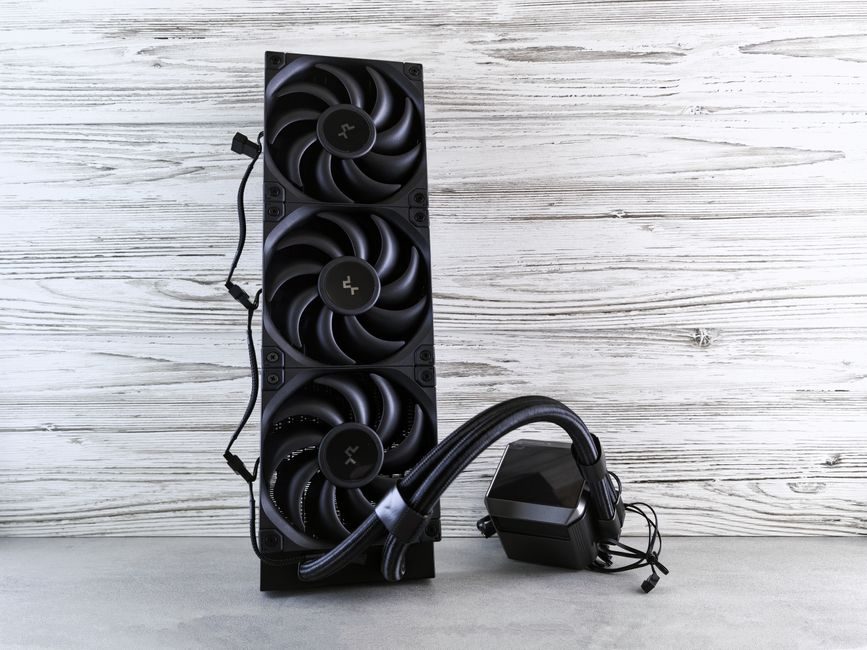
Chiller and Coolant Distribution Unit (CDU) lead times for AI-class direct-to-chip (DTC) liquid cooling loops are running 26-40 weeks as of July 2026, with dielectric fluid allocations now a gating constraint alongside brazed plate heat exchangers and CDUs in the 1.5-3 MW envelope.
The squeeze sits at the intersection of three forces: AI server power envelopes crossing 60-100 kW per rack, hyperscaler build pipelines absorbing single-source CDU production, and a slow-burn retrofit wave at enterprise colos that previously ran air cooling. Iceotope positions its chassis-level precision liquid cooling with dielectric fluid supporting inlet temperatures above 55°C for warm-water operation, while Chilldyne's negative-pressure leak-free DTC design is being absorbed by Daikin Applied to broaden its data center portfolio [S1][S2].
What is actually short, by component, in July 2026
The shortage is not a single bottleneck. CDUs in the 1-3 MW class are the most cited pinch point, with vendor confirmations placing delivery at 6-10 months for new orders placed this quarter. Brazed plate heat exchangers (BPHEs) sized for 40-80 kW per rack are reported at 30-38 weeks because stainless 316L plate stock is allocated to semiconductor fab tool builders competing for the same coil and frame fabricators. Dielectric coolant supply is rationed by tier-one chemistry producers, and instrument air for leak-detection systems on cold plates is back-ordered 12-16 weeks at distributors serving North American and EU integrators [S1][S2].
Secondary constraints compound the picture. Quick-disconnect (QDC) couplings qualified to OCP and vendor-specific leak-test specs are running 18-24 weeks, and the manifolds that feed rack-level TCS loops sit at similar lead times. The history of direct liquid cooling goes back to IBM's 1964 first water-cooled product, but the supply base for high-volume AI-class loops is still narrow, with a handful of CDU fabricators and a few coolant blenders carrying most of the order book [S4].
Decision criteria: who is exposed and who is not
Operators exposed in the 2026 window are those retrofitting 30-80 kW/rack air-cooled halls to liquid with a hard go-live date, those building new 1-3 MW GPU clusters on a greenfield campus, and any specifier who picked a single-source CDU vendor without a second-source clause. Operators not exposed in the same window are those already on warm-water loops above 45°C inlet, those with air-cooled 15-25 kW/rack envelopes, and edge sites under 50 kW per cabinet where sealed self-contained thermal routing cabinets replace facility water entirely [S1].
The decision rule of thumb: if your rack density exceeds 40 kW and your timeline is under nine months, you need a second-source CDU, a stocked dielectric coolant reservation, and a QDC coupling alternate qualified to the same leak-test pressure. Operators running on air with planned density under 30 kW/rack through 2027 can defer liquid entirely. Operators with sealed dielectric chassis solutions, such as Iceotope's "direct to everything" architecture, are insulated from facility water and dry-cooler dependencies but remain gated by the same CDU and manifold suppliers downstream [S1].
Comparing the three main liquid-cooling architectures on supply risk
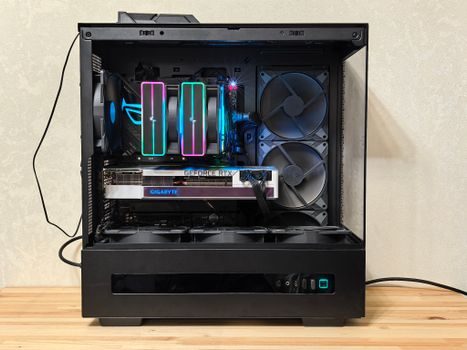
The three architectures most often specified in 2026 are full-system dielectric immersion, cold-plate direct-to-chip (DTC) with facility water, and warm-water DTC with negative-pressure secondary loop. On supply risk, dielectric immersion scores best for facility-side dependencies because it removes the need for facility water and dry chillers at the edge, but it is exposed to the same dielectric fluid allocation as the others. Standard cold-plate DTC carries the highest lead-time risk because it depends on facility cooling towers, high-volume CDUs, and high volumes of QDC couplings. Negative-pressure DTC, the design Chilldyne ships and which has run leak-free at Sandia since 2019, reduces leak-driven downtime but is gated by the same CDU and BPHE supply chain [S2].
On operating envelope, dielectric immersion typically supports inlet temperatures above 55°C and enables dry-cooler heat rejection with no additional water; negative-pressure DTC targets the same warm-water band but stays within the 40-65°C inlet window that OCP-aligned CDUs handle; standard cold-plate DTC is more conservative, usually 18-32°C inlet, and forces the operator to specify a chilled-water plant. On capex, dielectric immersion has the highest per-rack premium because the chassis itself is sealed and dielectric-filled, but it removes facility water infrastructure that standard cold-plate loops require. On retrofit risk, any architecture that requires facility water and a new chiller plant carries the longest critical-path schedule in 2026 because the chiller vendors are running at allocation. For operators already on air at 20-30 kW/rack, the liquid cooling vendor map and spec-tier shortlist breaks down who ships what and on what lead time.
Use cases: which architecture fits which load
Hyperscale AI training halls at 60-100 kW/rack are converging on cold-plate DTC with warm-water secondary loops and OCP-style manifolds, because the heat-rejecting water temperature is high enough to feed district heating or onsite reuse. Edge sites under 50 kW per cabinet and any deployment without facility water are an architectural fit for sealed self-contained thermal routing cabinets, where compute, cooling, networking, memory, and storage are integrated into a single drop that needs no facility water or dry chiller. Enterprise retrofits at 30-50 kW/rack with an existing chilled-water plant often stay on cold-plate DTC because reusing the chiller halves the retrofit's critical path, and the industrial UPS sizing on the floor must be re-checked because pump loads shift the upstream switching power supply and standby DC power supply sizing envelope. [S1]
Operating-temperature guidance from one chassis-level dielectric supplier supports inlet coolant temperatures above 55°C, enabling efficient warm-water operation and easier heat reuse, with dry-cooler heat rejection requiring no additional water [S1]. This is the operating point that drives down cooling energy, but only the dielectric and negative-pressure architectures routinely operate in that band; standard cold-plate plants stay in the 18-32°C range.
Failure modes and constraints specifiers are reporting in 2026

Four failure modes dominate the post-deployment complaint data. The first is coolant leak from QDC mis-mating under vibration, which negative-pressure designs address by holding the loop below ambient pressure so a seal failure pulls air in rather than pushing coolant out. The second is coolant chemistry drift, which forces a CDU-side water-chemistry control loop and periodic glycol or dielectric resistivity checks; this is why a CDU manages coolant flow, pressure, water chemistry, and temperature rather than just flow. The third is air entrainment at the rack manifold, which costs pumping head and degrades heat transfer. The fourth is the retrocommissioning risk on brownfield sites, where a 2018-era pressure transmitter on the chilled-water loop and a legacy flow meter on the condenser water side may not be specified for the new operating temperatures and the dielectric or glycol-water mix now in service [S1].
The reliability claims worth weighing: one negative-pressure DTC vendor reports leak-free operation at Sandia since 2019, and the same vendor reports a 1 MW GPU cluster running on its loop since 2014 with no coolant-damaged server repair on record [S2]. These are customer references, not controlled benchmark data, but they line up with the architectural logic of holding the loop below ambient pressure.
Sourcing, standards, and what to put in the purchase order
For a 2026 purchase order, the specifier checklist that holds up under supply pressure is short. First, declare a second-source CDU and a second-source BPHE vendor, both named in the bid form, with each qualified to the same OCP or vendor leak-test pressure. Second, reserve dielectric coolant or glycol volume at the chemistry supplier with a delivery schedule keyed to the CDU arrival, not the building opening. Third, qualify two QDC coupling vendors to the same spill test pressure. Fourth, on the controls side, require the CDU to publish its flow, pressure, water-chemistry, and temperature control loops in a vendor-neutral protocol that your existing industrial valve actuators and instrumentation can read. [S1]
Standards to anchor the spec against depend on the project geography, but the universally applicable references are ASHRAE TC 9.9 for thermal envelopes, OCP Open Rack v3 for manifold and coupling baselines, and the IPC-6012 / IPC-A-610 class for any custom manifold fabrication. Liquid-cooling loop part numbers are already public at the silicon-vendor level — Intel lists Liquid-Cooling Loop DIMM TIMM (DNPLCDMTM, SKU 232218) and Liquid-Cooling Loop DNPLCLPCM (SKU 232216) as orderable Emerald Rapids components, which is the kind of model-code specificity specifiers should pin on the bill of materials to avoid generic substitutes [S5][S6].
Trackable signals for the next quarter: CDU lead-time announcements at SC25 (St. Louis, Nov 17-20, where Chilldyne exhibits at booth 3908), any second-source qualification by a hyperscaler OCP contributor, and dielectric coolant allocation letters from the two main chemistry suppliers [S2]. Operators watching the chiller side should also track the broader data center cooling supply picture, because the air-cooled retrofit queue is the leading indicator for liquid-loop demand nine to twelve months out.