Industrial lithium hydroxide monohydrate (CAS 1310-66-3, LiOH·H2O, MW 41.96 g/mol, density 1.51 g/cm³) reached a 2027 demand model of US$2.60Bn at an 8.2% CAGR over 2022-2027, with Li-ion battery cathode use capturing 28.3% of the application mix in the most recent vendor analysis [S1].
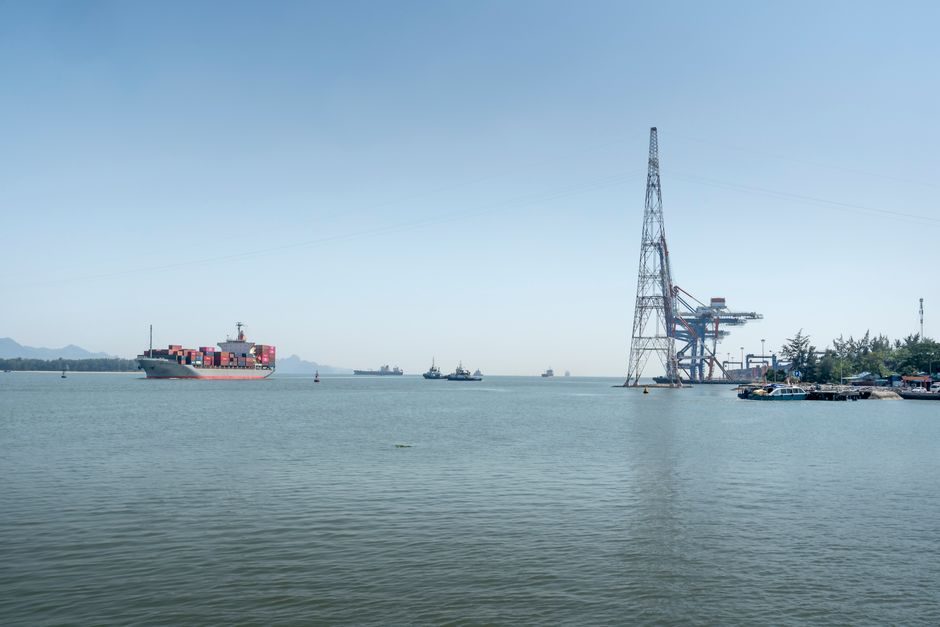
The supply chain is dominated by a single chemistry: a metathesis reaction between lithium carbonate and calcium hydroxide, which yields a product without the hydrogen-bond network that complicates carbonate-route drying — that single reaction is what makes a battery-grade 99.3% LiOH·H2O economically reachable at scale [S1]. China is the structural price-setter, with Japan and South Korea historically absorbing more than 80% of Chinese hydroxide exports before the 2020 customs disruption exposed the concentration risk [S1].
What "lithium hydroxide" actually means at the spec sheet
Anhydrous LiOH (CAS 1310-65-2) and the monohydrate LiOH·H2O (CAS 1310-66-3) behave as two different procurement lines: the monohydrate carries the structural water (melting point 462 °C, boiling point 920 °C for the hydrate) that battery and grease buyers must call out on the Certificate of Analysis, because drying losses shift the active assay [S4].
Purity bands on commercial offers are 55%, 99%, 99.3%, and higher; battery-grade monohydrate is the 99.3% tier, packaged in moisture-controlled bags or bottles, and is the line called out under GB/T 26008-2020 (battery grade lithium hydroxide monohydrate, replacing GB/T 26008-2010) [S1][S2]. The 55% technical grade is the workhorse for CO2 scrubbers in closed environments (submarines, spacecraft life-support) and for cement accelerators where assay precision matters less than lot-to-lot consistency [S1].
Grease-grade monohydrate and anhydrous LiOH both serve as thickeners in lithium-complex lubricating greases; this is a smaller-volume but higher-margin use, and the purity tolerance here is tighter than cement-grade but looser than battery-grade — most multi-purpose greases sit in the 99% band [S1].
Manufacturing route and the metathesis bottleneck
Industrial production runs Li2CO3 + Ca(OH)2 → 2 LiOH + CaCO3, with the CaCO3 filtered off and the LiOH liquor concentrated and crystallized as the monohydrate [S1]. The route is carbonate-anchored, which means every lithium hydroxide plant is structurally a downstream of a lithium carbonate plant, and any tightness or contamination event on the carbonate side propagates into hydroxide [S1].
GB/T 11064 series governs the chemical analysis methods that buyers use to validate incoming lots: GB/T 11064.2-2023 (LiOH content by acid-base titration), GB/T 11064.9-2023 (sulfate by barium sulfate turbidimetric), GB/T 11064.7-2013 (iron by 1,10-phenanthroline spectrophotometry), GB/T 11064.8-2013 (silicon by molybdenum blue), GB/T 11064.14-2013 (arsenic by molybdenum blue), GB/T 11064.15-2013 (fluoride by ion-selective electrode), and GB/T 11064.11-2013 (acid-insolubles by gravimetry) [S2]. GB/T 45328-2025 layers on a cleanroom-style test for magnetic foreign-metal particles in Li2CO3, LiOH·H2O, and LiCl — a direct response to cathode-coating defects traced to sub-millimetre ferrous contamination [S2].
Process engineers specifying battery-grade LiOH·H2O should expect CoA coverage of at least LiOH assay, Na, K, Ca, Fe, Cu, sulfate, chloride, acid-insolubles, and magnetic particles — that envelope is what GB/T 26008-2020 plus the GB/T 11064 methods are designed to enforce, and it is the same envelope Japanese and Korean cathode buyers re-test on inbound [S1][S2].
Application mix and who is buying which grade
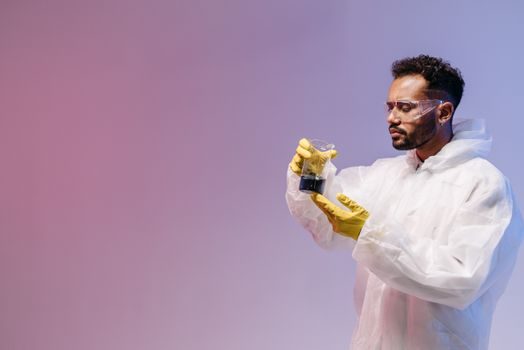
Li-ion batteries held the largest application share at 28.3% in the most recent segmentation, with the balance split across lubricating grease, glass and ceramics, dye, CO2 scrubber, and a long tail of chemical and metallurgical uses [S1]. The 99.3% battery-grade line is the volume driver; NCA cathode chemistries in particular prefer LiOH·H2O over Li2CO3 because the higher decomposition temperature avoids CO2 evolution during sintering [S1].
Grease and CO2-scrubber grades tolerate the 99% band, and the 55% technical grade remains the most forgiving on assay but the most punishing on insoluble content — a 55% grade with poor filtration will plug scrubber beds and has to be re-blended or rejected. The "Lubricant industry and battery industry" end-user split that vendors publish maps directly onto that grade stack, with battery and grease together absorbing the bulk of premium monohydrate [S5].
For comparison, the main grades line up against the four criteria procurement most often scores on:
- 99.3% battery monohydrate (GB/T 26008-2020): LiOH·H2O assay ≥ 99.3%, magnetic-particle test per GB/T 45328-2025, low Na/K/Fe, premium price, longest lead time [S1][S2].
- 99% technical/anhydrous: assay ≥ 99%, lower impurity ceiling than battery, mid-price, used in grease and high-purity chemical synthesis [S1].
- 55% technical: low assay, used in cement, CO2 scrubbing, dye, and air-treatment where insolubles and color are the gate rather than assay [S1].
Buyers sourcing the 99.3% line should expect a 4-8 week lead time from Chinese or Chilean converters in normal conditions, with spot price moves tied to Li2CO3 tightness — a parallel dynamic to what the Lithium Carbonate 2026: Price Bands, Supply Inflection, and Sourcing Map reference frames for the upstream.
Regional sourcing map and concentration risk
Asia-Pacific dominates volume because automotive and cell production cluster in China, Japan, and South Korea, with Chinese commercial-vehicle sales of 5.23 million units in 2021 (+20% year over year) cited as the demand pull [S1]. The 2020 customs disruption showed that more than 80% of China's hydroxide exports historically went to Japan and South Korea, so any logistics shock to that corridor moves global spot price within weeks [S1].
Australian spodumene converters (Greenbushes, SQM-aligned brine operations in Chile, and Argentine brine projects) sit behind most of the non-China volume; the metathesis reaction itself is simple, so capacity additions tend to be debottlenecking of existing carbonate lines rather than greenfield hydroxide [S1]. Department of Industry, Science and Resources (Australia) modelling estimated global LiOH output reaching roughly 600 thousand tonnes by 2025, which is the supply envelope the 8.2% CAGR through 2027 is built on [S1].
European and North-American buyers who want a non-China source for ESG or IRA-related sourcing rules have to accept that the qualified supplier list is short: Albemarle, SQM, Livent, and a handful of Australian converters. The 2022-2027 forecast in [S1] does not break out IRA-driven capacity but the 8.2% CAGR implicitly assumes new ex-China conversion comes onstream in the back half of the window.
Process-side constraints: corrosion, handling, and material compatibility
Lithium hydroxide is a strong base and absorbs CO2 and water from ambient air, so handling has to assume a sealed dry-cabinet workflow with desiccant and CO2-scrubbed air, and storage tanks are typically 304/316 stainless rather than carbon steel [S1][S4]. Material compatibility data published for pump tubing and gaskets shows C-FLEX and C-Flex ULTRA rated "excellent" against CAS 1310-65-2, while PharMed BPT, PharMed High-Pressure, PharmaPure, Noprene, Noprene Food, Puri-Flex, and Chem-Durance Bio are rated "good" with only mild reaction noted [S3].
PTFE (GORE Style 100SC) and platinum-cured or peroxide-cured silicone are explicitly flagged as "severe chemical reaction, not recommended" against aqueous LiOH, and BioPharm / BioPharm Plus carry the same warning — the silicone swelling and PTFE stress-cracking seen in field returns is consistent with that rating [S3]. Viton and PharmaPure GORE Style 400 sit at "fair / medium reaction, not for continuous service" with documented softening, strength loss, and swelling [S3].
For pump heads specifically, polysulfone (Tygon E-Lab), polycarbonate (Tygon E-LFL), polyphenylene sulfide (Tygon E-Food), and stainless steel (Tygon Fuel & Lubricant) are all rated "excellent" against 1310-65-2, which is the relevant cell when LiOH·H2O liquor is being metered into a crystallizer or into a cathode-precursor reactor [S3]. The GHS pictograms GHS05 (corrosive) and GHS07 (irritant) on the SDS with signal word "Danger" confirm the handling class — splash goggles, chemical-resistant gloves, and a Class D or compatible extinguisher are the floor, not the ceiling [S4].
Standards, specifications, and the test-method stack
For a battery-grade procurement spec, the controlling documents are GB/T 26008-2020 (battery-grade LiOH·H2O), GB/T 8766-2013 (LiOH·H2O base standard), and the GB/T 11064 series for analysis methods, with GB/T 45328-2025 added for magnetic-particle cleanliness [S2]. Older revisions — GB/T 26008-2010, GB/T 8766-2002, and the 1989 / 2013 GB/T 11064.x parts — remain cited in legacy contracts but are no longer the current revision for new procurement [S2].
GB/T 11064.1-2024 (titrimetric determination of Li2CO3 content) is the method used to back out carbonate contamination in the LiOH·H2O feed, which matters because residual carbonate is the single biggest driver of CO2 evolution during NCA sintering [S2]. For 99.3% battery-grade procurement, the residual carbonate spec is typically the binding constraint, not the LiOH assay.
Limitations, toxicity, and what does not work
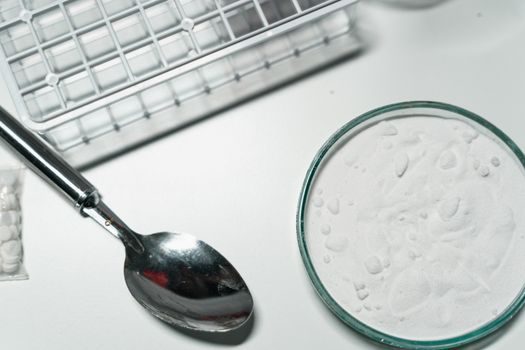
Lithium hydroxide is corrosive, hygroscopic, and classified with GHS05 (corrosive) plus GHS07 (irritant) — the toxicity concern flagged in the [S1] outlook is real, not theoretical, and the 2020 customs-driven price increase (Ganfeng raised battery-grade spot by no more than 10% on raw-material and transport cost grounds) is the kind of step-change that hits cell makers within a quarter [S1][S4].
The metathesis route does not break the Li2CO3-to-LiOH dependency; any spec that assumes independent LiOH supply is structurally wrong, and a buyer who has not locked a parallel Li2CO3 contract will see LiOH spot price move with carbonate. The export corridor concentration (more than 80% of Chinese hydroxide historically going to Japan and South Korea) means a single logistics event moves the entire Asian benchmark, which is why parallel industrial UPS and dc power supply strategies are usually tied into the same hedging review as raw-material hedging on cathode-active lines.
Silicone and PTFE fluid-path components fail in LiOH service and should be replaced with C-FLEX, PharMed, polysulfone, PPS, or stainless before any line is commissioned, with Viton and PharmaPure GORE Style 400 only on non-continuous duty [S3]. A buyer who skips the magnetic-particle test (GB/T 45328-2025) on incoming 99.3% monohydrate will see cathode-coating pinhole defects within weeks of cell production, and the defect will not be visible at the LiOH receipt stage [S2].
Decision rules for the 2026 sourcing cycle
Specify 99.3% LiOH·H2O to GB/T 26008-2020 with GB/T 11064 methods and the GB/T 45328-2025 magnetic-particle test for any cell or precursor line, and require the CoA to show assay, Na, K, Ca, Fe, Cu, sulfate, chloride, acid-insolubles, magnetic particles, and residual Li2CO3 [S1][S2].
For process-side engineering, the reference set to keep open during line design is broader than the chemical itself: material-handling spec work crosses into dc power supply sizing for dry-cabinet dehumidifiers, switching power supply units for crystallizer instrumentation, industrial UPS for control continuity, and chain conveyor / roller chain selection for the bag-and-bottle packaging lines that move 25 kg battery-grade bags from drum to reactor head [S1].
Track these three signals through Q4 2026: (1) any update to GB/T 26008 revision (the current 2020 issue is the binding version), (2) Australian and Argentine converter nameplate announcements, which are the marginal swing for the 8.2% CAGR through 2027, and (3) any GHS classification amendment that re-classes LiOH under stricter corrosive categories — that has historically forced glove and cabinet re-specs across LiOH-using pilot lines [S1][S2][S4].