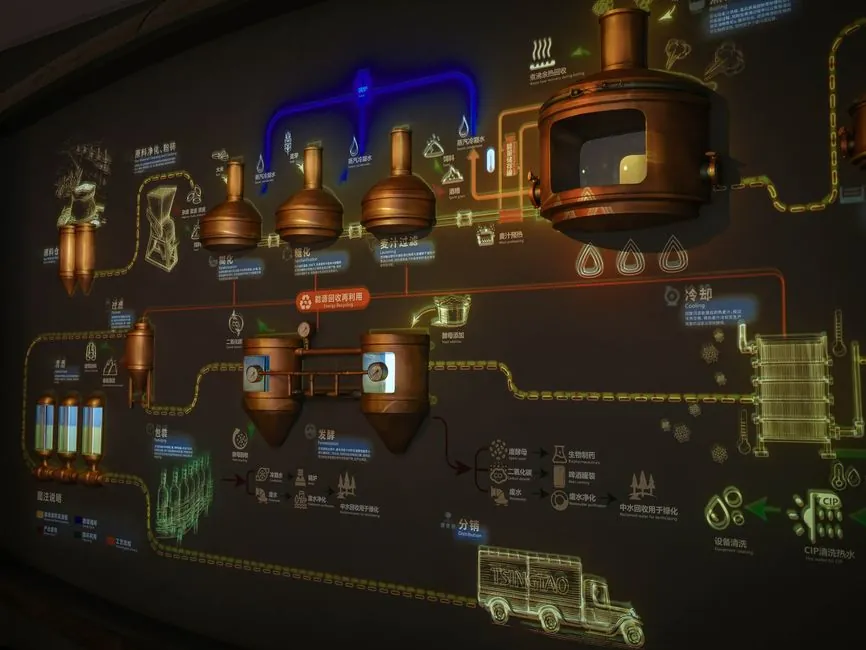
An LNG train's capex is concentrated in a handful of heavy equipment lines, not the instrumentation. Buy-side listings published on made-in-china.com on 2026-05-11 put a 10,750 L CNG/LNG vacuum-tank sewage truck at US$7,000-18,000 per unit, and a 5,100 L variant at US$7,000-12,800 per unit, both at 1-unit MOQ [S3]; those are the small mobile end, useful only as a sanity check against the multi-hundred-million-dollar stationary plant figure.
The cost stack for a stationary LNG facility is built from five blocks: gas pretreatment and acid-gas removal, liquefaction (mixed-refrigerant or AP-NPC), main cryogenic heat exchangers, storage and loading, and BOP/instrumentation. Driver ranking, not sticker price, is what a process engineer needs: the same US$1 of LNG equipment carries very different freight, erection, and commissioning loadings across those blocks.
Block 1: Liquefaction train and cold-box cost drivers
The mixed-refrigerant compressor train plus the brazed-aluminum heat exchanger (BAHX) cold-box is the single largest capex line on most LNG trains. A C3MR / AP-NPC / Cascade configuration choice changes the BAHX surface area by an order of magnitude; that surface area, in m^2, is the dominant variable in cold-box material cost, since BAHX cores are built from thousands of diffusion-bonded aluminum plates and the brazing furnace cycle is the throughput bottleneck [S1].
Frame agreements (GE, Siemens Energy, Air Products) and EPC packaging mean the buyer rarely sees an itemized cold-box price. What the engineer can control: refrigerant composition (pure-component vs mixed), number of compression stages, and driver-machinery selection (electric motor vs gas turbine). Gas-turbine drivers add US dollars per kW installed but remove substation capex; electric-motor drivers invert that trade. Driver selection moves 10-20 percent of train cost depending on grid availability at the site.
Block 2: Storage and loading, dominated by tank shell mass
Full-containment LNG storage is a 9% Ni steel inner tank plus a prestressed concrete outer tank, with perlite insulation in the annulus. Tank cost scales with shell mass and roof weight, so capacity is the first-order driver: doubling capacity typically increases tank cost by 60-80 percent, not 100 percent, because perimeter, foundation, and dome scale sub-linearly. Membrane-type tanks (GTT Mark III / NO96) substitute a stainless membrane and insulation panels for the 9% Ni inner shell, shifting cost from metallurgy to panelized installation labor. [S4]
Loading arms, vapor return, and BOG recondensation are small dollar terms per train but recurring opex drivers. Boil-off gas is typically reliquefied or used as fuel gas; the reliquefaction skid, a small BAHX with a dedicated mixed-refrigerant or nitrogen expander loop, is a frequent cost surprise because it is often omitted from EPC base scope and added as a change order.
Block 3: Pretreatment and acid-gas removal, the hidden opex anchor
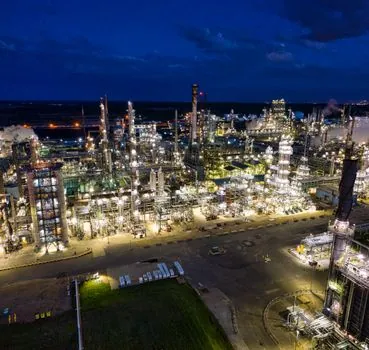
Amine treating, molecular-sieve dehydration, and mercury removal sit upstream of liquefaction. These are not the biggest capex line, but they anchor opex through solvent replacement, adsorbent bed change-out, and mercury-sulfide disposal. A 5 MTPA train typically runs 2-3 molecular-sieve beds in parallel, with 3-5 year change-out cycles; planning for change-out logistics is part of the lifetime cost, not a footnote. [S1]
Feed-gas CO2 spec (typically <50 ppmv) and H2O spec (<1 ppmv) determine amine-circulation rate and sieve mass, which in turn determine regenerator and heater sizing. Tightening the H2O spec by a factor of 10 multiplies sieve mass; loosening the CO2 spec adds downstream cold-box fouling risk. This is a classic place where a 1 percent capex saving on pretreatment becomes a 5 percent opex penalty on the cold-box.
Block 4: Instrumentation and control, the small-share, high-density layer
Instrumentation and control (I&C) is a single-digit share of total LNG plant capex, but it carries the highest density of line items per square meter. The 2026-06-11 made-in-china.com factory snapshot shows representative buy prices: 8-year-battery IP68 magnetostrictive LNG tank level meter at US$135-145 per piece, cryogenic liquid turbine flow meter rated to -196 C for LNG/LOX/LN2 at US$68-98 per piece at 50-piece MOQ, and a Coriolis mass flow meter in the cryogenic line at the same factory [S4].
The point is unit price, not sticker comparison: cryogenic pressure transmitters command a 3-8x multiplier over standard process transmitters, and flow meters for LNG service are almost always intrusive (turbine, Coriolis, ultrasonic clamp-on) rather than orifice, because orifice plates have no acceptable delta-T behavior at -162 C. Specifying the wrong sensor family is a frequent cause of late-stage redesign; the industrial valve layer interacts here because cryogenic ball valves and check valves share the same low-temperature material constraints (-196 C) and the same -29 C minimum impact-test gate per ASME B31.3.
Block 5: Comparison of three main liquefaction routes on cost-relevant axes
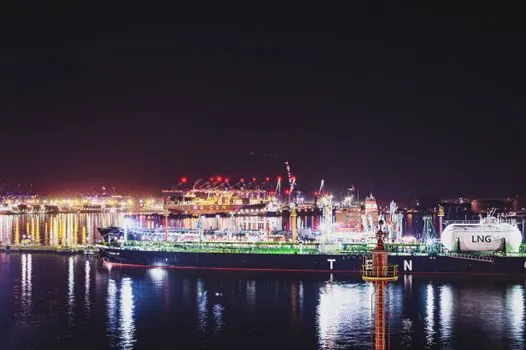
Three commercial liquefaction routes dominate 2026 project pipelines, and the cost-relevant axes are: refrigerant complexity, plot area per MTPA, and cold-box equipment count. APCI C3MR (propane precool + mixed-refrigerant) is the incumbent baseline; ConocoPhillips Optimized Cascade uses three pure-component refrigerant loops (C3, ethylene, methane), trading higher refrigerant inventory for lower shaft power per kg; Air Products AP-NPC and AP-DUAL use a single mixed-refrigerant loop with a nitrogen precool, reducing driver count at the cost of larger cold-box surface area. [S2]
On a criteria view: C3MR has the lowest cold-box surface area per MTPA but the highest number of large rotating drivers; Optimized Cascade has the highest refrigerant-purity specification and the smallest driver count per MTPA, with corresponding opex upside; AP-NPC sits between, with the shortest plot area per MTPA. Selection is rarely about capex alone; feed-gas pressure, ambient temperature (warm-climate sites penalize propane precool), and electrical power availability shift the answer.
Total cost of ownership: where the sticker price misleads
Purchase price for the EPC package covers equipment, freight, and erection. It does not cover driver power opex over 25 years, BOG and BOG-handling, dry-gas-seal nitrogen consumption, or amine and sieve replacement. For a 5 MTPA train, 25-year power opex can exceed the EPC capital figure at grid tariffs above 0.06 US$/kWh; below that, the answer is much closer to parity. The instrument layer's opex is small but recurrent: calibration cycles, SIL proof tests on safety pressure transmitters, and flow meter verification are 1-2 percent of I&C capex per year. [S4]
For more on the equipment layer behind these numbers, the LNG manufacturing equipment spec map breaks down cold-box, storage, and instrument layers side by side. Engineers comparing driver-machinery economics against grid build-out will also find the diesel generator set pricing tier reference useful, since peaking and black-start gensets are a real sub-line in remote-site LNG capex.
Trackable signals through the rest of 2026: EPC bid behavior for the next FIDs in Mozambique, Mexico Pacific, and Qatar's North Field expansion, and OEM list-price moves on BAHX cores and 9% Ni plate, both of which lead the cost stack by 2-3 quarters. Spec gate at the I&C layer remains the cryogenic pressure sensor package; any sub-specification there propagates into a redesign charge that no plant owner wants to see on a lump-sum EPC contract.