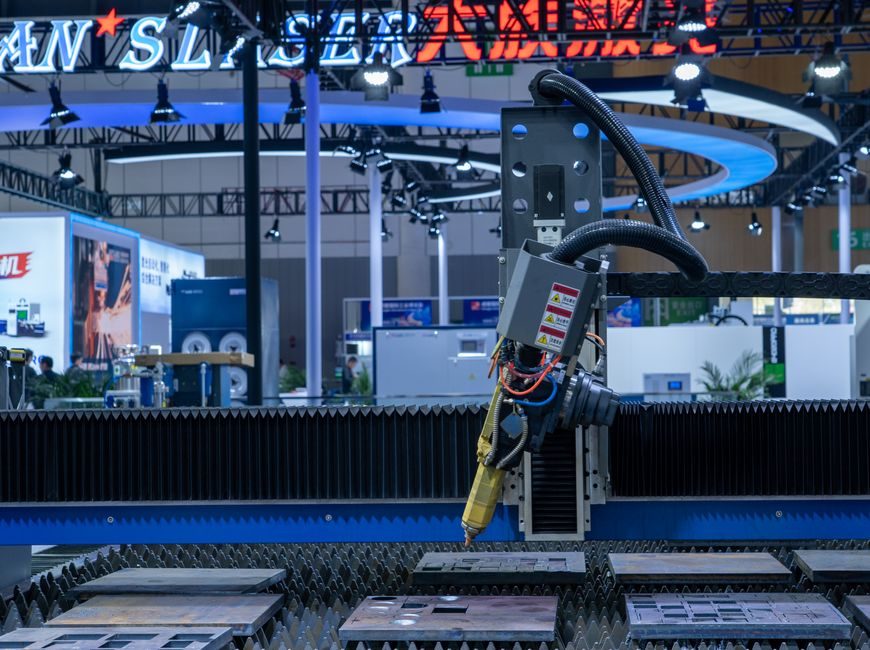
Machine tool production technology covers the metal-cutting equipment stack used to convert billet, forging or plate into finished parts: CNC lathes, vertical and horizontal machining centers (VMC/HMC), 3/4/5-axis mills, EDM wire and die-sink units, drilling machines, and power presses, with the 2026 buy-side conversation now dominated by spindle speed, axis count, positioning repeatability, and thermal-stability compensation rather than raw horsepower [S1][S3][S4].
On the sourcing side, 2026 wholesale catalogs list common bed sizes from VMC650 (650 mm X-travel) up through VMC1370, three to five simultaneous axes, and CNC EDM modules for tool-room and mold work, with factory-direct pricing on platforms aggregating Shandong- and Guangdong-built units [S4]. For process engineers, the technology is best treated as a chain: workpiece definition → fixturing → roughing → finishing → metrology, and the equipment in each node is now specced to a tolerance band rather than a brand [S1][S2].
Process chain and the seven machine classes that anchor a 2026 cell
A standard metal-cutting cell in 2026 routes parts across seven equipment classes: CNC lathe (turning, OD/ID, facing), CNC milling (VMC, 3-axis), 4- or 5-axis machining center (multi-face prismatic parts), EDM wire (through-cutting of hard-tool materials and complex contours), EDM die-sink (cavities, micro-features), drilling machine (high-ratio hole patterns), and power press (blanking, forming) [S4]. Each class has a defined role in the chain, and the practical spec question for buyers is which axis count, table size, and controller actually fits the part mix, not which vendor badge is on the column.
Design references published for machine-tool development, including the Springer text on machine-tools production systems, lay out the metrology workflow that follows machining: identification of weak points in machine behavior, calculation of static and dynamic stiffness, and assessment of geometric accuracy against ISO 230 series test code conventions [S2]. A 2026 buyer who skips that step is buying steel and servos, not a production system. The 2026 reference workflow goes workpiece drawing → process plan → machine class selection → fixturing strategy → cutting parameter window → in-process measurement → final CMM verification [S1][S2].
Selection criteria: spindle, axis, repeatability, controller
Four numbers decide most 2026 quotes. Spindle speed and taper (BT40/BT50, HSK-A63/A100, direct-drive vs belt) cap the cutting window — a 12,000 rpm BT40 unit covers general aluminum and steel work, while 15,000-24,000 rpm direct-drive spindles are now standard for aluminum aerospace and die-mold finishing. Axis count sets geometry: 3-axis VMC handles roughly 80% of prismatic work, 4-axis adds one rotary table for multi-face parts, and 5-axis (trunnion or swivel-head) is required for undercuts, impellers and aerospace structural parts. Positioning repeatability (typically ±0.005 mm to ±0.003 mm on a quality VMC) and the controller family (FANUC, Siemens SINUMERIK, Mitsubishi M80, Heidenhain TNC) close the decision. Buyers running high-mix small-batch work typically stay on 3-axis VMC650-VMC850 platforms; job shops with aerospace or medical work move up to VMC1160/1370 with 5-axis option [S4].
For buyers evaluating which equipment class to add first, the criteria-based comparison below maps the seven common classes to part type, typical tolerance, and lead-time impact. Treat the table as a decision aid, not a buying list — tolerance bands assume a properly leveled, vibration-isolated install and qualified tooling.
Lathe vs VMC vs 4/5-axis machining center vs EDM wire vs EDM die-sink vs drilling machine vs power press: lathes win on axisymmetric parts at ±0.01 mm with the lowest per-part cost; VMCs dominate prismatic work from ±0.02 mm down to ±0.005 mm; 4/5-axis centers remove secondary setups and hit ±0.005 mm on multi-face geometry; EDM wire cuts hardened tool steel and intricate contours beyond mill reach; EDM die-sink forms blind cavities and micro-features; drilling machines specialize in high-ratio hole patterns and tapping; power presses handle blanking and forming where chip-cutting is wrong. The same engineering reference frames machine behavior as a stiffness, damping, and thermal-drift problem — meaning the machine that holds tolerance on hour 200 of a shift is the one that won the spec [S1][S2][S4].
Who this technology is for, and who should not buy it
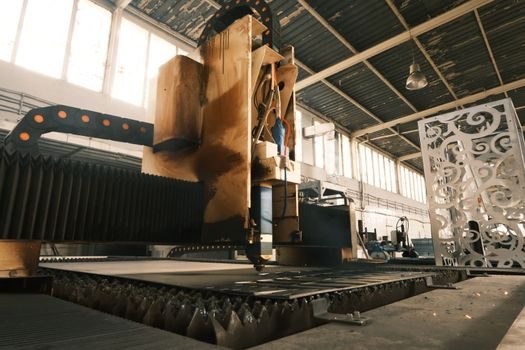
Machine tool production technology is built for fabrication shops, mold makers, aerospace tier-2 suppliers, automotive tier-1 lines, and job shops that cut metal, composite, or graphite for a living [S1][S3]. A contract manufacturer running 50+ part numbers a month on aluminum, steel, and tool steel needs at least one VMC, one lathe, and likely one EDM module to stay competitive on lead-time. Tier-2 aerospace shops handling aluminum structural parts at ±0.005 mm should plan for a 5-axis VMC1370-class machine with thermal compensation and a qualified probing package [S4].
It is not the right tool for low-volume prototyping in soft materials (a 3D printer, waterjet or manual mill covers it for less), nor for sheet-metal work above 6 mm thickness where press brake and laser/plasma tables belong. Buyers who only need drilling-and-tapping on plate should not over-spec into a 5-axis machining center — a dedicated drilling-tapping center delivers better cost-per-hole [S1][S4]. For shop owners planning a 2026 cell expansion, the rule of thumb is: match axis count and table size to the part envelope, not the brand brochure.
Standards, metrology, and the test codes that govern acceptance
Machine tool acceptance runs on ISO 230 series test code for geometric accuracy, with ISO 230-1 covering geometric accuracy of machines operating under no-load or quasi-static conditions, ISO 230-2 covering position accuracy on NC axes, and ISO 230-3 covering thermal effects [S2]. Repeatability and backlash claims on a 2026 datasheet are only meaningful if the test method is named and the compensation state is declared. Buyers should request the test code and the as-measured values, not the marketing peak number.
For cutting-tool geometry and tool-steel selection, the relevant handbooks run to ISO 513 (classification and application of hard cutting materials) and ISO 3685 (turning test with single-point tools); mold steel and die work tie into the tool die steel reference for grade selection on H13, D2, S7 and P20 equivalents. Controllers and fieldbus — typically Ethernet-based protocols on modern CNC — are not interchangeable with 4-20 mA analog instrumentation in process plants; that is a different machine class entirely, so a buyer who needs to integrate a coding machine or a labeling machine on the same line should not assume the CNC controller will talk to packaging assets without a gateway [S2][S4].
Cutting parameters, materials, and the 2026 productivity levers
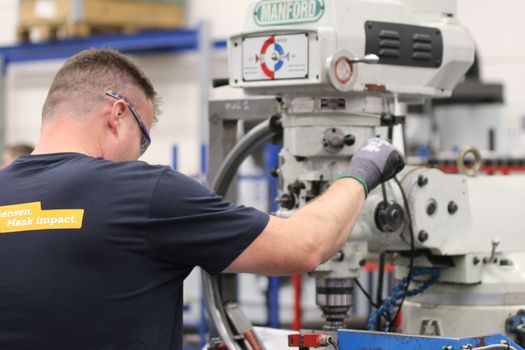
For buyers evaluating factory-direct vs distributor pricing, the 2026 wholesale catalog bands on metal-cutting equipment are roughly: benchtop drill-press class under USD 2,000, entry 3-axis VMC650 in the USD 15,000-30,000 band (factory-direct), mid-range VMC850-VMC1160 with 4th-axis rotary table in the USD 35,000-80,000 band, 5-axis VMC1370-class machines in the USD 120,000-300,000 band, and wire-EDM modules starting around USD 30,000 and rising with travel size and submerged-cut options [S4]. Volume discounts, OEM controller choice, and tooling package contents shift those bands by ±20% on a real RFQ, so the comparison above is a band, not a quote. The longer-form economics conversation also runs through adjacent equipment — buyers cross-shopping a cutting machine for the same cell should compare spindle class and controller platform, not headline wattage.
Failure modes, limits, and the constraints buyers miss
Three constraints drive most 2026 warranty calls. First, thermal drift: a VMC without thermal compensation will lose 0.01-0.03 mm over an 8-hour shift as the spindle and ballscrews warm, which is the difference between hitting and missing a ±0.01 mm print. Second, foundation and rigidity: a 5-axis machining center on a non-isolated industrial floor will not hold its published accuracy, no matter what the controller reports. Third, controller-encoder mismatch: low-resolution feedback scales amplify the backlash the spec sheet claims to have eliminated. Each of these is solvable at the spec stage, not the install stage [S1][S2].
Other recurring limits: tool-changer reliability on high-mix cells (a 24-30-tool ATC is the practical 2026 floor for a job shop), chip evacuation on deep-pocket cavity work (a 5-axis head with through-spindle coolant and high-pressure coolant — typically 70 bar — is now table stakes for hardened-steel finishing), and EDM wire wear on taper cuts (above 15° taper, cut rate drops sharply and surface finish degrades). The metrological assessment step in the Springer reference is the only reliable way to surface these limits on a specific machine before the PO, not after [S2].
Implementation flow: from RFQ to first-article inspection

A clean 2026 implementation runs RFQ → shortlist by axis, table size, controller, and quoted test-code report → site audit (level, power, air, foundation) → PO with acceptance clause tied to ISO 230 test results at install → tooling and workholding package sourced in parallel → first-article inspection on a CMM with a documented measurement plan → ramp under a guarded production window. Skipping the CMM plan is the single most common cause of a 2026 cell failing to hit its quoted throughput. The core machine reference covers the supporting equipment — chip conveyors, coolant management, and tool-presetter — that the main asset depends on; for buyers who also run packaging or finishing lines, the filling machine category sits at the opposite end of the same plant and is governed by hygienic-design and washdown ratings, which is why these encyclopedia pages stay separated [S1][S2][S4].
For cross-shop planning, see how the same spec-first method applies to adjacent plant assets in the oxy-fuel cutting torch vs arc welding machine and power mixer vs cut-off machine breakdowns, where tolerance, duty cycle, and duty-class spec bands drive the same kind of decision tree as a VMC purchase.