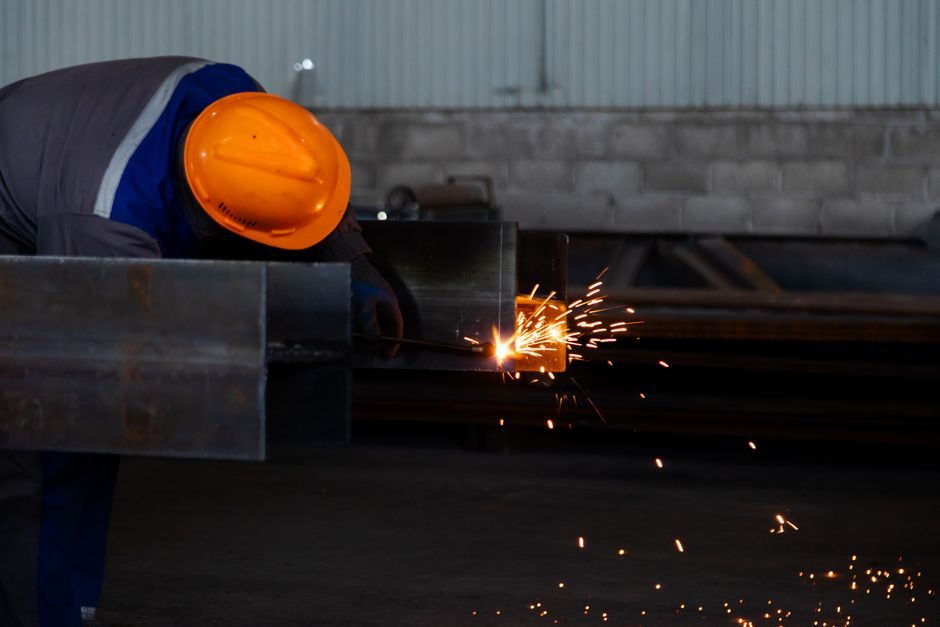
Oxy-fuel cutting torches and arc welders are two of the most-asked-for machines on metal-fabrication shop floors, but they are built for opposite jobs: one severs steel by chemical oxidation, the other fuses metal via an electric arc [S7].
Oxy-fuel dominates thermal cutting for low-alloy carbon steel in the 0.5 mm to 250 mm thickness range because the preheat-ignition cycle and oxygen jet work on iron chemistry, not just heat [S7]. Arc welding is a joining process family (SMAW, GMAW, GTAW, FCAW, SAW, PAW, ESW-EGW) where an electrode arc deposits filler or fuses parent metal, classified under ISO 4063 process codes such as 111 (SMAW), 135 (GMAW with solid wire), 141 (GTAW/TIG) and 121 (SAW) [S8].
What Each Process Actually Does
Oxy-fuel cutting is a three-step thermal process: a fuel gas (acetylene, propane, MAPP, propylene or natural gas) is mixed with oxygen to preheat the steel to its ignition band of 700 °C to 900 °C, then a high-purity oxygen jet is switched in to oxidise (burn) the iron and blow the molten oxide out of the kerf [S7]. Acetylene remains the only fuel that can produce a neutral or carburising flame hot enough for certain stainless and cast-iron work; propane and propylene deliver lower flame temperatures but higher specific heat, suiting preheat of heavy plate [S7].
Arc welding is fundamentally an electric-arc process: a power source forces current across a gap between electrode and workpiece, melting the joint and (in most variants) a filler. GMAW (ISO 4063 code 135, also MIG/MAG) uses a continuously fed solid or metal-cored wire under shielding gas; FCAW (code 136) feeds a flux-cored tubular wire that may or may not need external gas; SMAW (code 111, "stick") uses a flux-coated stick electrode melted by hand; GTAW (code 141, TIG) uses a non-consumable tungsten electrode with optional filler rod; SAW (code 121) submerges the arc under a granular flux pile for high-deposition plate welding; and EGW (electrogas, code 73) combines a fusible consumable guide with gas shielding for vertical-up plate welding [S8]. Each code implies specific polarity, shielding gas and joint-prep expectations.
Thickness, Material and Geometry Windows
For cutting, oxy-fuel is the workhorse from roughly 0.5 mm thin gauge to 250 mm heavy plate on mild and low-alloy carbon steel; stainless, copper, aluminium and cast iron do not cut cleanly by oxidation because their oxides melt above the parent metal or block further reaction [S7]. Modern CNC oxy-fuel/plasma combination gantries routinely span 1,500-12,000 mm on the Y-axis and 1,500-4,000 mm on the X-axis, with cutting speeds of 35 mm/min to 19,000 mm/min depending on material and process, as shown in published 2026 machine datasheets [S1][S6]. A heavy-duty gantry such as the FICEP KRONOS weighs 2,500-10,000 kg and handles 40 mm tube diameter for steel sections, with optional drilling, tapping and marking heads co-mounted on the same gantry [S4].
For joining, arc welding covers plate from 0.5 mm thin sheet (GTAW, pulsed GMAW) up to unlimited thickness on heavy structural work (SAW, EGW, electroslag). GMAW solid wire is the productivity default for 1-12 mm carbon-steel fabrication; FCAW is preferred outdoors where wind would strip a shielding gas envelope; SMAW remains the field-repair default because the flux coating generates its own shielding and the equipment is portable; GTAW delivers the lowest heat input and best cosmetic profile for stainless, aluminium and root passes on pipe; SAW delivers the highest deposition rates in the flat/horizontal positions for shipbuilding and pressure-vessel seam welds [S8].
Selection Criteria Side by Side
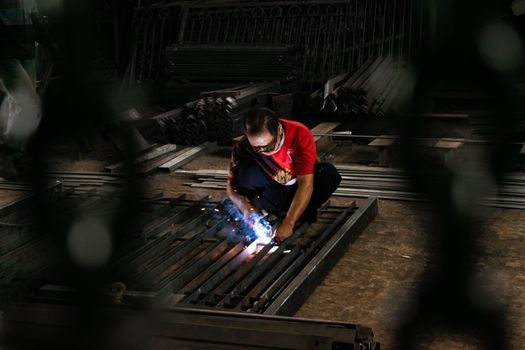
The decision tree collapses to four criteria: (1) what is the required outcome — a severed part or a continuous joint; (2) what is the material — oxidisable carbon steel, or any weldable alloy including stainless, aluminium, copper, nickel; (3) what thickness and travel speed is the production rate target; (4) what is the available power and shielding-gas supply. The accompanying cutting machine datasheets and welding classification table (ISO 4063) make the trade-offs explicit. [S1]
On cut machines published 2026, oxy-fuel/plasma combination gantries such as the ESAB TELEREX TXB list a Y-travel of 26,000 mm and a cutting-speed band of 50-19,000 mm/min for plate and panel work in shipyards [S1]. Compact portable table-top units like the ARCBRO Scout 1313 are aimed at thin sheet and aluminium-profile shops, not heavy plate [S5]. ERMAKSAN's SMART PLAZMA gantry spans 1,500-4,000 mm X, 3,000-12,000 mm Y and cuts up to 38 mm thickness, with high-definition plasma options for stainless and aluminium that oxy-fuel cannot process at all [S6].
For arc welding the comparison axis is process-to-joint: SMAW suits field repair and dirty/rusty plate where flux-coated stick electrodes tolerate poor fit-up; GMAW (135) is the high-speed CO2/Ar-mix default for 1-12 mm carbon steel in production; FCAW (136) takes over outdoors or on thick plate where wind tolerance and high deposition matter; GTAW (141) is non-negotiable for stainless tube root passes, aluminium and any code work (ASME Section IX, EN 1090) requiring low spatter and verified mechanical properties; SAW (121) wins on flat 12-100 mm plate seam welds in shipbuilding and tank fabrication; EGW (73) wins on vertical-up plate joints where deposition rate and flux shielding matter [S8].
Where Oxy-Fuel Beats Plasma, and Where It Loses
On thick carbon steel above 25-30 mm, oxy-fuel remains cheaper per linear metre of cut than high-definition plasma because the only consumable is oxygen and fuel gas, not electrodes and nozzles [S7]. A heavy-duty oxy-fuel gantry running 50-19,000 mm/min with a 26,000 mm Y-travel is a different asset class from a portable plasma table, and shipyards continue to standardise on it for panel cutting and profile cutting of plate [S1][S4].
On stainless, aluminium, copper and cast iron, oxy-fuel simply does not work: the oxide layer either melts above the base metal or blocks oxygen from reaching fresh iron [S7]. Plasma and oxy-fuel cutter datasheets confirm this by listing the material options — the United ProArc Master series explicitly handles stainless steel, carbon steel and iron via plasma, with oxy-fuel kept for the carbon-steel subset, while a gantry such as the ERMAKSAN SMART PLAZMA is sold as a high-performance plasma system with oxy-fuel as an option, not the lead technology [S3][S6]. Vision-based robotic oxy-fuel control research (arXiv 2307.00133, 2023-06-30) confirms oxy-fuel remains "an established cutting medium in industry" for automated metal cutting and recycling lines, but only on materials that oxidise cleanly [S9].
Where Arc Welding Outperforms Alternatives, and Where It Loses
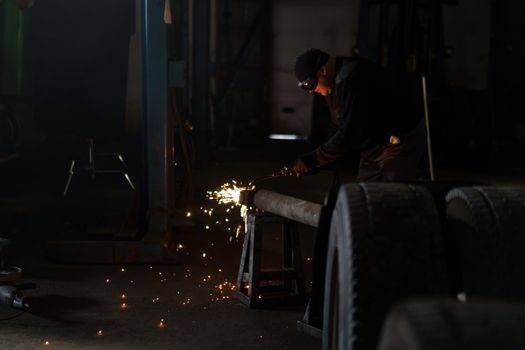
Arc welding is the only practical joining process family for steel, stainless, aluminium, copper, nickel and titanium in the field — resistance welding, laser welding and electron-beam welding all need tightly controlled factory conditions, while arc welding tolerates outdoor, dirty, variable-fit-up environments. A GMAW rig with an 80 % Ar / 20 % CO2 mix and 0.8-1.2 mm wire is the most flexible single asset a general fabrication shop can own, and FCAW with a 1.2 mm self-shielded tubular wire is the standard for shipbuilding-erection welds above 6 mm where wind would blow away gas shielding [S8].
The trade-off is heat input and distortion: arc welding deposits filler metal and locally melts the parent metal, so thin sheet (below 1 mm) is hard to weld by arc without burn-through, and heat-sensitive alloys (some stainless grades, magnesium, zinc-coated galvanneal) demand pulsed GMAW or GTAW to control the heat-affected zone [S8]. For plain cutting of plate, the plasma cutter vs oxy-fuel torch comparison still comes down to material, thickness and cut quality, and arc welding is not in that contest at all — it joins, it does not sever.
Limits, Failure Modes and Standards
Oxy-fuel failure modes are dominated by chemistry, not heat: the cut stops if the steel is not preheated into the 700-900 °C ignition band, if the oxygen purity drops, or if the steel contains enough chromium, nickel or copper to form a refractory oxide [S7]. Machine-side limits are published explicitly: the SMART PLAZMA gantry cuts 5-38 mm thickness at up to 35 m/s traverse in the plasma mode; below 5 mm the cut quality drops and micro-EDM-like precision is not realistic [S6]. The KRONOS gantry lists 2,500-10,000 kg mass and a 40 mm tube-diameter limit, beyond which a different machine class is required [S4].
Arc-welding failure modes are dominated by shielding, heat input and procedure qualification. GMAW/FCAW require the right shielding-gas composition (Ar/CO2 mix for mild steel, Ar/CO2/O2 trim for stainless, pure Ar for aluminium with a pulsed or AC waveform); SAW and EGW are limited to flat/horizontal or vertical-up positions respectively; SMAW tolerates the worst fit-up but is the slowest and dirtiest process; GTAW is the cleanest but the lowest deposition per minute [S8]. Welds on pressure equipment, structural steel and pipe are governed by codes such as ASME Section IX, EN ISO 15614-1 (procedure qualification) and EN 1090 (structural execution), and welder qualification follows ISO 9606-1 — none of which apply to oxy-fuel cutting except where the cut edge becomes a weld preparation.
Sourcing and Procurement Signals in 2026
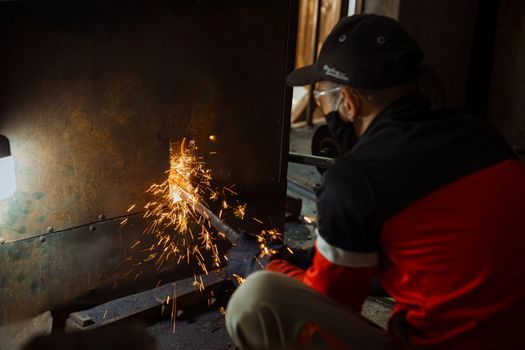
Published 2026 product data from the DirectIndustry catalogue shows that oxy-fuel/plasma combination gantries remain the standard CNC plate-cutting line item, with ESAB, FICEP, ERMAKSAN, United ProArc, ARCBRO, Shandong Jiaxin and Shanghai Huawei all offering CNC-controlled oxy-fuel plus plasma combinations spanning 1,200-6,000 mm cutting length and 1,500-26,000 mm Y-travel [S1][S2][S3][S4][S5][S6][S10]. The Shandong Jiaxin CNC series publishes a standard 1,200 mm width / 2,000 mm length envelope (extensible to 1,600 mm / 6,000 mm) with optional auto-ignition and PTHC arc-voltage height control for the plasma side, indicating that "combination" is the new default rather than pure oxy-fuel [S2].
For welding, the coding machine and core machine reference pages classify the wire-handling and consumable side of the process, while the riser-cutting machine page covers the related thermal-cutting niche of foundry riser removal. The TIG welder price & cost guide 2026 is the natural procurement reference for the GTAW (141) subset, where waveform and cooling drive the cost-per-ampere curve. Trackable signals for the next procurement cycle are: (1) ISO 4063 process code on every weld procedure sheet, so the auditor can map equipment to weld type; (2) material-specific cut-edge requirement, since oxy-fuel on stainless and aluminium will fail the part before it leaves the machine.