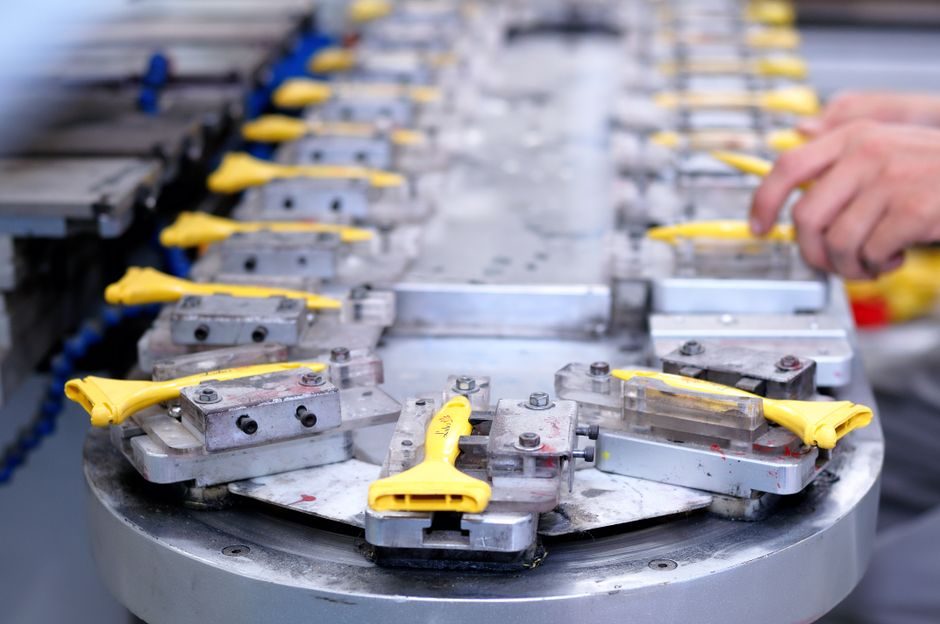
A machine vision system is the thin software-and-camera layer that turns photons into go/no-go signals; everything else on the bill of materials is either feeding it or being fed by it, and the split runs straight through the optical train, the image sensor, the embedded controller, and the line-side PLC or robot that consumes the result [S1].
Upstream of the vision head sit component vendors for industrial lenses, LED and structured-light sources, CMOS/CCD sensors, frame grabbers, and FPGA or vision-controller boards; downstream sit the system integrators and OEM line builders in PCBA SMT, back-end semiconductor, automotive body and battery, pharmaceutical packaging, and food sorting, who buy the vision subsystem as a module and embed it in a turnkey cell [S2][S1].
Upstream Stack: Optics, Light, Sensor, and Compute
Industrial cameras in this segment now commonly push 7-megapixel CMOS resolutions into CoaXPress or 10 GigE links, with the IMPERX CXP-C3240 listed as a current 7 MP ruggedized CMOS example that targets harsh-line environments and high-frame-rate inspection [S5]. The lens and vision light source pair is the single biggest variable on a vision spec sheet, because backlight, dome, ring, coaxial, and structured-light patterns each change contrast on the same part by an order of magnitude.
Upstream compute has converged on embedded vision controllers and industrial PCs, with motion I/O cards sold alongside cameras to keep trigger latency under one frame; ViTrox lists "Integrated Industrial Embedded Solutions" (IO cards, motion-based controllers) as a standalone product line rather than an accessory, which signals how much of the BOM cost has migrated from optics into the controller board [S1]. Image Labs International, a US systems house, similarly packages "Imaging Solutions, Integrated Software, Custom Engineering, and Service & Support" as four co-equal pillars rather than treating software as a freebie [S3].
Downstream Stack: Where the Vision Cell Is Actually Installed
Downstream demand is dominated by PCBA SMT inspection, back-end semiconductor inspection, automotive electronics, and pharmaceutical/medical assembly lines, with Allied Market Research sizing the global machine vision system market at a projected $74.9 billion by 2027 [S2]. The PCBA SMT segment alone covers Advanced Solder Paste Inspection (SPI), Automated Optical Inspection (AOI), and X-ray inspection as three distinct machine classes, and most lines buy all three from a single vendor to keep recipe formats compatible [S1].
Semiconductor back-end is the most spec-heavy downstream cell: tray-to-tray and tape-and-reel IC handlers in the ViTrox range cover IC packages up to 120 mm × 120 mm, including BGA, QFP, QFN, CSP, TSSOP, MSOP, SOP, and inspect for WETQFN, SiP, lid gap, die crack, inner crack, and side-exposed copper, with AI OCR trained on large character sets to push decode rates above conventional OCR [S1]. Wafer-level inspection is its own sub-segment, with 2D surface-defect and metrology systems handling raw wafer, hoop ring, and framed wafer forms, backside inspection down to approximately 200 µm gross defect, and frame-wafer-through-tape chipping captured above 15 µm using a "Smart Thresholding" defect-detection algorithm [S1].
Application Split: Semiconductor vs SMT vs Medical vs Logistics
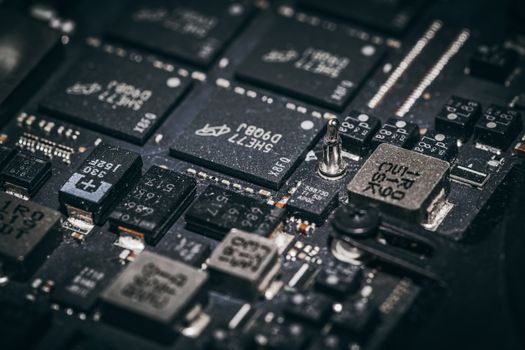
The same vision subsystem gets re-used across very different downstream cells, and the spec envelope changes with each. Sancoo Technology (Xiamen) lists medical-industry intelligent production equipment for breathing balls, breathing masks, and throat masks as a standalone industry solution, which is a useful tell that mask-line vision is treated as a long-tail vertical rather than a generic electronics play [S4]. The trade-off is straightforward: semiconductor back-end demands sub-15 µm defect capture and 6-sided die inspection, SMT lines prioritize false-call rate under 200 ppm at full conveyor speed, and medical-assembly lines prioritize recipe changeover time and cleanroom-compatible materials.
Logistics and ASRS-adjacent cells use the same CMOS camera and lighting stack as semiconductor lines, but with a completely different software stack (1D/2D code reading, dimensioning, and volume weight); this is why most vision vendors keep the imaging hardware line shared and split the application software vertically by industry. Image Labs International's "30 years of industry experience" claim is the kind of vendor statement that maps to this pattern: hardware stays generic, software stacks specialize [S3].
Selection Criteria: Matching the Vision Cell to the Line
Four engineering numbers drive most vision-cell selection: resolution (µm/pixel at the part), frame rate (fps at the line speed), interface bandwidth (CoaXPress, 10 GigE, USB3, or Camera Link), and lighting geometry (backlight, dome, ring, coaxial, or structured). A wafer-inspection cell that needs to capture 15 µm chipping on a moving frame will over-spec an SMT AOI cell that only needs 50 µm solder-paste coverage, and pairing a 7 MP CMOS CoaXPress camera into a 100 Mbps USB3 line is a classic upstream-downstream mismatch that wastes the sensor's bandwidth [S5][S1].
Selection comparison, drawn from the inspected-application range above: (1) Semiconductor back-end wafer/defect — needs 15-200 µm defect capture, IR and backside illumination, 6-sided handling, AI OCR; (2) PCBA SMT AOI/SPI — needs 30-50 µm resolution at 0.5-1.0 m/s line speed, 3-color LED ring or coaxial lighting, low false-call rate; (3) Medical/breathing-mask assembly — needs recipe changeover under 5 minutes, cleanroom-tolerant enclosures, color verification; (4) Logistics and shuttle-system dimensioning — needs 2D code reading, package dimensioning at 1-3 m/s conveyor speed, depth sensing or volumetric vision measuring machine overhead [S1][S4].
Failure Modes and Engineering Constraints
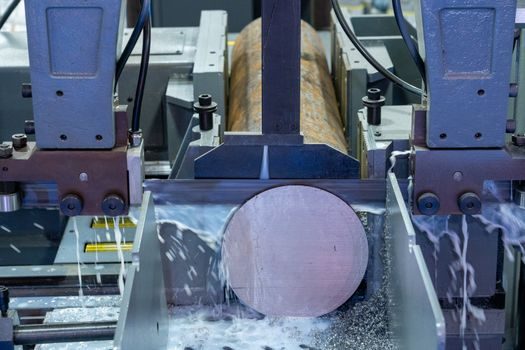
The most common upstream constraint is lighting stability: LED aging shifts intensity 10-20% over 20,000 hours and silently degrades threshold-based defect detection, which is why closed-loop lighting with photo-feedback is becoming the default rather than an option. Sensor-side constraints are dominated by global-shutter CMOS rolling-shutter artifacts on moving parts, which force shorter exposure times and therefore more light or higher sensor gain.
Downstream, the dominant failure modes are mechanical-vibration false calls on SMT lines, recipe-portability issues when a line is run by two different OEMs, and integration gaps between the vision cell's discrete I/O and the line-side PLC's fieldbus (EtherCAT, PROFINET, or EtherNet/IP). Allied Market Research's $74.9 billion 2027 projection is the macro ceiling on this whole stack, but the binding constraint on a specific line is almost always mechanical or lighting, not the camera or the algorithm [S2].
Supply Chain Signals Worth Tracking
Three trackable signals for 2026 specifiers: (a) CoaXPress and 10 GigE interface adoption replacing legacy Camera Link in new semiconductor-inspection cells; (b) embedded AI inference on the vision controller shifting OCR and defect-classification loads off-line PCs; (c) the medical and pharmaceutical-assembly vertical pulling the same CMOS and lighting stack into cleanroom-rated enclosures, which is where Sancoo's mask-line work sits [S4][S5][S1]. The 7 MP ruggedized CMOS camera class is the new middle ground between 2-3 MP legacy line-scan cameras and 12+ MP high-end area-scan units, and most new SMT and back-end-semiconductor cells written in 2026 are converging on it [S5]. Engineers who pin down interface, lighting geometry, and defect-resolution numbers before vendor selection will find the upstream-downstream split is a lot less mysterious than the marketing decks suggest.
See also our earlier report, Dynamic Balancing Machine Buying Guide: Specs, Variants, Sourcing.