
Global data-center precision air conditioning (PAC) demand is on track from USD 2.82 billion in 2026 to USD 4.24 billion by 2034 at a 5.21% CAGR, against an HVAC/R supply chain that Budget Heating flagged on 2026-01-14 as still under equipment-shortage, refrigerant-transition, and shipping-bottleneck pressure [S2][S3].
For process and facilities engineers, that combination — growing load plus a stressed upstream — turns the question from "which PAC" into "which PAC you can actually receive, with the right refrigerant, on the right lead time." A 30 kW Liebert PEX-class unit FOB Baoding at USD 7,785–7,950 per piece, 1-piece MOQ, and a 7.32-hour median supplier response time describe the commercial reality of one Chinese channel in this market [S1].
Scope: What "Precision Air Conditioning" Means in 2026 Sourcing
Straits Research defines PAC as cooling engineered for IT loads — servers, storage, network — and segments it by product (CRAC, CRAH), deployment (in-row, in-rack, centralized), and tier (I/II, III, IV) [S3]. In-row and in-rack topologies map to the modular-data-center build-out, where operating cost runs roughly 30% lower than a traditional facility of equivalent IT load, per the same dataset [S3].
Real product envelopes confirm the spread: Dantherm's PrecisionAir Series covers 2,000–4,000 BTU enclosures at 115 V or 230 V, 50–60 Hz, with 10–15 A external over-current protection [S4]. Aermec's PAC line documents EER measured against total cooling capacity divided by compressor plus fan input (air-cooled condenser excluded), with sound levels at 2 m in a free field per UNI EN ISO 3744:2010 [S5]. Airedale stacks a 200–650 kW AireWall ONE parametric fan wall against a 35 kW–1 MW SmartCool ONE evolution of its SmartCool line [S6]. Sourcing teams comparing these need to align on three numbers first: kW per rack, required sensible heat ratio, and ASHRAE TC 9.9 envelope — typically the A1/A2 allowable range, not the broader A1–A4 marketing range.
Selection Criteria: Refrigerant Class, Density, and Topology
Budget Heating's 2026 guide puts the lower-GWP refrigerant shift at the centre of equipment decision-making, alongside equipment shortages and material cost [S2]. The first citable filter is therefore the refrigerant: legacy R-410A systems, transitional R-32 designs, and low-GWP candidates (R-454B, R-290, CO₂) are not drop-in — they have different glide, different lubricant requirements, and different charge limits under IEC 60335-2-40. Pair this with the topology decision. CRAH (chilled-water) plus perimeter units suits Tier III/IV sites with central plant; in-row CRAC suits modular halls under 250 kW per row; rear-door heat exchangers and immersion are reserved for very high density (≥40 kW per rack) where Airedale-class 1 MW units enter the conversation [S3][S6].
Supply-chain criteria now rival thermodynamic criteria. Procurement in 2026 is asking which PAC platforms have stable component supply (compressors, EC fans, BMS controllers), validated alternate-source skids, and documented lead times under tariff and freight variability — the same questions driving UPS System Supply Chain 2026: Tariff Refunds, ICS2 Release 3, and Logistics-Tech Sourcing on the power side. If the data hall also runs UPS and DC plant, sourcing them on a common controller protocol (Modbus TCP, BACnet, SNMP v3) is what turns "compatible" specifications into a working BMS at handover.
Who This Is For — and Who Should Buy Differently

It is the wrong spec for general office comfort, warehouses, or any space where humidity is uncontrolled and particulate load is high. [S3]
For these IT-grade sites, the DC power supply upstream of the rack and the industrial UPS downstream of the grid are part of the same critical-power chain: a precision AC unit that drops load because the rectifier module faults is the same outage whether the trigger is thermal or electrical. A facility team that treats cooling and power as separate procurement streams is the user that benefits least from PAC technology.
Small edge sites under 2 kW are often better served by closed-loop rack heat exchangers or thermoelectric coolers than by full CRAC. Conversely, hyperscale halls above 5 MW should not be quoted from catalogue PAC SKUs at all — liquid cooling (CDU-to-chip, immersion) carries the load, with precision AC as trim. The "PAC" label covers both extremes; the right architecture sits between them.
Comparison: CRAC vs CRAH vs Liquid, on Four Decision Criteria
Four criteria decide the architecture. (1) Power density: CRAC handles 5–20 kW per rack comfortably; CRAH with chilled water pushes to 30 kW per rack; direct-to-chip liquid reaches 50–100 kW per rack. (2) Water risk tolerance: CRAC is air-side, zero water-on-floor; CRAH introduces a chilled-water loop and a leak path; liquid cooling adds dielectric fluid or glycol-water at the rack. (3) Efficiency: CRAH systems typically post lower PUE at partial load because the chiller plant scales better than DX compressors; Budget Heating's 2026 outlook also flags refrigerant cost and availability as a moving target on the DX side [S2]. (4) Lead time: skid-mounted CRAH and air-side CRAC from Tier-1 OEMs typically quote 8–14 weeks; liquid-cooling CDUs and manifolds vary widely because the supply base is smaller.
Straits' 2026 base year of USD 2.82 billion is heavily weighted to CRAC and CRAH, with in-row and centralized deployments growing fastest inside that mix [S3]. Airedale positions AireWall ONE at 200–650 kW to bridge the gap between perimeter CRAH and a 1 MW SmartCool ONE unit, reflecting the data-hall shift toward parametric, hot-aisle-containment fan walls [S6]. For procurement, the practical extraction is: if the hall design is fixed to raised floor and ≤20 kW per rack, CRAC remains the lowest-risk buy; if the design is hot-aisle containment and 25–35 kW per rack, CRAH; if 40 kW+ per rack or AI training load, plan liquid cooling now and treat PAC as trim cooling.
Use Cases: Modular Halls, Edge Containers, Tier-IV Hyperscale
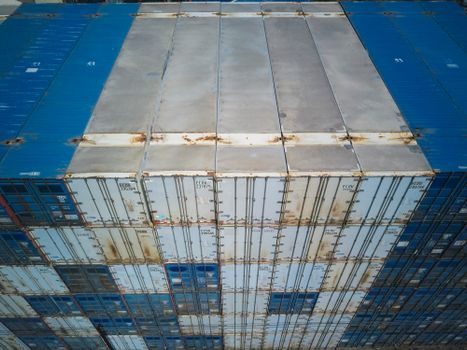
Modular prefabricated data centres are the structural driver. Straits cites roughly 30% lower operating cost versus traditional builds as the reason modular rollouts continue, with the cooling skid specified to match container envelope and ambient profile [S3]. For these skids, Dantherm-class 2,000–4,000 BTU cabinet units are typical edge-scale references; the same 115/230 V 50–60 Hz supply that powers telecom gear also powers the PAC, which simplifies spares and switching power supply inventory at regional warehouses [S4].
Mid-size Tier III sites typically deploy 30–150 kW in-row or perimeter CRAC, with CRAH as a chilled-water hybrid in warm climates. The Liebert PEX 30 kW class referenced by Hebei Chengyue (USD 7,785–7,950 FOB, 1-piece MOQ) sits in this band, with a manufacturer partner network of 5 supply-chain partners and a 7.32-hour average response time visible to overseas buyers — useful indicators when lead-time, not just price, is the binding constraint [S1].
Tier-IV hyperscale is where 1 MW parametric fan walls and liquid-cooled racks dominate. Airedale's AireWall ONE and SmartCool ONE families are explicit responses to "increasing demand" from AI and high-density deployments, with 200–650 kW and 35 kW–1 MW envelope respectively [S6]. For these sites, the procurement process has already moved past SKU selection into multi-vendor qualification, factory acceptance testing, and lifecycle service contracts — the same maturity curve visible in the UPS Upstream and Downstream Industry Map: Component Supply and Load-Side Verticals coverage.
Limitations, Failure Modes, and Constraint Map
Every PAC decision runs into four constraints. (a) Refrigerant availability: Budget Heating's January 2026 guide explicitly calls out the shift to lower-GWP refrigerants as a 2026 supply-chain pressure, and R-410A, R-32, R-454B, and R-290 have different charge limits and leak-test thresholds under IEC 60335-2-40 [S2]. (b) Compressor and EC-fan lead time: inverter-driven scroll and EC plug fans are the bottlenecks most often cited, with multi-quarter waits for some ratings. (c) BMS integration: vendor lock-in to proprietary controllers is a real cost; a precision filter specification is often the cleaner way to handle rack-level air quality than a closed BMS loop. (d) Service network: Tier-IV sites demand 4-hour SLA response, which a regional PAC OEM may not support; international sourcing from a Baoding-based supplier works for hardware but not for service-level response [S1].
Failure modes that show up in incident reports include: condensate pan overflow from humidity setpoint drift, clogged condenser coils in dusty ambient, sensor calibration drift on return-air humidity sensors (causing latent load miscalculation), and refrigerant undercharge after poor service — all of which drive down sensible cooling capacity well before a hard compressor trip. Specifying redundancy (N+1 compressors, dual EC fans, dual power feeds) is the cheapest way to extend MTBF; specifying controller interoperability (Modbus TCP, BACnet/IP, SNMP v3) is the cheapest way to keep service competitive.
Standards, Sourcing, and Trackable 2026 Signals

Standards to anchor to: ASHRAE TC 9.9 for thermal envelopes; EN 14511 for declared cooling capacity and EER; UNI EN ISO 3744:2010 for sound-pressure measurement at 2 m, as Aermec documents [S5]; IEC 60335-2-40 for refrigerant charge safety; IEC 61000-6-x for EMC in data halls; Uptime Institute Tier I–IV for mechanical+electrical topology. Procurement should also track EN 50600 for the broader data-centre infrastructure design, which is the European reference for facilities-level conformance.
Trackable signals for the second half of 2026: (1) refrigerant allocation notices from major compressor OEMs, which historically lead spot-price moves by 2–3 months; (2) the 2026–2034 forecast band of 5.21% CAGR from Straits, which will be reissued as quarterly updates and is the cleanest single demand number to anchor the capex case [S3]; (3) Tier-IV retrofit announcements in APAC and the Middle East, which usually bundle PAC procurement with industrial UPS and switchgear purchases and therefore lead the broader supply-chain cycle. The HVAC/R pipeline noted in Budget Heating's 2026-01-14 outlook is still under strain, so lead time — not list price — remains the binding variable for any PAC order placed in H2 2026.