Magnetic drive pumps and sewage pumps are two different tools sold under the word "pump" — they overlap in nothing but the rotating-impeller principle, and a spec that mixes them up will fail on site. Magnetic drives (sealless, magnet-coupled) are built for clean, often aggressive or toxic chemical service where a single drop of leakage is unacceptable; sewage pumps are built for dirty, solids-laden, fibrous wastewater where the duty is moving volume and passing debris, not hermetic sealing. Treating them as alternatives is one of the most common procurement errors in light industrial procurement.
Typical spec windows: a CQB-class magnetic drive pump covers 1.8–1450 m³/h with head ≤133 m, suction-plus-head working pressure ≤1.6 MPa, medium temperature -10 to 120 °C, on 380 V / 50 Hz motors at 2900 / 1450 / 970 r/min, with cast-iron body, cast-iron cover, cast-iron impeller and 45# steel shaft as the base build [S3]. Sewage pumps from the same Chinese industrial cluster (Shijiazhuang Damei Kingmech, Hebei) list slurry pump, magnetic driven pump, sewage pump, ISO water pump and slurry valve as five separate main product lines on the same corporate page — confirmation that the two are not the same SKU family [S2].
What a Magnetic Drive Pump Actually Is (and Is Not)
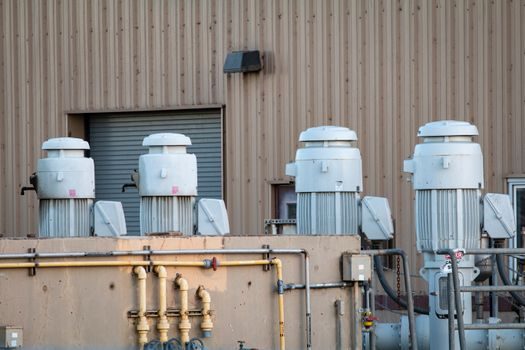
A magnetic drive pump replaces the dynamic shaft seal of a conventional centrifugal pump with a permanent-magnet coupling: an outer magnet assembly on the motor shaft drives an inner magnet assembly on the impeller shaft through a containment shell, and the wetted side has no shaft penetration [S5]. The containment shell — usually a metal can or a fluoropolymer liner — is the only leak path, and at rest the inner rotor is held by the magnetic drag, so dry-running damage is a known failure mode that the spec must address. CQB-class units run at IP44/IP54 with insulation class B/F on a 380 V / 50 Hz supply, with a maximum ambient of 40 °C, and that 1.6 MPa cap on suction-plus-head is the practical ceiling for the standard cast-iron build [S3].
Higher-end units, like the Magnatex MEP/MPL line, push the envelope to 340 GPM, 400 ft head, 20 HP, -112 °F to 660 °F liquid temperature, 150# or 300# RF flanges, SiC or SiC-X bearings, and 170 or 225 psig working pressure — API 685 sealless configurations for refinery and chlor-alkali service [S6][S8]. At the small end, a 110 V MP-20RM home-brew magnetic drive pump with 3/4" thread sits at the consumer end of the same architecture [S7]. Magnetic drive pumps are not for slurries with abrasive solids, not for flows that need to pass large particles, and not for fluids that lose viscosity at the operating temperature — those are hard design walls of the magnetic coupling concept, not marketing caveats. For a deeper look at material selection and decoupling, see the magnetic drive pump encyclopedia entry.
What a Sewage Pump Is (and Why It Is Built So Differently)
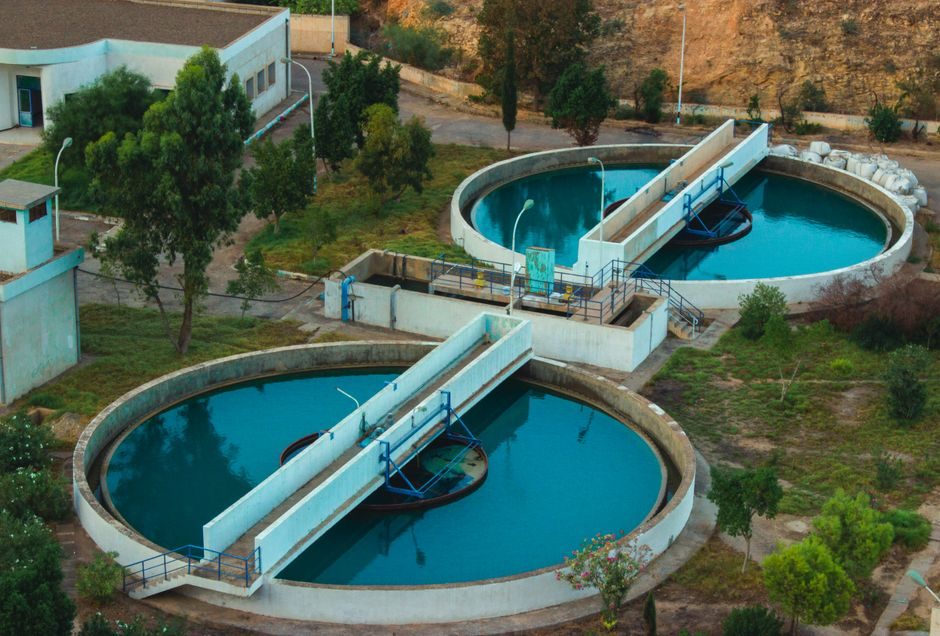
A sewage pump is a submersible or dry-installed centrifugal pump engineered to pass solids, fibres and stringy material without clogging. The defining design choices are a vortex / open-channel impeller, a wide free-passage clearance, cast-iron or duplex stainless wear parts, and — for the submersible class — IP68 stator sealing with mechanical seal plus lip seal, oil chamber, and moisture sensor. Spec bands in this class are typically 50–2500 m³/h at heads of 5–60 m with free-passage up to 80–120 mm depending on size, running at 2-pole or 4-pole speeds. Sealing is mechanical and water-lubricated, not magnetic — exactly the opposite design philosophy to a magnetic drive. [S1]
The procurement reality is that sewage pump manufacturers, like Shijiazhuang Damei Kingmech, list sewage pump as a distinct main product line alongside magnetic driven pump, slurry pump, and ISO water pump [S2]. That separation is structural, not marketing — the impeller hydraulics, the bearing housing, the seal chamber, and the motor cooling differ fundamentally. Trying to use a magnetic drive pump as a sewage pump fails in days; trying to use a sewage pump as a chemical pump fails in hours, usually as a seal leak.
Selection Criteria Side-by-Side
Across four decision criteria — sealing architecture, solids handling, fluid compatibility, and head/pressure capability — the two pump families do not compete on the same axis: [S2]
For readers cross-shopping centrifugal-pump families, the multistage centrifugal pump vs sump pump buying guide maps out an adjacent comparison and helps frame where magnetic drives sit relative to other non-submersible architectures.
Materials, Bearings and Containment Shells
Materials on a CQB-class magnetic drive pump are cast iron body, cast iron cover, cast iron impeller and 45# pump shaft as the baseline [S3]. When the fluid is incompatible with cast iron — hydrochloric acid, sulfuric acid, bromine, hydrofluoric acid, halogenated solutions — the OEM moves to fluoropolymer-lined or all-fluoroplastic builds; one Anhui-based OEM lists stainless steel centrifugal pump, magnetic centrifugal pump, PTFE centrifugal pump, slurry pump, chemical pump and canned pump as parallel SKUs out of an 80,000 m² site [S4]. That parallel product line is the practical evidence that metallurgy is selected per fluid, not per pump architecture.
On bearing materials, the Magnatex MEP/MPL range specifies SiC or SiC-X — silicon carbide on silicon carbide, with the SiC-X grade aimed at low-flow, low-NPSH chemical service [S6][S8]. Containment shell material follows fluid: Hastelloy, titanium (one directindustry listing specifies a titanium magnetic drive pump at 1,400 W, 195×195×355 mm, 8 kg alloy capacity) [S1], or fluoropolymer liner for the most aggressive chemistries. The bearing and shell choices are why Magnatex publishes flow ranges from sub-GPM laboratory pumps up to 340 GPM / 400 ft process pumps from the same product family [S8].
Operating Limits and Failure Modes Engineers Watch
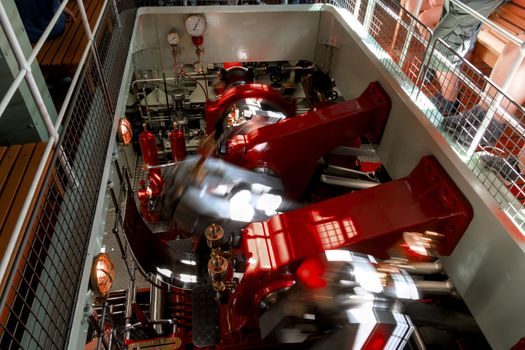
The two real failure modes for magnetic drive pumps are: (1) magnet decoupling under overload, high temperature, or running with a partially filled casing — the inner rotor slips, friction rises, the magnets lose strength over time; and (2) dry-running damage, which is a specific weakness because the magnetic coupling provides no cooling flow when the casing is empty. The CQB spec cap of 1.6 MPa on suction-plus-head and 40 °C ambient is the operating envelope that protects the magnets and the bearings simultaneously [S3]. A 660 °F upper temperature in the Magnatex MPL data is only feasible because the bearing chamber and the magnet chamber are thermally isolated by the containment shell and the specific bearing choice [S8] — a hard limit, not a soft suggestion.
Sewage pumps fail on clogging first and seal failure second. The free-passage impeller geometry (vortex, channel, or grinder cutter) sets the maximum particle size, and the seal chamber water/oil column protects the motor. Spec sheets always state solid-handling diameter, minimum submergence, and maximum number of starts per hour — that is the real operating envelope, not the flow curve. Selecting a magnetic drive for sewage duty is the fastest way to clog the containment shell and decouple the magnets; selecting a sewage pump for chemical duty is the fastest way to destroy the mechanical seal and leak fluid into the motor housing.
Manufacturer and Supply Landscape (2026 Cluster Snapshot)
The 2026 supply base for magnetic drive pumps is concentrated in two clusters: Chinese chemical-pump specialists in Hebei and Anhui (Shijiazhuang Damei Kingmech [S2], the Anhui fluoroplastics-magnetic-pump OEM [S4]) and US-headquartered API 685 specialists (Magnatex, Houston, ISO 9001-2008 certified, distributing stainless, alloy, fluoropolymer-lined and side-channel configurations globally) [S6][S8]. Smaller specialty OEMs supply the low-power / lab end of the market (VAGUES SERVICES titanium magnetic drive pump, 1,400 W, 8 kg alloy capacity, stationary industrial) [S1], and consumer-grade units like the MP-20RM 110 V home-brew pump at US$85 occupy the bottom of the price ladder [S7]. Sewage pumps follow a parallel but separate Chinese industrial cluster map, dominated by Hebei, Jiangsu and Zhejiang foundries.
For sourcing channels and cluster mapping across the broader industrial valve and pump ecosystem, the industrial valve suppliers 2026 cluster map gives a useful read. Readers already deep into magnetic drive spec work can layer this comparison onto the dedicated magnetic drive pump buying guide 2026.
Who Each Pump Is For — and Who Should Walk Away
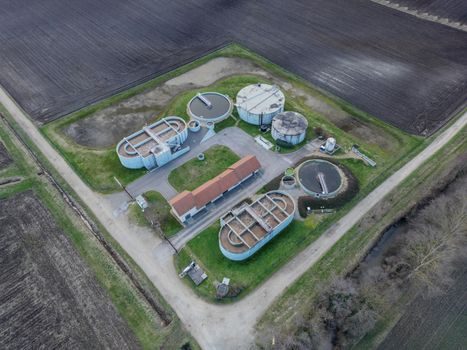
Magnetic drive pumps are for: chemical plants handling HCl, H₂SO₄, HNO₃, HF, bromine, chlorine, hydrocarbons, glycols, heat-transfer fluids, solvent recovery, brine, and ultra-pure chemical dosing [S8]. They are not for: abrasive slurries, raw sewage, fibrous wastewater, fluids with high solids content, or any service where dry-running is likely. Sewage pumps are for: municipal sewage lift stations, industrial wastewater sumps, food-processing effluent, stormwater discharge, and dewatering duty with solids up to the impeller free-passage rating. They are not for: clean aggressive chemicals, sterile or hygienic service, or any application where a seal leak is unacceptable. The two product lines rarely meet on a P&ID, and when procurement tries to use one for the other's duty the failure mode is always the same: a service that the wrong pump was never designed to handle.
Closing read: track the Magnatex MEP/MPL bearing-grade (SiC vs SiC-X) selection on the next API 685 RFQ — Magnatex publishes both as options on the same model code, and the cost delta is real [S6][S8]. For procurement teams mapping out their 2026 chemical-pump vendor shortlist, a useful next node is to compare the steel-plastic composite pipe buying guide 2026 against the same fluid-chemistry matrix, since the piping and the pump must agree on chemical resistance for the system to be safe.
For component-level specifications, see sewage pump, and magnetic material.