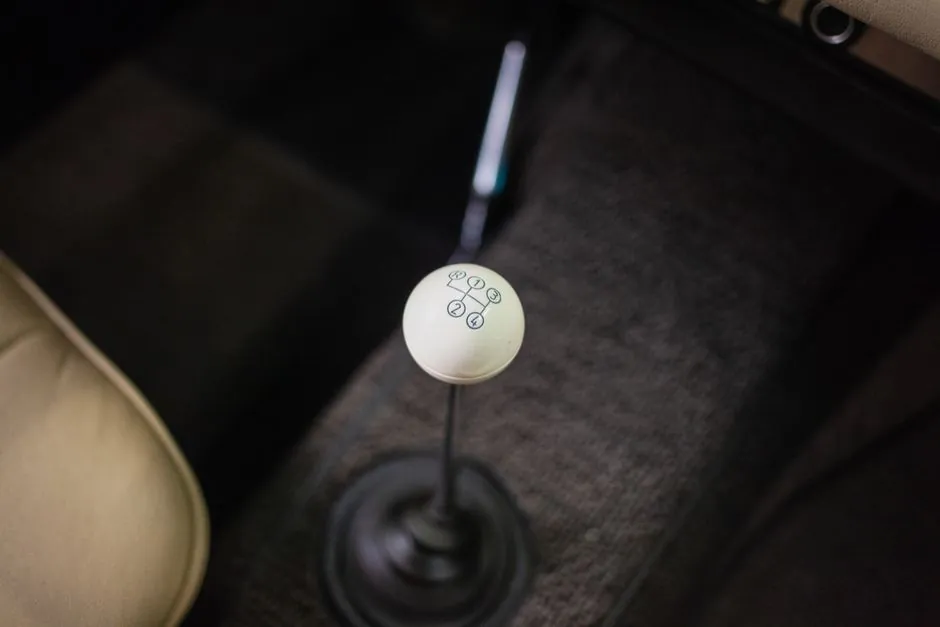
Marine gearboxes bridge the speed gap between diesel engines (commonly 1,500-2,000 RPM) and slow-turning propellers (typically 100-300 RPM), while delivering forward-neutral-reverse selection in a single housing [S1].
Selection in 2026 still splits into two architectural choices: a simple reverse gear at 1:1 ratio for small outboard-coupled craft, or a multi-stage reduction gearbox for mid-size and large vessels where torque multiplication and propeller efficiency matter [S1]. Double-helical reduction gearboxes from suppliers such as RENK and Flender are rated up to 50,000 kW per engine, a class reserved for naval auxiliaries, LNG carriers, and large commercial propulsion [S3].
Reduction ratio and propeller sweet spot
Propellers reach peak efficiency in the 100-300 RPM window; driving them directly from a 1,800-2,000 RPM medium-speed diesel wastes fuel and induces cavitation, so a gearbox typically reduces input speed by a factor of 3:1 to 6:1 for planing and displacement hulls, and 8:1 to 12:1 for large two-stroke main engines driving low-RPM propellers [S1].
The same gear set that lowers RPM multiplies torque proportionally, which is the mechanism that gets a heavily loaded fishing trawler moving from a standstill without stalling the engine. A separate article on packaging-line gearboxes shows the same torque-versus-speed tradeoff applied to industrial lines, with backlash and washdown ratings added.
Three gearbox architectures used at sea
Direct-drive reverse gears transmit 1:1 and add only forward-neutral-reverse selection; they are the lightest, cheapest, and most common option on small outboards and inboard pleasure craft under about 75 kW [S1].
Multi-stage reduction gearboxes (commonly 2-4 stages of spur or single-helical gearing) cover the bulk of commercial fishing, tug, and patrol-boat propulsion, with reduction ratios from roughly 2:1 to 6:1 and an integrated clutch pack for ahead/astern selection [S1].
Double-helical (or herringbone) reduction gearboxes use two opposing helix angles to cancel axial thrust, eliminating thrust bearings in many designs and reducing axial-bearing load by approximately 80% versus single-helical units; contact ratios above 2.0 give smoother torque transmission at ratings up to 50,000 kW per engine [S3].
Decision criteria compared across gearbox types
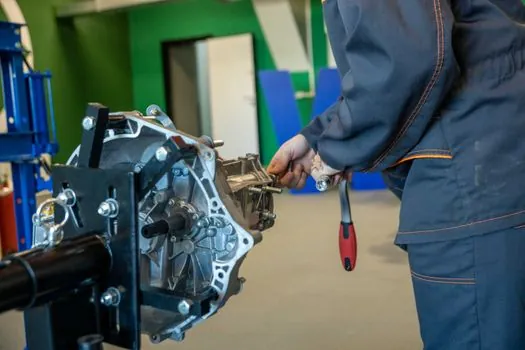
On the four criteria that matter for a spec sheet (power class, reduction ratio, noise/vibration, and maintenance access), the three architectures line up as follows. Direct-drive reverse gears: under 75 kW, 1:1 only, low noise irrelevant at low power, simplest service. Multi-stage spur/helical reduction gearboxes: 75 kW to 5,000 kW, 2:1 to 6:1, moderate noise needing flexible mounts, periodic clutch inspection. Double-helical reduction gearboxes: 1,000 kW to 50,000 kW per engine, 5:1 to 12:1, lowest noise and vibration of the three, but specialised repair due to matched helical sets and tight alignment [S1][S3].
For fishing trawlers and small commercial vessels, the 2-stage helical unit is the workhorse; for naval combatants and cruise ships, double-helical is the default because radiated noise drives sonar signature and passenger comfort.
Who the gearbox is for, and who it is not for
Reduction gearboxes are necessary for any vessel with a fixed-pitch propeller and an engine whose optimal RPM exceeds the propeller's efficient range; they are also required for controllable-pitch propeller systems, though there the gearbox typically drops the reversing function and lets the blades handle ahead/astern [S1].
A reverse-only direct-drive unit is NOT appropriate when the engine's power band sits well above the propeller's efficient RPM, when torque multiplication is needed to break a hull free from a dead-stop, or when the vessel operates in a class whose rules demand a separate reduction stage. For purely electric or hybrid drives, the same architectural logic applies, but a different maintenance regime is needed and is covered in industrial contexts like wind-turbine gearbox economics.
Integration with engine, propeller, and shaft system
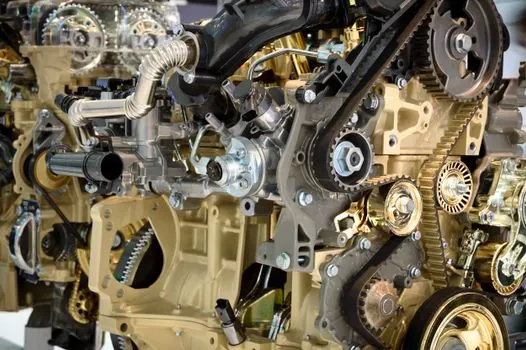
Marine propulsion is sold as a package: engine, gearbox, propeller, and stern shaft must share an alignment plan and a thrust-bearing arrangement; suppliers like SINOOUTPUT group these four items so the buyer matches gearbox input flange to engine flywheel and gearbox output to shaft diameter in one spec pass [S2].
Common commercial product lines such as the Advance HC, GW, GC, 2GWH parallel, two-speed, and PTO/PTI series each target a specific vessel class: HC and light-duty high-speed for small craft, GW and GC for mid-range commercial, 2GWH for twin-engine parallel drives, two-speed for vessels with both cruise and work modes, and PTO/PTI for hybrid auxiliaries [S2]. Specifying the wrong line typically shows up as either clutch slip under load or a gearbox running outside its design duty cycle, both of which shorten bearing life dramatically.
Limitations, failure modes, and service constraints
Marine gearboxes operate in salt-laden, humid air with continuous duty cycles, so the dominant failure modes are bearing fatigue from contaminated oil, clutch-plate wear from repeated ahead/astern cycling, and pitting on gear flanks from overload or lube starvation [S1].
Double-helical units add a sensitivity: the two opposing helix sets must be aligned precisely or the thrust-cancellation benefit is lost and bearing load returns toward single-helical levels; field repair of helical sets is rarely economical, so the practical service path is full set replacement [S3]. For lower-power industrial gear duty outside marine, the same failure-mode logic shows up in heavy-industry selections like cement-plant gearboxes, where dust ingress and 24/7 duty dominate.
Standards, sourcing, and trackable signals
Classification society rules (IACS member societies: ABS, DNV, LR, BV, CCS, KR, NK, RINA) govern material, alignment, and shock-load testing for marine reduction gearboxes above roughly 375 kW, and they are the reference a spec engineer should anchor the gearbox data sheet against rather than a vendor's marketing curve. [S1]
Two signals to track over the next quarter: (1) hybrid PTO/PTI gearbox variants expanding into the 500-2,000 kW mid-size class as more workboats add electric propulsion, and (2) the spread of double-helical designs into yacht and small-commercial segments where noise and vibration, not just power, drive the spec [S2][S3].
Detailed specification references: gearbox, pressure transmitter, and flow meter.