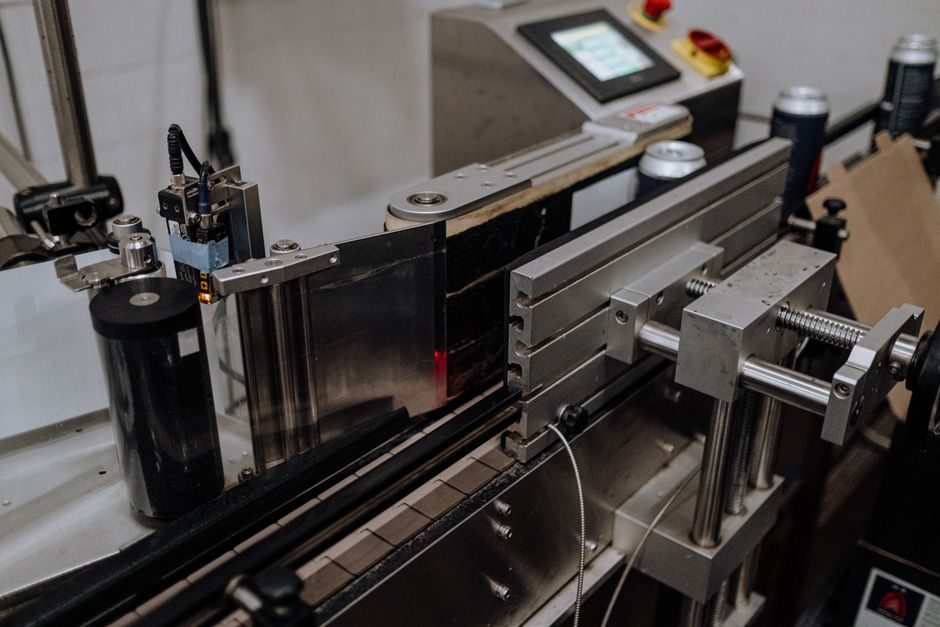
Both equipment categories are spec'd against the same industrial engineering framework: site environment, electrical or mechanical load, automation class, maintenance access, regional service, and applicable safety standards. The specific values differ — a 415V Motor Control Center rated IP54 and a polypropylene-banded pallet strapper rated IP44 follow different numeric paths — but the decision tree is identical.
Procurement teams that run parallel sourcing for both classes — common in packaging-line upgrades that also touch motor rooms — flag the same bottleneck: vendors optimize brochures around the most photogenic criterion and bury maintenance-cost data in fine print. The six-criterion check below flattens that asymmetry and uses a shared vocabulary across both RFQs.
Environment envelope: temperature, humidity, ingress
IEC 60529 IP rating is the first cross-cut filter for both equipment classes. MCC panels in food-processing or outdoor utility rooms must hold IP54 minimum against hose-down and dust; a semi-automatic strapping machine in the same facility typically only needs IP44 because it sits inside a controlled packaging hall [S1]. Humidity tolerance is the next gate: tropical or coastal sites push both classes toward conformal-coated PCBs and stainless fasteners, and the cost premium runs 8–15% on the bill of materials at this scope.
Operating temperature window matters differently across the two. An MCC's horizontal bus derates above 40 °C ambient, which forces either a larger enclosure or active cooling. A strapper's heat-seal head fails above 35 °C without compressed-air cooling — a specification detail that frequently gets missed until the first summer shutdown [S5].
Load profile and duty cycle
MCC starters are selected by locked-rotor current, starts-per-hour, and duty class (S1 continuous through S9 intermittent with electrical braking). A 75 kW pump motor on S3 duty at 60 starts/hour rules out direct-on-line contactors under 100 A and pushes the spec toward soft-starters or VFDs [S2].
Strapping machines are spec'd on strap tension range (typically 200–2500 N), cycle time per strap (1.5–6 s), and package size envelope. A unit sized for 20 straps/min on corrugated cartons will not survive a switch to 35 straps/min on wooden crates without a frame and motor upgrade — a common post-installation failure mode [S4].
Automation class: Class I/II/III wiring vs semi-auto/auto strapper
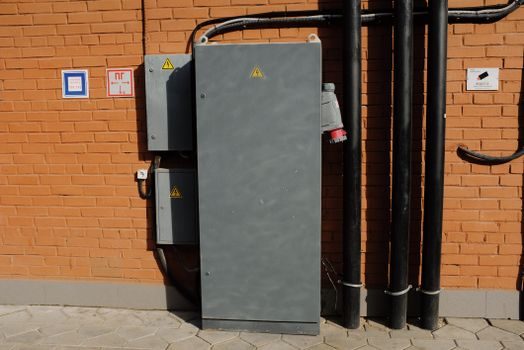
For MCCs, the equivalent decision is wiring class. Class I (factory-wired, field-connected) cuts commissioning labor but freezes the configuration. Class II (factory-wired with terminal blocks for future changes) costs 6–10% more upfront but saves roughly 30% on every later motor addition [S2]. Plants expecting process changes in 24–36 months should default to Class II; single-product plants stay on Class I.
For strappers, the line splits between semi-automatic (operator places the strap, machine tensions and seals) and automatic (conveyor-fed, no operator touch). Volumes below 8 straps/min with mixed SKUs and limited floor space favor semi-automatic; throughput above 12 straps/min with stable pack geometry justifies fully automatic lines and the servo-motor integration they require [S4].
Maintainability and component access
MCC maintainability is a function of drawer design, terminal accessibility, and the ability to swap a starter bucket without disturbing adjacent cubicles. The leading design pattern is withdrawable-unit construction that lets a technician replace a bucket in under 90 seconds with the bus energized and adjacent units live [S5].
Strapper maintainability is a function of strap-path access, seal-head changeover time, and the availability of OEM versus third-party wear parts. Suppliers that lock consumables behind proprietary SKUs add 12–25% to lifetime strap cost; suppliers using commodity PET or PP strapping keep the line competitive. The pull-apart service test: open the access panels with one tool, no specialist [S3].
Supplier support and regional service

Industry guidance consistently ranks regional service response above sticker price when buyers evaluate MCC and strapper vendor reliability; downtime from service-call wait time is a documented failure mode for plants outside metropolitan areas [S3][S4].
Check the supplier's published mean-time-to-repair, not just warranty length. A two-year warranty with 72-hour guaranteed response outperforms a five-year warranty with best-effort dispatch on any line running 24/7 [S3].
Standards, compliance, and audit trail
MCC panels must satisfy IEC 61439-1 for low-voltage switchgear assemblies, with regional overlays (UL 845 in North America, IS 8623 in India). Certification scope — entire assembly versus individual sub-assemblies — is the detail auditors check first [S6].
Strapping machines in food or pharma lines fall under machinery-safety directives that require risk assessment and CE/UL marking on the integrated line, not just the standalone unit. FDA/FSMA recordkeeping also imposes traceability on the sealing process, which means a printer-equipped strapper with audit-log output is no longer optional in regulated packaging lines [S3].
Comparison: MCC starter spec vs strapper spec at a glance
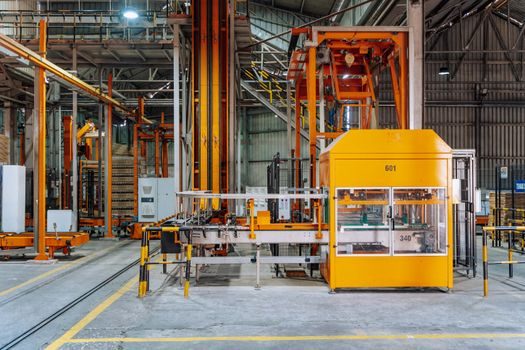
The two equipment classes look unrelated on the BOM, but on the spec sheet they line up against the same four axes. Below is the cross-walk an engineer can use to brief procurement on both RFQs in one sitting. [S1]
Environment (IP / temperature) maps directly: MCC IP54 at 40 °C ambient vs strapper IP44 at 35 °C ambient. Load profile maps by analogy — motor locked-rotor amperage to strap tension in Newtons, and starts-per-hour to cycles-per-minute. Automation class maps wiring class to operator-presence: Class II terminal blocks to semi-automatic operator stations. Maintainability maps drawer swap to seal-head swap, both benchmarked at "under 90 seconds with one tool."
Where the comparison breaks: MCC failure modes (arc-flash, bus fault) are safety-critical and code-mandated; strapper failure modes (missed seal, misaligned strap) are productivity-critical and contractually negotiated. The spec writer should weight the safety column heavier on the MCC RFQ and the uptime column heavier on the strapper RFQ — even when both are being sourced from the same vendor list [S1][S6].
Who this framework is for — and who it isn't
Use the six-criterion check for any industrial capital equipment with a 5+ year service life: MCCs, strappers, conveyors, pressure-transmitter loops, flow-meter skids, and industrial-valve manifolds. The framework breaks down for short-life consumables (gaskets, O-rings), for prototype R&D equipment with no production volume, and for equipment under 50 V / 50 N where full IEC 61439 risk assessment is disproportionate. [S2]
Skip it entirely when the RFQ is below $5,000 total or when the equipment is rented short-term. The procurement overhead of a six-criterion matrix exceeds the savings below that threshold.
Limitations and failure modes in the framework itself
The six-criterion model is a procurement filter, not a design tool. It does not replace a one-line diagram, a strap-tension calculation, or a short-circuit coordination study. Engineers who skip the calculation step and use the matrix to argue with vendors typically end up with equipment that passes procurement but fails commissioning. [S3]
Two known failure modes: (1) vendors who game the IP rating by testing empty enclosures, then ship the unit with cable glands that drop the rating by one or two notches; (2) vendors who quote IEC 61439-1 compliance on the bus structure only, then build the bucket wiring to a lower sub-assembly standard. The fix in both cases is a witnessed factory acceptance test on the exact unit being shipped, not a catalog page [S6].
Trackable signals for the next 6 months
Two signals worth watching through end-2026: (a) ongoing IEC 61439-2 verification-regime refinements for partially type-tested assemblies, which periodically tighten factory-acceptance scope and force spec re-writes on the MCC side; (b) the spread of servo-driven seal heads into mid-range automatic strappers, which collapses the cycle-time gap with premium lines and forces a re-spec at every brownfield packaging-line upgrade. [S4]