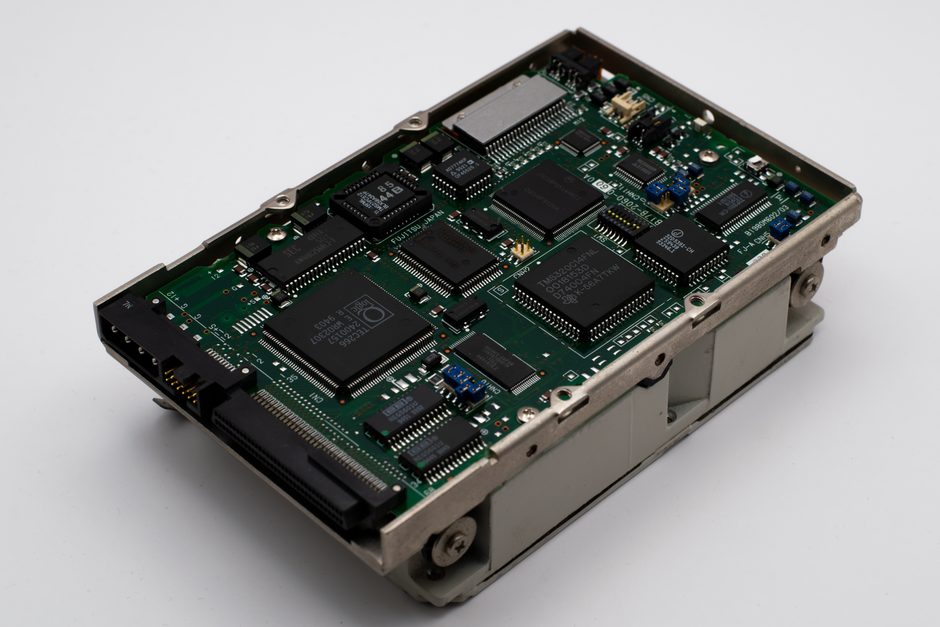
A 7SK-class or SEL-749M-tier microprocessor protection relay running IEEE C37.96-2012 protection logic is the baseline specification for AC induction motors above 75 kW in 2026, displacing bimetal and single-function thermal overloads in greenfield industrial panels [S1][S4].
Procurement scope now covers a 0.5-class metering engine, 4 voltage / 3 current analog inputs, 7 binary inputs / 2 binary outputs minimum, IEC 60255-151 inverse-time curves, IEC 61850 GOOSE messaging, and an arc-flash-rated HMI for LV switchgear integration [S2][S3].
What a 2026 Microprocessor Relay Must Contain
Modern devices bundle thermal overload (49), locked-rotor (48/51LR), phase loss (46), earth fault (51N/50N), and differential (87) functions in a single 19-inch rack or draw-out case, with the SEL-749M and SIPROTEC 7SK85 explicitly listing these protections for LV/MV motors [S2].
Channel count is now a hard procurement line: the SXJB-3300 tester references 4 phase voltage outputs at 120 V and 3 current outputs at up to 40 A paralleled to 120 A, with 7 contact inputs / 2 idle contact outputs — a 4V/3I I/O map that benchmark relays must meet or exceed for substation commissioning [S3].
Thermal modelling is a differentiator. SEL's patented thermal-overload algorithm tracks heating under cyclic loading, while the MP8000 from Littelfuse exposes 90–690 V trigger voltage and Bluetooth configuration via iOS/Android — a 600 V working-voltage range that covers 400 V and 690 V European drives without external PTs [S2].
Variant Comparison: Four Realistic 2026 Options
Selection collapses to four real options once duty, voltage class, and arc-flash exposure are fixed:
1. SIPROTEC 7SK80/7SK85 (Siemens) — 7SK8x family, full motor + generator protection with IEC 61850; aimed at >250 kW MV motors; pairs with 7UM85 generator unit for power-plant auxiliaries [S2].<br/>2. SEL-749M (Schweitzer Engineering) — 0.5-class metering, SEL thermal model, arc-flash rated; aimed at continuous-process LV/MV motors in petrochemical duty [S2].<br/>3. REF601 (ABB) — feeder protection, 24–265 V trigger voltage, distribution-automation focused; aimed at utility primary/secondary feeders rather than large motors [S2].<br/>4. MP8000 Bluetooth overload (Littelfuse) — 90–690 V, smartphone commissioning, basic thermal overload only; aimed at sub-75 kW LV motors where the trip function is the only protection needed [S2].
On four decision criteria the split is sharp: trip-function count (7SK8x ≈ 12 / SEL-749M ≈ 10 / REF601 ≈ 6 / MP8000 ≈ 3), 61850 support (7SK8x yes / SEL yes / REF601 optional / MP8000 no), arc-flash rated HMI (SEL-749M yes / 7SK8x optional / REF601 no / MP8000 no), and commissioning interface (MP8000 Bluetooth / SEL AcSELerator / 7SK DIGSI 4 / REF601 PCM600) [S2]. A buyer needing more than 8 protection functions and IEC 61850 should write 7SK8x or SEL-749M into the spec; the REF601 is correctly classed as a feeder, not a motor, device.
Who Should Use a Microprocessor Relay — and Who Should Not
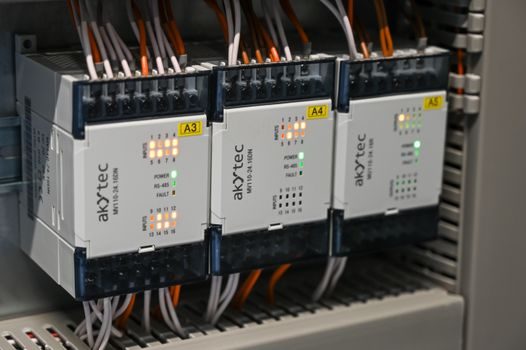
Microprocessor relays earn their premium on motors above 75 kW, on any motor driving a high-inertia load (centrifugal compressors, large fans), and on motors in continuous-process plants where an unplanned trip costs more than the relay itself — a cost case the SEL-749M and 7SK85 catalogues target explicitly [S1][S2].
Engineers should not default to a microprocessor device on fractional-horsepower circuits under 22 kW, on single-function DOL starters feeding non-critical HVAC fans, or on packaged equipment where the OEM has already integrated an industrial relay module with vendor-locked firmware; in those positions a thermal overload or a dedicated motor protection relay is the right call, and a 7SK-class unit is over-spec [S2].
Users who do not have a commissioning laptop with IEC 61850 SCL editing and who do not run arc-flash studies on the panel should also avoid high-end units; the SEL-749M and SIPROTEC families assume the buyer will configure trip logic, set pickup curves, and validate GOOSE messaging before energisation [S2].
Setting Philosophy and the IEEE C37.96 Anchor
IEEE C37.96-2012 (revision of the 2000 edition) is the application guide that aligns motor protection philosophy with microprocessor relays, covering squirrel-cage, wound-rotor induction, and synchronous machines; the standard explicitly states that the document "identifies and summarizes the functions necessary for adequate protection of motors based on type, size, and application," and includes setting guidance for microprocessor-based systems [S1][S4].
Practical pickup values from the standard: locked-rotor (48/51LR) timed to the motor's accelerating time, negative-sequence (46) typically at 15 % of full-load current with a 2.5–10 s curve, and earth-fault (51N) at 10–20 % of CT rating to detect standing earth faults while passing through CT imbalance [S1]. A 49 thermal element is set at the motor's service factor, with the hot/cold ratio usually 1.05–1.10 to model rotor heating during repeated starts.
Communications, HMI, and Arc-Flash Considerations
For LV-only panels without a substation bus, Modbus TCP or Profinet via a gateway is acceptable and is what the MP8000 Bluetooth overload uses for smartphone handover [S2].
Arc-flash incident energy on LV switchgear often sits between 4 and 40 cal/cm²; the SEL-749M's removable HMI can be racked out to the panel door, keeping the operator outside the arc-flash boundary during testing — a wiring pattern the Littelfuse MP8000 and REF601 do not offer [S2]. Where arc-flash energy exceeds 40 cal/cm², IEC 60255-127 arc-flash detection (light + overcurrent) should be specified alongside the motor relay.
For hazardous-area installations — refineries, chemical plants with Zone 1/Class I Div 2 areas — relay selection must respect the enclosure certification; pairing an ATEX-certified cabinet with a non-ATEX relay voids the panel rating, a procurement gap covered in the explosion-proof control station spec comparison.
Test Equipment Sourcing and Commissioning
A 4V/3I relay test set is the bench tool for acceptance testing before energisation. The Sansion SXJB-3300, a 4-phase-voltage / 3-phase-current microcomputer-controlled unit, ships at USD 1 000–10 000 ex-works Shenzhen with a 5-day delivery and 7 contact inputs / 2 idle contact outputs, matching the I/O count of mainstream 7SK8x and SEL-749M-class relays [S3].
Higher-channel six-phase test sets in the same product family extend to USD 100 000 for transformer differential (87T) and busbar (87B) testing, where three winding currents and three restraint currents must be injected simultaneously; a 4V/3I set is inadequate for that scope and should not be specified [S3].
Buyers should also budget a portable arc-flash relay test kit and a relay module simulator; without these, a 7SK85's claim of 12 protection functions remains on paper rather than on the switchboard. Plan the acceptance test in the FAT (factory acceptance test) rather than at site, to avoid blowing commissioning windows.
Limitations, Failure Modes, and Watch-outs
Microprocessor relays are not immune to failure: the 7SK and SEL families both rely on auxiliary DC supply (typically 110/220 V DC or 24–48 V DC), and a supply drop below the ride-through threshold (commonly 60 % of nominal for 50 ms) will reboot the relay and momentarily blind the protections [S2]. Specify a buffered DC supply or a dedicated battery trip unit on the same panel.
CT saturation under motor starting transients can desensitise the 51N earth-fault element; the mitigation in the IEEE C37.96-2012 guide is either an instantaneous high-set 50N element at 8–12 × CT primary, or a restrained differential (87) element if the motor has dedicated CTs at both ends [S1][S4].
Finally, a Bluetooth-only commissioning path on the MP8000 family is a cyber-security red flag in IEC 62443 environments; the SEL-749M and 7SK8x support signed firmware and role-based access, which an audit team will ask for, and the MP8000 does not [S2].
Trackable next signals: the IEEE PC37.96 working-group ballot schedule, IEC 60255-127 Edition 2 publication, and UL 508A Industrial Control Panel revisions. Each will shift the spec baseline for 2027 procurement.