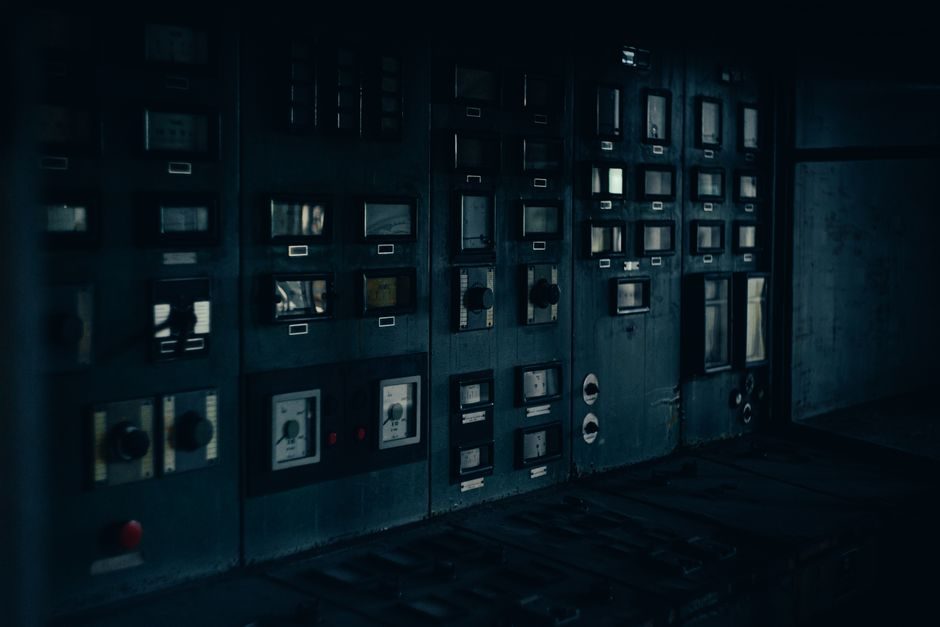
A Chinese OEM price scan on 2026-04-26 lists a CZ Explosion-Proof Electric Appliance EX plastic control station with a 1-set minimum order and a stated supply ability of 500 sets per day, framing the volume ceiling that most mid-tier Chinese lines run at [S2]. Yueqing Chengyang Electric's BF8030 and BCZ8030 lines, also updated 2026-07-25, cover the corrosion-proof control-box and plug-socket device pairs that share the same GRP/aluminum enclosure supply chain as standalone control stations [S1].
For buyers, the 2026 price band is a function of three nested decisions: (1) the Ex-mark and zone rating the inspector will sign off, (2) the enclosure material compatible with the gas group or dust type, and (3) the working I/O count (pushbuttons, pilot lights, selector switches, ammeters). The supply-side reference set, comprising CZ Explosion-Proof, Yueqing Chengyang, and CIMFR-certified ExEC (founded 1996) [S3], shows that a like-for-like GRP-bodied 2-button station with one indicator is the entry SKU, while SS316 stations with certified EEx d IIB + H2 and 6+ operators move into the upper tier.
Cost Driver #1: Ex-Mark, Zone, and Gas Group Stack
Explosion-proof control stations carry a price premium of roughly 25-60% over their non-certified industrial equivalents, and that premium scales with the zone rating and gas group [S2]. A Zone 1 / Zone 21 Ex d IIB station is the mainstream commercial offering from the CZ, Chengyang, and ExEC lines; Zone 0 and Zone 20 ratings, or IIB+H2 for hydrogen service, push the same enclosure to the top of the catalog.
Certification itself is a real line item. CIMFR certification, the Indian testing house used by ExEC, is positioned on the manufacturer site as the visible safety credential on every featured product [S3]. For European and Middle Eastern end-users, ATEX 2014/34/EU and IECEx certification each add their own third-party test report cost, and dual-marked units command a price uplift versus a single-region listing. Buyers should treat the certification stack (CIMFR / ATEX / IECEx) as a separate cost line from the enclosure, not as a checkbox bundled into the unit price.
The biggest cost trap in this tier is paying for IIB+H2 (hydrogen) when the service only sees ethylene or propane. Hydrogen-rated stations add tighter flamepath tolerances and longer QA, and the cost delta is not recoverable on a hydrocarbon-only duty. Pin the gas group to the real process fluid before sizing the budget.
Cost Driver #2: Enclosure Material - GRP vs Aluminum vs SS316
Three enclosure families dominate the 2026 control-station market, and each has a distinct cost slope. GRP (glass-reinforced polyester, often called "EX plastic" in the CZ catalog) is the cheapest and the most common on Zone 1/21 pushbutton stations; it resists many corrosive atmospheres but has a lower mechanical-impact rating than metal [S2]. Aluminum alloy, the typical cast body for the BF8030-series and the BF2-series operation posts, sits in the middle on price and adds better heat dissipation for indicator-heavy panels [S1].
Stainless steel SS316 is the top of the line. Buyers see SS316 specified wherever chloride exposure, hygienic washdown, or offshore salt-spray service rules out aluminum. As a rule of thumb, SS316 enclosures run roughly 2-3x the GRP equivalent, and aluminum lands between them. The selection logic is captured in the spec-first map for explosion-proof junction boxes, which is a sibling article because the same material decision applies to both product types.
Lead time moves with material as well. The 500-sets-per-day supply ability shown on the CZ listing is for the GRP plastic line [S2]; cast-aluminum and SS316 lines run in shorter campaigns and longer tooling changeovers, so any quoted price must be paired with a quoted lead time, not assumed from the plastic-line throughput.
Cost Driver #3: I/O Count and Operator Layout

A blank enclosure is roughly half the cost of the same enclosure fitted with a typical 2-operator layout (one pushbutton + one indicator). Each added operator (pushbutton, selector switch, ammeter, pilot light, potentiometer) adds a flameproof operator, an internal wiring point, and a nameplate engraving. The BF2-series operation post from Chengyang is a single-operator module designed to chain into multi-post walls; this is the cost-efficient way to scale up I/O without over-sizing one large enclosure [S1].
The wiring interface is the other cost line that is easy to underestimate. Entries and exits via explosion-proof cable glands (not the same as the junction-box entry hardware) drive both certification and install labour. A station specified with 4 entries versus 1 entry does not just add the gland hardware; it often forces a larger enclosure body to maintain the internal wiring bending radius, which cascades the price.
Decision Comparison: GRP vs Aluminum vs SS316 on 4 Buy Criteria
The four criteria that almost every procurement engineer weights on a 2026 RFQ are unit price, corrosion compatibility, mechanical impact rating, and lead time. On unit price, GRP is the lowest and SS316 the highest. On corrosion compatibility, SS316 wins for chloride and acidic vapours, GRP is acceptable for many chemical atmospheres, and aluminum needs protective painting for salt-spray service. On mechanical impact, cast aluminum and SS316 outperform GRP, which can crack under heavy impact. On lead time, GRP runs fastest because the Chengyang and CZ lines post 500-sets-per-day class throughput on plastic bodies [S2].
The same four-axis logic is laid out for explosion-proof distribution equipment, and the rankings translate: SS316 for offshore, aluminum for general industrial, GRP for indoor chemical and dust service. The explosion-proof button operator family is the most cost-sensitive line because the button itself, not the enclosure, is the recurring per-station cost.
Total Cost of Ownership: Install, Maintenance, Energy
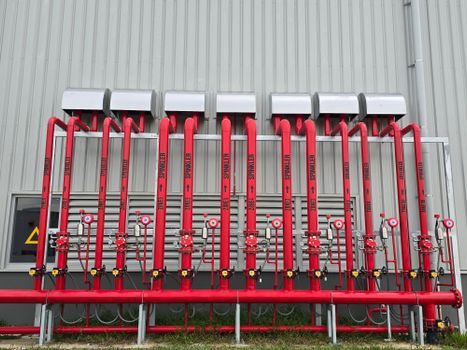
Purchase price is the smallest line on a 10-year station TCO. Installation labour is the next tier: certified stations must be wired through certified glands, on certified conduit, with the correct IP rating at every joint, and the field-labour hours scale with the number of entries and the I/O count. A 6-operator SS316 station with 4 entries can take a full shift to terminate; a 2-operator GRP station with 1 entry is typically under 2 hours. [S3]
Maintenance runs as a function of the operator type, not the enclosure. Illuminated pushbuttons fail faster than non-illuminated ones; ammeters and selector switches carry the most wear. The good news is that modular post designs like Chengyang's BF2 series allow a single failed post to be swapped without disturbing the rest of the wall [S1]. Energy is negligible on a passive control station; the only parasitic draw is indicator lamps, which is dwarfed by the install and certification cost lines.
Downtime risk is the hidden fourth TCO line. A Zone 1 station that is mis-specified for the gas group and triggers a shutdown costs more in lost production than the entire station CAPEX. The cost-driven way to manage this is to fix the zone, gas group, and IP rating first, then shop the price, in that order. Buyers evaluating the broader category will see the same ordering logic applied to explosion-proof light fixtures and explosion-proof motor packages.
2026 Sourcing Notes from the Chinese and Indian Supply Base
Three signals are worth tracking for the rest of 2026. First, Chinese OEM lines like CZ Explosion-Proof and Yueqing Chengyang are publishing 2026-dated catalogs that pair EX plastic control stations with cable glands, junction boxes, and plug-socket devices on the same SKU family, which lets a buyer consolidate one supplier for a full hazardous-area kit [S1][S2]. Second, Indian suppliers such as ExEC (founded 1996, CIMFR-certified) are pushing flameproof build quality as the differentiator over the Chinese plastic-body lines, which usually wins on price for Zone 2/22 and loses on price for Zone 1/21 hydrogen service [S3]. Third, OEM/ODM is openly listed as a service by Chinese makers, meaning custom engraving, custom I/O layouts, and private-label runs are available at MOQ 1 set on some lines, though custom certification is a different conversation [S1].
Trackable next signal: any 2026-Q3 update to the BF8030 or BCZ8030 series catalogs at Chengyang, and any new CIMFR certificate numbers published by ExEC, will move the supply-side price floor in this category. The peer article on explosion-proof distribution box price and cost guide 2026 tracks the same supply-side signals on the distribution-box sibling.